At their core, roasting and calcination are both high-temperature processes used to purify ores, but they differ fundamentally in their chemical goals and the atmosphere they require. Roasting involves heating an ore in the presence of excess air or oxygen to induce a chemical reaction, typically oxidation. Calcination, in contrast, involves heating a material, often in the absence or with a limited supply of air, to drive off volatile components through thermal decomposition.
The essential difference lies in the role of air: roasting uses oxygen to chemically change the ore (e.g., sulfide to oxide), while calcination uses heat alone to break down the ore and remove components like CO₂ or water.
What is Roasting? A Closer Look at Oxidation
The Role of Oxygen
Roasting is an oxidation process. Its primary purpose is to heat a mineral in an oxygen-rich environment to convert it into a different, more easily processed chemical form.
The air in the furnace is not just a heating medium; it is an active chemical reactant.
Common Applications: Sulfide Ores
Roasting is most frequently applied to sulfide ores, such as zinc sulfide (ZnS) or lead sulfide (PbS).
These sulfides are difficult to reduce directly to their base metal. By roasting them, they are converted into their corresponding metal oxides (e.g., ZnO or PbO), which are much easier to smelt.
The Desired Outcome: Metal Oxides
The final product of roasting is typically a metal oxide, along with a gaseous byproduct like sulfur dioxide (SO₂). This SO₂ is often captured and used to produce sulfuric acid.
What is Calcination? The Power of Thermal Decomposition
The Role of Heat (and Lack of Air)
Calcination is fundamentally a thermal decomposition process. The goal is to use heat to break down a compound into simpler, more stable substances without a significant chemical reaction with the furnace atmosphere.
This is why it is often conducted in an inert or controlled atmosphere with little to no oxygen.
Common Applications: Carbonates and Hydrates
Calcination is the standard method for processing carbonate ores like limestone (CaCO₃) to produce lime (CaO) by driving off carbon dioxide (CO₂).
It is also used to remove bound water from hydrated minerals (hydrates), effectively drying the material at a chemical level.
The Desired Outcome: A Purified Compound
The end product of calcination is a more concentrated or purified version of the original material, stripped of its volatile components. The material's core element remains, but its chemical composition is simplified.
Understanding the Trade-offs and Key Differences
Atmosphere is Everything
The single most important distinction is the furnace atmosphere. Roasting requires oxygen to function; calcination requires its absence or limitation to prevent unwanted oxidation.
Choosing the wrong atmosphere will either halt the intended process or produce an undesirable side reaction.
Chemical Reaction vs. Physical Separation
Think of roasting as a chemical transformation where the ore reacts with the air.
In contrast, think of calcination as a physical separation at the molecular level, where heat "cracks" the compound apart and volatile parts escape as gas.
Byproduct Management
Roasting often produces environmentally significant byproducts like **sulfur dioxide (SO₂) **, which must be carefully managed.
Calcination typically produces less hazardous byproducts like carbon dioxide (CO₂) or water vapor, though large-scale CO₂ emissions are also a major industrial consideration.
Making the Right Choice for Your Material
The selection between these two processes is dictated entirely by your starting material and your desired final product.
- If your primary focus is converting a sulfide ore into an oxide: You will use roasting to facilitate the later stages of metal extraction.
- If your primary focus is decomposing a carbonate ore like limestone: You will use calcination to drive off CO₂ and produce a simple oxide like lime.
- If your primary focus is removing chemically bound water from a mineral: You will use calcination to dehydrate the material.
Ultimately, understanding the chemical goal—oxidation or decomposition—is the key to selecting the correct thermal process.
Summary Table:
| Feature | Roasting | Calcination |
|---|---|---|
| Primary Goal | Chemical Oxidation | Thermal Decomposition |
| Atmosphere | Excess Air / Oxygen | Limited or No Air |
| Common Input | Sulfide Ores (e.g., ZnS) | Carbonate Ores (e.g., CaCO₃) |
| Key Byproduct | Sulfur Dioxide (SO₂) | Carbon Dioxide (CO₂) / Water Vapor |
| Final Product | Metal Oxide (e.g., ZnO) | Purified Oxide (e.g., CaO) |
Ready to Optimize Your High-Temperature Processes?
Choosing the right thermal treatment is critical for your material's purity and efficiency. KINTEK specializes in precision lab equipment and consumables for all your calcining and roasting applications. Our expertise ensures you achieve the exact chemical and physical transformations you need.
Contact our experts today to discuss how KINTEK's solutions can enhance your laboratory's capabilities and drive your research forward.
Visual Guide

Related Products
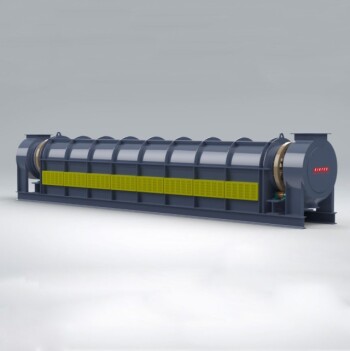
- Electric Rotary Kiln Pyrolysis Furnace Plant Machine Calciner Small Rotary Kiln Rotating Furnace
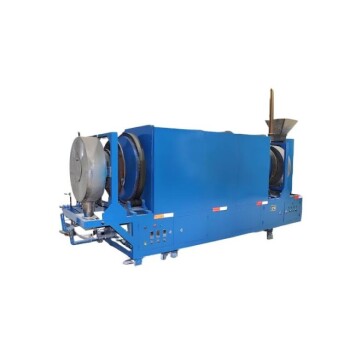
- Electric Rotary Kiln Continuous Working Small Rotary Furnace Heating Pyrolysis Plant
- Rubber Vulcanizer Vulcanizing Machine Plate Vulcanizing Press for Lab
- Lab Internal Rubber Mixer Rubber Kneader Machine for Mixing and Kneading
- Professional Cutting Tools for Carbon Paper Cloth Diaphragm Copper Aluminum Foil and More
People Also Ask
- What are the advantages of rotary kiln furnace? Achieve Superior Uniformity & Efficiency
- How are rotary kilns heated? Direct vs. Indirect Heating Methods Explained
- What is the temperature of a rotating kiln? It Depends on Your Material and Process Goal
- What are the characteristics of the slipping, slumping, and rolling modes of bed motion? Optimize Your Rotary Process
- At what temperature does pyrolysis occur? A Guide to Controlling Your Product Output