
The primary hazards of molten metals extend far beyond severe burns. They encompass catastrophic steam explosions, the release of toxic gases and fumes, intense radiant heat, and significant fire risks. Understanding each of these vectors is critical for establishing a safe operational environment.
The most severe incidents involving molten metal are rarely caused by the obvious danger of direct contact. Instead, they are typically triggered by overlooked secondary hazards, most notably the explosive interaction between the metal and even small, seemingly insignificant amounts of water.
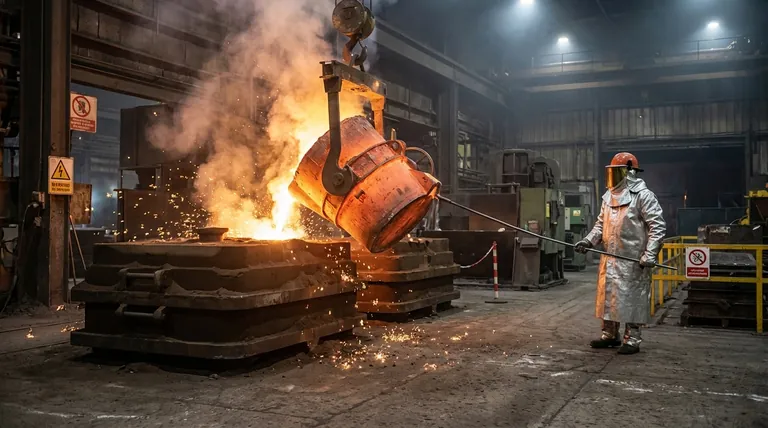
The Spectrum of Thermal Hazards
The most intuitive danger of molten metal is its extreme temperature. Steel, for example, is handled at approximately 2800°F (1538°C). These temperatures create multiple layers of thermal risk.
Direct Contact Burns
Any splash or spill of molten metal onto skin will cause immediate, deep, and life-threatening burns. The metal's high thermal capacity means it transfers a massive amount of energy very quickly.
Standard clothing offers no protection and can worsen injuries by melting and fusing to the skin.
Radiant Heat Exposure
You do not need to touch molten metal for it to harm you. Furnaces, ladles, and the metal itself radiate intense infrared energy.
This radiant heat can cause serious burns from a distance, damage eyesight, and lead to heat stress, exhaustion, and dehydration over time, impairing judgment and physical performance.
Fire and Ignition Risk
A spill of molten metal will instantly ignite any combustible materials it contacts. This includes wood, paper, cardboard, flammable liquids, and hydraulic oils.
This risk requires impeccable housekeeping and a careful audit of all materials present in the melt shop, foundry, or casting area.
The Critical Danger of Explosive Reactions
The single greatest potential for a catastrophic event comes from the interaction of molten metal with water or other liquids. This is a primary focus of any robust safety program.
Steam Explosions Explained
When molten metal encapsulates water, the water rapidly flashes into steam. This phase change involves a violent expansion, with water increasing its volume by over 1,600 times almost instantaneously.
This creates a powerful explosion that can launch tons of molten metal and equipment fragments across a wide area, with devastating consequences. The trigger can be as little as a few drops of water falling into a ladle or a small spill finding a puddle on the floor.
Common Sources of Water Contamination
Preventing steam explosions requires obsessive vigilance for moisture. Key sources include:
- Damp or wet scrap metal charged into the furnace.
- Wet tools, molds, or instruments introduced into the melt.
- Leaks from water-cooled furnace panels or equipment.
- Puddles on the floor from rain, cleaning, or leaks.
- Condensation dripping from overhead pipes or roofing.
The Impact of Confined Spaces
A steam explosion that occurs within a pit, trench, or other confined space is significantly more dangerous. The explosive force is focused and directed, amplifying its destructive power.
Atmospheric and Chemical Hazards
What you can't see can be just as dangerous. Melting metals releases a variety of invisible but potent hazards into the air.
Toxic Fumes and Metal Vapors
Heating metals to their melting point causes them to release fumes and vapors. The specific hazard depends on the alloy being processed.
Metals like zinc, cadmium, lead, and manganese can produce toxic fumes. Inhaling these can cause immediate illness (such as metal fume fever) or lead to long-term, chronic health damage affecting the nervous system and internal organs.
Asphyxiation Risk
Many melting operations use inert gases, such as argon or nitrogen, to shield the molten metal from oxygen and prevent oxidation.
In enclosed or poorly ventilated areas, these gases can displace oxygen in the air. This creates a silent and deadly asphyxiation hazard, as a person can lose consciousness without any warning.
Chemical Burns from Flux and Slag
Materials known as fluxes are often added to the melt to remove impurities. The resulting waste material, called slag, is also at extreme temperatures.
Both flux and slag can be highly caustic or acidic. A splash can cause a severe thermal burn compounded by a chemical burn, complicating treatment and worsening the injury.
Common Pitfalls and Misconceptions
True safety requires moving beyond basic awareness to understand common points of failure in safety protocols.
The Myth of a "Minor" Spill
There is no such thing as a safe or minor spill. Even a small amount of molten metal can trigger a catastrophic steam explosion if it finds a water source. Every spill is an uncontrolled, high-risk event.
Overlooking Secondary Ignition
Operators are often focused on the ladle and the pour, causing them to overlook secondary fire risks. A small splash can travel surprisingly far, easily finding a forgotten pile of oily rags or a leaking hydraulic line.
Inadequate Personal Protective Equipment (PPE)
Using standard cotton or polyester clothing is a critical error. Only specialized PPE, such as aluminized or other flame-retardant garments, should be worn. This gear is designed to shed molten metal splashes and resist ignition, providing crucial seconds for escape.
Complacency and Risk Normalization
In facilities where people work around these hazards daily, a dangerous sense of familiarity can develop. This "normalization of risk" leads to shortcuts, neglected procedures, and a drift away from a vigilant safety culture.
A Proactive Approach to Molten Metal Safety
Implementing a successful safety strategy is about building layers of defense against each specific hazard.
- If your primary focus is preventing catastrophic events: Prioritize the absolute elimination of water and moisture from all areas where molten metal is handled or transported.
- If your primary focus is protecting long-term worker health: Implement and maintain robust ventilation systems and air quality monitoring to control exposure to toxic fumes and metal vapors.
- If your primary focus is daily operational safety: Mandate the use of appropriate, specialized PPE for all personnel in the area and conduct rigorous, ongoing training on emergency procedures.
Mastering these hazards is achieved not through fear, but through a deep respect for the process and a disciplined commitment to safety at every step.
Summary Table:
| Hazard Category | Key Risks | Primary Prevention Focus |
|---|---|---|
| Explosive Reactions | Steam explosions from water contact | Eliminate all moisture sources |
| Thermal Hazards | Severe burns, radiant heat, fires | Use specialized PPE, maintain clear areas |
| Atmospheric Hazards | Toxic metal fumes, asphyxiation risks | Implement robust ventilation and gas monitoring |
| Chemical Hazards | Burns from corrosive fluxes and slag | Handle with appropriate protective equipment |
Protect your team and your facility from catastrophic molten metal hazards. KINTEK specializes in providing the robust lab equipment and safety consumables needed for high-temperature metal processing. Our furnaces, PPE, and fume extraction systems are designed for maximum safety and reliability. Don't leave safety to chance—contact our experts today to ensure your operations are protected against explosions, toxic fumes, and thermal risks.
Visual Guide
