
Coal Quality Analyzers
Microcomputer Dual Control Oxygen Bomb Calorimeter for Solid Combustibles Calorific Value Determination
Item Number : KT-TE7
Price varies based on specs and customizations
- Heat Capacity
- Approximately 10500 J/K
- Temperature Resolution
- 0.0001 K
- Calorific Value Detection Accuracy
- 0.1% (Benzoic Acid)

Shipping:
Contact us to get shipping details Enjoy On-time Dispatch Guarantee.
Why Choose Us
Easy ordering process, quality products, and dedicated support for your business success.
Product Overview
This system represents an advanced thermodynamic measurement platform engineered for precise calorific value determinations of solid combustibles. Built around an intelligent microcomputer architecture, the equipment incorporates asynchronous dual-control technology that enables two independent oxygen bomb testing stations to operate simultaneously via a single workstation. By automating fluidics, vessel charging, dynamic thermal equilibration, and numerical data processing, this instrument delivers high-accuracy gross and net calorific values while maximizing laboratory sample throughput.
Designed primarily for high-demand quality control, fuel trade settlement, and standard research workflows, this unit serves foundational roles across power generation stations, coal mining operations, metallurgical coking plants, and third-party inspection agencies. The platform strictly satisfies the rigorous testing mandates set forth in GB/T213-2008 standards for coal calorific determination, delivering verifiable measurement integrity whether analyzing raw coal feeds, prepared coke, petroleum residues, or washery gangue.
Industrial testing environments demand equipment capable of resisting ambient thermal drift and mechanical fatigue. This equipment couples heavy-gauge isothermal jacket stabilization with robust internal fluid management to suppress convective and radiative interference. Equipped with integrated hardware safeguards and predictive fault self-diagnostics, this analytical instrument maintains operational repeatability across multi-shift evaluation schedules, minimizing operator intervention while safeguarding raw data authenticity.
Detail & Parts


Key Features
- Asynchronous Dual-Vessel Architecture: Driven by a centralized microcomputer interface running on an intuitive operating system, this platform enables completely independent asynchronous control over two distinct calorimeter barrels, allowing simultaneous or staggered testing runs without mutual cross-talk or computational lag.
- End-to-End Fluidic and Operational Automation: The internal fluid mechanics system automates quantitative water dosing, pneumatic filling, thermal adjustment, and post-combustion drainage, requiring the analyst only to mount the prepared oxygen bomb before initiating an automated testing sequence.
- High-Precision Temperature Sensing: Featuring an ultra-sensitive thermal acquisition core, the system achieves a measurement resolution of 0.0001 K across its thermal gradient, capturing minute enthalpy variations during primary combustion to guarantee authoritative precision.
- Precision Quantitative Dosing: An integrated automated weighing and volumetric metering mechanism regulates inner vessel liquid charge within a tolerance of ≤ ±0.1 g, eliminating human volumetric error and establishing uniform thermal capacity for every measurement cycle.
- Advanced Cooling Correction Algorithm: Integrated thermal leakage algorithms continuously calculate exchange rates between the inner vessel and the surrounding 30-liter constant-temperature jacket, executing real-time cooling curve corrections that mitigate ambient thermal influence.
- Automated Heat Capacity Calibration: The onboard software automates heat capacity standardization using certified benzoic acid standards, instantaneously computing conversion values, logging historical calibration factors, and applying calibration baselines to sample runs.
- Safe Low-Voltage Ignition Circuitry: Controlled 24 V electrical ignition sequencing ensures positive, rapid ignition of sample wires with integrated continuity sensing and timed thermal curve triggers, eliminating partial burn errors and protecting internal electronics.
- Integrated Data Governance and Reporting: The administrative software suite provides comprehensive spreadsheet compilation, customized statistical reporting, baseline recalculation capabilities, and automatic printout functionality for seamless integration into industrial laboratory management systems.
- Comprehensive Fault Self-Diagnostics: Active diagnostic routines monitor jacket fluid circulation, sensor continuity, and quantitative dosing performance, triggering automatic protective shutdowns and descriptive screen alerts whenever parameters fall outside safe operating windows.
Applications
| Application | Description | Key Benefit |
|---|---|---|
| Coal-Fired Power Generation | High-frequency calorific profiling of incoming pulverized coal, blended boiler fuels, and bottom ash | Optimizes combustion stoichiometry, ensures regulatory thermal compliance, and prevents boiler fouling |
| Coal Mining and Mineral Processing | Evaluation of raw run-of-mine coal, washed clean coal fractions, tailings, and washery gangue | Accurately dictates commercial product grading, optimizes washing plant yield, and validates contract specifications |
| Metallurgical Coke Manufacturing | Enthalpy testing of coking coals, semi-coke blends, and metallurgical-grade foundry coke products | Secures consistent blast furnace thermal profiles and verifies carbonaceous raw material reactivity |
| Petrochemical Residue Analysis | Determining gross heat values of petroleum coke, refinery pitch, heavy distillation residues, and carbon black | Delivers accurate thermal balance data required for industrial waste heat recovery and commercial fuel sales |
| Commercial Quality Inspection | Independent third-party validation, custody transfer settlement, and export certification of solid fuels | Ensures reproducible, audit-proof analytical documentation complying with statutory energy standards |
| Environmental Waste-to-Energy | Calorific screening of municipal solid waste (MSW) pellets, refuse-derived fuel (RDF), and biomass briquettes | Establishes furnace feed rates, predicts energy recovery efficiency, and prevents sub-temperature incinerator emissions |
| Cement Clinker Manufacturing | Continuous energy characterization of alternative fuels, waste tires, and carbonaceous kiln fuels | Maintains stable sintering zone temperatures while reducing procurement expenditure on primary fossil fuels |
Technical Specifications
| Specification Parameter | Technical Metric (KT-TE7) |
|---|---|
| Product Item Number | KT-TE7 |
| Dual-Control Operating Mode | Asynchronous dual-vessel microcomputer control (independent barrel operation) |
| Heat Capacity (Calorimeter Equivalent) | Approximately 10500 J/K |
| Temperature Resolution | 0.0001 K |
| Single Test Duration | Approximately 15 minutes |
| Outer Jacket Reservoir Capacity | 30 L |
| Inner Vessel Capacity | Approximately 2.3 L |
| Quantitative Dosing Error | ≤ ±0.1 g |
| Ignition Voltage | 24 V |
| Ignition Timing Program | 6-minute timed ignition cycle |
| Temperature Measurement Range | 0°C to 65°C |
| Ambient Operating Temperature Range | 5°C to 40°C |
| Calorific Value Measurement Accuracy | 0.1% (Standard Benzoic Acid evaluation) |
| Standard Compliance | Conforms fully to GB/T213-2008 Requirements |
| Input Power Supply | AC 220V ± 10%, 50 Hz |
| Power Consumption | < 300 W |
| Analytical Corrections | Integrated real-time cooling correction system |
| Data Management System | Automated heat capacity calibration, conversion, spreadsheet storage, and print output |
Why Choose This Product
- Industrial-Grade Analytical Throughput: By utilizing an asynchronous dual-barrel design running on a single microcomputer workstation, this instrument doubles testing capacity without requiring additional laboratory footprint or multiple instrument operators.
- Uncompromising Metrological Precision: Engineered with a 30-liter constant-temperature outer reservoir and 0.0001 K resolution sensors, this unit suppresses external thermal disruptions to achieve an analytical accuracy of 0.1% against standard benzoic acid.
- Minimized Human Operational Error: Full automation of water measurement, isothermal stabilization, electronic ignition, and thermodynamic formula conversions ensures that analytical consistency is governed by precision engineering rather than technician variability.
- Resilient Industrial Construction: Built with corrosion-resistant fluid channels, heavy-duty oxygen bomb assemblies, and protected internal electronics, the equipment withstands continuous round-the-clock operation in arduous industrial plant testing rooms.
- Full Regulatory Alignment: Complete design adherence to GB/T213-2008 standards guarantees that all generated calorific metrics, printouts, and data reports withstand statutory compliance audits and commercial arbitration.
Connect with our technical engineering team today to request a comprehensive quotation, review custom integration options, or discuss your laboratory throughput requirements.
Trusted by Industry Leaders

REQUEST A QUOTE
Our professional team will reply to you within one business day. Please feel free to contact us!
Related Products

Oxygen Probe to Measure Temperature and Active Oxygen Content in Molten Steel
Optimize steelmaking with our high-accuracy oxygen probe. Fast, reliable, and essential for precise oxygen and temperature control. Enhance quality and efficiency today.
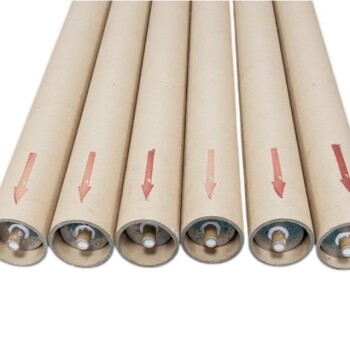
Bomb Type Probe for Steelmaking Production Process
Bomb-type probe for precise steelmaking control: measures carbon content (±0.02%) and temperature (20℃ accuracy) in 4-8s. Boost efficiency now!