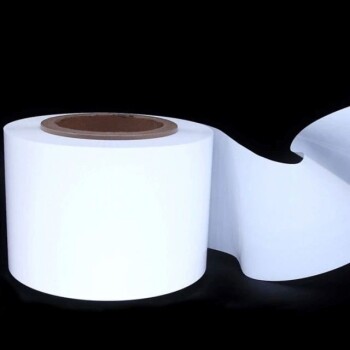
Glass fiber separators are essential for zinc-ion hybrid capacitors (ZHSCs) because they combine extreme electrolyte retention with superior structural integrity. These separators facilitate rapid zinc-ion transport through their high porosity and excellent wettability while providing the physical insulation necessary to prevent internal short circuits. This unique combination allows ZHSCs to achieve high power densities and maintain stability even under high active material loading conditions.
The core value of glass fiber separators lies in their dual role as a high-capacity electrolyte reservoir and a robust physical barrier. By ensuring low internal resistance and preventing dendrite-induced failures, they are the primary enabler of high-performance, long-cycle-life zinc-ion storage devices.
Optimizing Ion Transport Through Microstructure
High Porosity and Electrolyte Retention
Glass fiber (GF) separators feature a loose, highly porous structure that allows them to absorb and hold significant volumes of liquid or gel electrolytes. This reservoir effect ensures that a constant supply of ions is available at the electrode interface, preventing electrolyte depletion during high-rate discharges.
Superior Wettability for Rapid Migration
The inherent hydrophilicity of glass fiber ensures that aqueous electrolytes, such as $ZnSO_4$, penetrate the entire separator thickness almost instantaneously. This excellent wettability facilitates rapid zinc-ion shuttling between the anode and cathode, which is critical for achieving high power density.
Reduction of Internal Resistance
By maintaining a continuous and uniform ion diffusion path, glass fiber separators significantly reduce the internal resistance (ESR) of the capacitor. This allows for more efficient energy transfer and minimizes heat generation during rapid charge-discharge cycles.
Ensuring Structural and Chemical Reliability
Prevention of Electrical Short Circuits
The primary mechanical function of the separator is to act as an electronic insulation layer between the zinc anode and the carbon-based cathode. Its physical presence prevents direct contact between the electrodes, which would lead to immediate device failure and potential safety hazards.
Mechanical Strength and Dendrite Mitigation
Zinc-ion systems are often subject to the growth of zinc dendrites during cycling, which can pierce softer separators. The mechanical strength of glass fiber provides a robust defense against these stresses, regulating diffusion paths and helping to inhibit dendrite penetration to extend battery life.
Chemical Stability in Aqueous Media
ZHSCs typically utilize corrosive or acidic aqueous environments that can degrade standard polymer membranes. Glass fiber is chosen for its chemical inertness, ensuring the separator does not decompose or react with the electrolyte over thousands of cycles.
Understanding Technical Trade-offs
Thickness vs. Volumetric Energy Density
Glass fiber separators are generally thicker than the microporous polymer membranes used in lithium-ion batteries. While this thickness improves electrolyte storage and short-circuit protection, it can increase the overall volume of the device, slightly lowering the volumetric energy density.
Material Fragility During Assembly
Despite their high compressive strength, glass fiber mats can be more brittle than flexible plastic films. This requires specialized handling during the manufacturing and assembly process to prevent tearing or the creation of micro-cracks that could compromise the cell's integrity.
Optimizing Separator Selection for Your Goal
When integrating glass fiber separators into your ZHSC assembly, consider the following strategic priorities:
- If your primary focus is High Power Output: Prioritize glass fiber membranes with the highest possible porosity and lowest thickness to minimize the ion migration path.
- If your primary focus is Long-Term Cycle Stability: Select thicker glass fiber mats with reinforced mechanical properties to better resist zinc dendrite growth over time.
- If your primary focus is High Active Material Loading: Use glass fiber separators with high electrolyte absorption capacities to ensure sufficient ionic contact for thick electrode frameworks.
The glass fiber separator remains the cornerstone of ZHSC design, providing the essential balance of ionic conductivity and physical protection required for reliable energy storage.
Summary Table:
| Feature | Benefit | Impact on ZHSC Performance |
|---|---|---|
| High Porosity | Exceptional electrolyte retention | Ensures sustained ion supply for high-rate discharge |
| Hydrophilicity | Rapid aqueous electrolyte wetting | Minimizes internal resistance (ESR) for high power |
| Mechanical Strength | Effective dendrite mitigation | Prevents internal short circuits and extends cycle life |
| Chemical Inertness | Stability in aqueous/acidic media | Maintains structural integrity over thousands of cycles |
| Electronic Insulation | Reliable physical barrier | Prevents direct contact between anode and cathode |
Optimize Your Battery Research with KINTEK
Precision in material selection is the key to high-performance energy storage. KINTEK provides a comprehensive suite of laboratory solutions specifically designed for advanced battery and capacitor research. From high-quality glass fiber separators and electrolytic cells to specialized battery research tools, our products ensure your ZHSC assemblies achieve maximum power density and longevity.
Whether you are scaling up active material loading or refining electrode frameworks, our portfolio—including high-purity ceramics, crucibles, and PTFE consumables—is engineered to meet the rigorous demands of aqueous chemistry.
Ready to enhance your lab's efficiency and results? Contact KINTEK experts today to find the perfect components for your energy storage projects.
References
- Yanzhen Li, Gongyuan Zhao. Boosting the Capacitance of Aqueous Zinc-Ion Hybrid Capacitors by Engineering Hierarchical Porous Carbon Architecture. DOI: 10.3390/batteries9080429
This article is also based on technical information from Kintek Solution Knowledge Base .
Related Products
- Polyethylene Separator for Lithium Battery
- Ultra-High Vacuum Flange Aviation Plug Glass Sintered Airtight Circular Connector for KF ISO CF
People Also Ask
- What role do high-performance battery separators play in RT Na-S batteries? Enhancing Stability and Cycle Life
- How to tell if a lithium-ion battery is bad? Spot the critical signs of failure before it's too late.
- Is there a way to test lithium batteries? Understand Voltage vs. True Health
- How to check if a lithium battery is good? Safely Test Voltage, Capacity & Internal Resistance
- How to check the power of a lithium-ion battery? Master the difference between charge level and battery health.