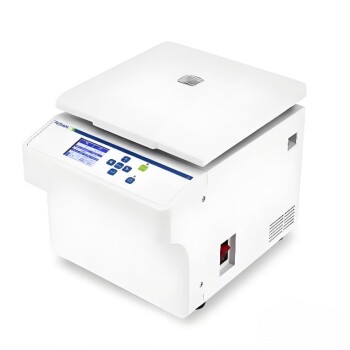
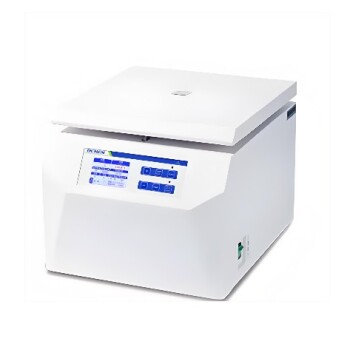
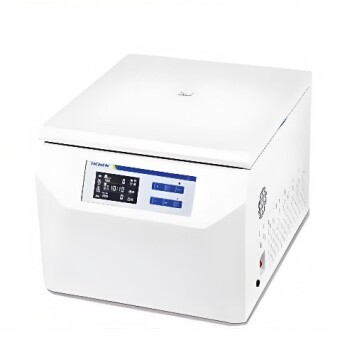
A precision centrifuge serves as the fundamental mechanism for ensuring data integrity during the analysis of treated wastewater. By applying high-speed centrifugal force, it rapidly separates metal hydroxide sludge and suspended particles from the liquid phase following electrocoagulation treatment.
Solid-liquid separation is not merely a cleaning step; it is a mandatory prerequisite for analytical accuracy. Without effectively removing suspended solids, particles will physically and optically interfere with testing, rendering data on Chemical Oxygen Demand (COD) and Total Organic Carbon (TOC) unreliable.
The Role of Separation in Electrocoagulation
Managing Treatment Byproducts
The electrocoagulation process inherently generates metal hydroxide sludge and other suspended particles. These byproducts are suspended in the treated water and must be physically removed before any analysis can occur.
Rapid Clarification
A precision centrifuge uses high-speed force to isolate these solids from the water. This creates a clear liquid supernatant that represents the true chemical state of the treated water, distinct from the solid waste generated by the treatment itself.
Ensuring Accuracy in Analytical Metrics
Protecting Optical Measurements
Techniques such as spectral analysis rely on the interaction between light and the liquid sample.
If suspended solids remain in the sample, they block or scatter light. This interference distorts the reading, making it impossible to obtain an accurate spectral profile of the wastewater.
Enabling Precise Titration
The measurement of Chemical Oxygen Demand (COD) and Total Organic Carbon (TOC) involves sensitive chemical titrations.
Suspended particles introduced during electrocoagulation can react unpredictably or obscure the titration endpoint. Centrifugation eliminates this variable, ensuring that measurements reflect the dissolved contaminants rather than the suspended sludge.
The Risks of Inadequate Preparation
Measurement Interference
It is critical to understand that the analyzer cannot distinguish between target contaminants and suspended sludge.
If the separation phase is skipped or performed poorly, the resulting data will be skewed. This leads to false readings regarding the efficiency of the wastewater treatment process.
False Positives
Solids that interfere with chemical titration can artificially inflate or deflate COD and TOC values. This may cause operators to misjudge compliance with environmental discharge standards.
Making the Right Choice for Your Goal
To ensure your wastewater analysis yields actionable data, consider the specific requirements of your testing method:
- If your primary focus is Spectral Analysis: Prioritize high-speed centrifugation to completely clear the optical path of light-scattering particles.
- If your primary focus is Chemical Quantification (COD/TOC): Use the centrifuge to strictly isolate metal hydroxide sludge that will interfere with titration accuracy.
Accurate analysis is impossible without the pristine sample preparation provided by precision centrifugation.
Summary Table:
| Analytical Challenge | Role of Precision Centrifuge | Benefit to Wastewater Analysis |
|---|---|---|
| Metal Hydroxide Sludge | Rapid solid-liquid separation via high centrifugal force | Prevents interference with chemical titration endpoints |
| Suspended Particles | Efficient clarification of the liquid supernatant | Eliminates light scattering for accurate spectral profiles |
| COD/TOC Measurement | Isolates dissolved contaminants from treatment byproducts | Ensures reliable data for environmental compliance |
| Data Integrity | Removal of physical/optical obstructions | Provides a true representation of the treated water state |
Elevate Your Environmental Analysis with KINTEK Precision
Don't let suspended solids compromise your data integrity. KINTEK specializes in high-performance laboratory equipment, including precision centrifuges, crushing and milling systems, and cooling solutions designed to streamline your wastewater research. Whether you are conducting electrocoagulation studies or sensitive COD/TOC titrations, our advanced centrifugation technology ensures the pristine sample preparation required for actionable insights.
Ready to optimize your lab's efficiency and accuracy? Contact our specialists today to find the perfect solution for your research goals.
References
- Edison GilPavas, Miguel Ángel Gómez García. Efficient treatment for textile wastewater through sequential electrocoagulation, electrochemical oxidation and adsorption processes: Optimization and toxicity assessment. DOI: 10.1016/j.jelechem.2020.114578
This article is also based on technical information from Kintek Solution Knowledge Base .
Related Products
- High-Speed Desktop Centrifuge for Blood Sample Processing
- Benchtop High Speed Small Lab Centrifuge for Serum Separation and Low Temperature Dehydration
- Laboratory Benchtop High Speed Small Centrifuge for Low Temp Serum Separation Dehydration Research
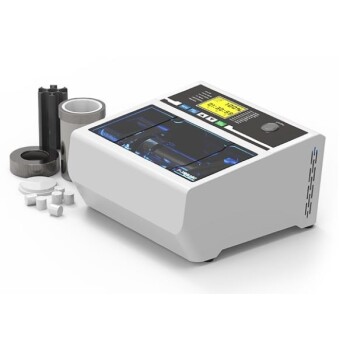
- Laboratory Micro Horizontal Jar Mill for Precision Sample Preparation in Research and Analysis
People Also Ask
- What is the primary function of a laboratory centrifuge? Master PAAMP-b-PVK Block Copolymer Purification
- What role does a Laboratory Centrifuge play in the production of succinic acid? Critical Solid-Liquid Separation Guide
- What are the uses of centrifuge in everyday life? From Dairy to Detergents, See How Separation Powers Your World
- What are the types of centrifuges and their applications? Find the Right Tool for Your Separation Needs
- How is a benchtop laboratory centrifuge used in the desorption and regeneration of composite adsorbent beads?