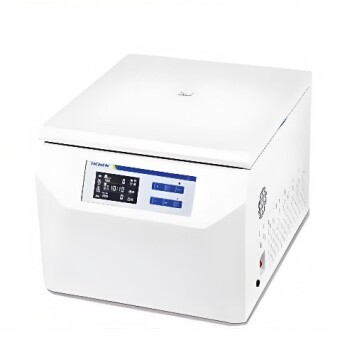
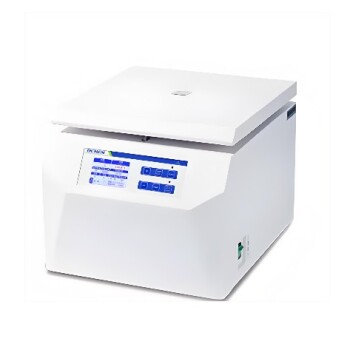
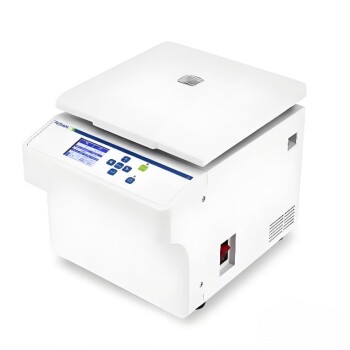
The primary function of a laboratory centrifuge during the processing of PAAMP-b-PVK block copolymers is to drive the physical separation of the solid polymer precipitate from the liquid reaction mixture. By operating at a speed of 6000 rpm, the device utilizes centrifugal force to isolate the copolymer from the supernatant, effectively stripping away unreacted reagents and reaction byproducts.
Centrifugation acts as the decisive purification mechanism, converting a crude reaction mixture into a high-purity solid precipitate required for the successful synthesis of brush-like polyaniline.
The Mechanics of Separation
Utilizing Centrifugal Force
The process relies on high-speed rotation to generate significant G-force.
In this specific protocol, the centrifuge operates at 6000 rpm. This speed is calibrated to force the denser polymer particles to the bottom of the vessel while keeping the liquid phase distinct.
Phase Isolation
The fundamental goal is phase separation.
The centrifuge forces the PAAMP-b-PVK block copolymers out of suspension, creating a compact pellet (precipitate). Simultaneously, the liquid solvent (supernatant)—which holds the contaminants—is clarified, allowing it to be easily decanted or removed.
Ensuring Material Purity
Removal of Contaminants
High-purity outcomes depend on the removal of specific chemical interferences.
During the spin cycle, reaction byproducts and unreacted reagents remain dissolved in the supernatant. Centrifugation ensures these impurities are physically segregated from the solid product, preventing them from contaminating the final material.
Enabling Downstream Applications
The purification process is not an end in itself; it is a preparation step.
The recovered precipitate is processed into a high-purity dry powder. This level of purity is strictly necessary to use the copolymer in the subsequent interfacial oxidative polymerization of brush-like polyaniline.
Understanding the Process Variables
The Role of Speed and Time
Optimal separation is a function of rotation speed and duration.
If the rpm is too low, fine polymer particles may remain suspended in the supernatant, leading to yield loss. Conversely, adequate speed ensures that even smaller particulates are captured in the precipitate.
The Necessity of Washing Cycles
While the primary reference focuses on separation, the centrifuge is often used in iterative washing steps.
Similar to protocols used for other materials (such as MgAl-LDH), the centrifuge allows for the removal of residual impurity ions by spinning down the solid, removing the wash liquid, and resuspending the solid in fresh solvent. This repetition ensures deep purification of the particle surfaces.
Making the Right Choice for Your Goal
To ensure the integrity of your PAAMP-b-PVK block copolymers, apply these principles:
- If your primary focus is Maximum Purity: Ensure the centrifuge operates at the recommended 6000 rpm to fully sediment the polymer and maximize the removal of impurity-laden supernatant.
- If your primary focus is Process Efficiency: Monitor the clarity of the supernatant after centrifugation; a clear liquid indicates that the separation of byproducts is effectively complete.
By strictly adhering to these separation parameters, you ensure the isolation of a clean, high-performance precursor ready for advanced polymerization.
Summary Table:
| Process Parameter | Specification | Purpose in Purification |
|---|---|---|
| Rotation Speed | 6000 rpm | Generate G-force to sediment dense polymer particles |
| Separation Goal | Phase Isolation | Distinguish solid precipitate from liquid supernatant |
| Impurity Removal | Decanting | Eliminate unreacted reagents and reaction byproducts |
| Final Product | High-Purity Powder | Preparation for interfacial oxidative polymerization |
Elevate Your Polymer Research with KINTEK Precision
Achieving the highest purity in PAAMP-b-PVK block copolymers requires reliable, high-performance separation. KINTEK specializes in advanced laboratory equipment designed for the most demanding research environments.
Whether you are performing complex polymer synthesis or routine material washing, our comprehensive range of products supports your workflow:
- Centrifugation & Separation: Precision tools to ensure maximum yield and contaminant removal.
- Thermal Processing: High-temperature muffle, vacuum, and tube furnaces for material curing.
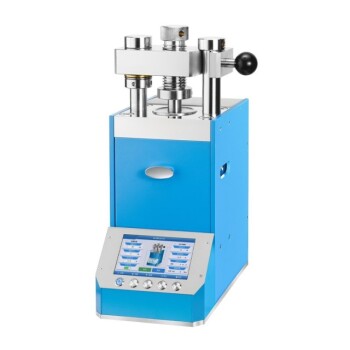
- Sample Preparation: Crushing, milling, and hydraulic presses for creating consistent dry powders.
- Advanced Reactors: High-temperature high-pressure reactors and autoclaves for sophisticated polymerization.
Ready to optimize your lab’s efficiency and purity? Contact KINTEK today to discover how our high-quality consumables and specialized equipment can empower your next breakthrough.
References
- Alain Salvador Conejo-Dávila, Erasto Armando Zaragoza‐Contreras. Brush-like Polyaniline with Optical and Electroactive Properties at Neutral pH and High Temperature. DOI: 10.3390/ijms23158085
This article is also based on technical information from Kintek Solution Knowledge Base .
Related Products
- Laboratory Benchtop High Speed Small Centrifuge for Low Temp Serum Separation Dehydration Research
- Benchtop High Speed Small Lab Centrifuge for Serum Separation and Low Temperature Dehydration
- High-Speed Desktop Centrifuge for Blood Sample Processing
- Circulating Water Vacuum Pump for Laboratory and Industrial Use
- Laboratory Test Sieves and Sieving Machines
People Also Ask
- How is a benchtop laboratory centrifuge used in the desorption and regeneration of composite adsorbent beads?
- What role does a Laboratory Centrifuge play in the production of succinic acid? Critical Solid-Liquid Separation Guide
- What does the centrifuge do to the solution? Separate Components with High-Speed Centrifugal Force
- How does a centrifuge separate particles? Master the Science of High-Speed Separation
- How does the centrifuge process work? Unlock Rapid Separation for Your Lab