
Automatic Heated Lab Press
Automatic Heated Hydraulic Press Machine with Heated Plates for Laboratory Hot Press 25T 30T 50T
Item Number : PCAH
Price varies based on specs and customizations
- Working pressure
- 0-50 T
- Heating control
- Digital programmed control
- Heating temperature
- <500 ℃
- Cooling method
- Chiller circulator

Shipping:
Contact us to get shipping details Enjoy On-time Dispatch Guarantee.
Why Choose Us
Easy ordering process, quality products, and dedicated support for your business success.
Applications
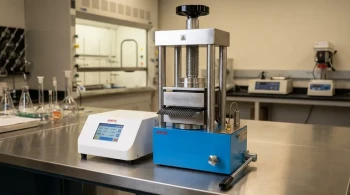
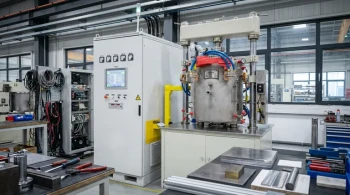
Automatic lab heat press is widely used in material researching labs,pharmacy,catalytic reaction,ceramics, electronic industries, it is one high efficient equipment for the sample preparing, due to its small footprint, it easy to carry and move, can work inside the vacuum glove box for processing under vacuum environment. Hydraulic press can also process hot press function with heating plates, which can serve the particular material processing.
After being heated and pressurized, the chemical stability of the sample particles or powder is improved, which is not easy to be broken and is conducive to cutting and preservation.
Feature
Automatic lab hot press can automatically carry out pressurization, pressure holding and pressure relief procedures, with precise control, suitable for sample preparation with high pressure control requirements. can be heated up to 500°C.
- Fast heating, heating plate can be single side or double side
- Automatically carry out pressurization, pressure holding and pressure relief procedures
- Water circulating fast cooling to protect the press
- Max. Heating temperature is up to 300 ℃
- Small footprint, light weight, easy to carry and move, nice fitting vacuum glove box
Detail & Parts


- Automatic: Fully automatic desktop tablet press, programmable pressurization, easy operation and other advantages, suitable for high-end laboratories.
- Efficiency: Simplify the loading/ejection process. Shorten operating time and improve work efficiency
- Display: LCD screen display, the operation is more intuitive and the display is clearer. Convenient for users to operate.


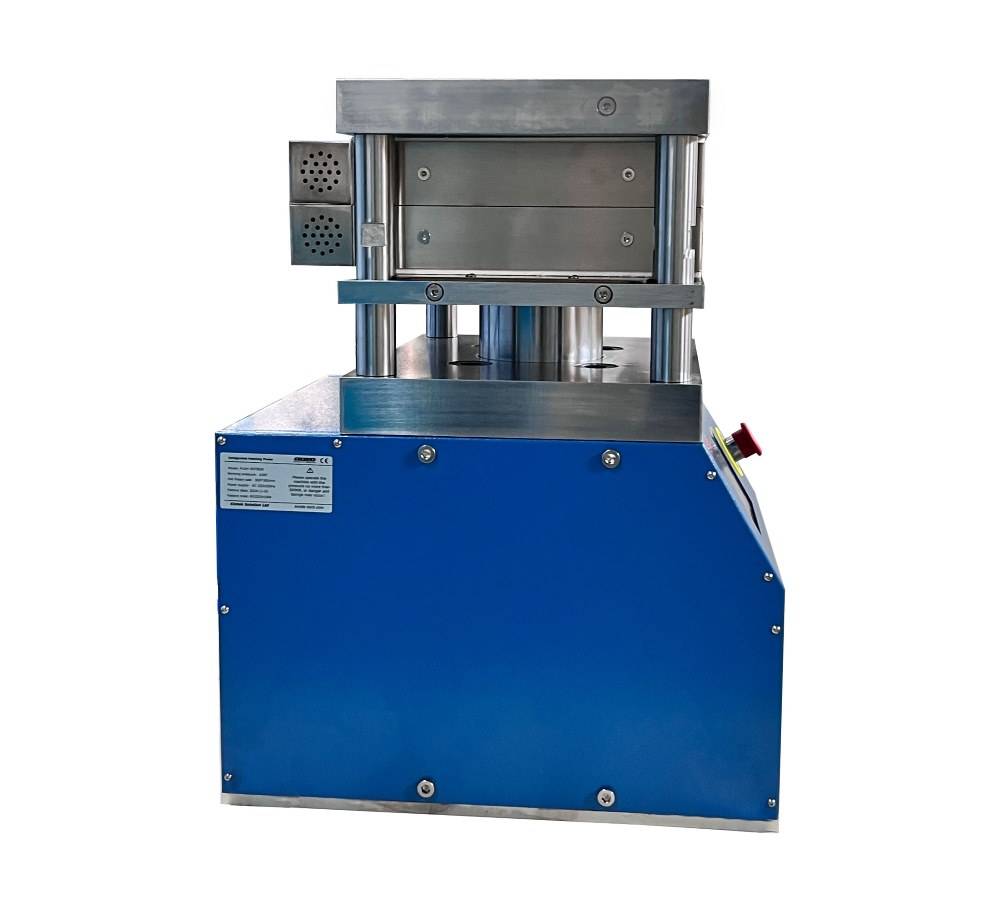

- When the temperature of the heating plate is air-cooled below 300℃, we can quickly cool the heating plate to room temperature through the water cooling cycle
- When the temperature of the heating plate is higher than 300℃, we need to pass water to the heat insulation plate to protect the temperature of the whole machine from rising.
Advantages
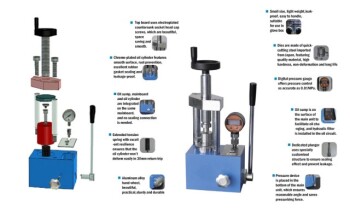
- The upper plate adopts electroplated countersunk head hexagonal screws, beautiful and space-saving
- Chrome-plated cylinder, smooth surface, no rust, good sealing rubber ring, no oil leakage
- One-piece main board structure, oil pool, main board, oil cylinder in a body, no seal connection
- Extended pulling spring, good rebound effect, not easy to deformation, can achieve the cylinder 30mm return without deformation
- All aluminum alloy hand wheel, beautiful, practical, not easy to break
- Small size, light weight, no oil leakage, can be used in the glove box
- Mold using Japanese high-speed steel, good material, high hardness, no deformation, long service life
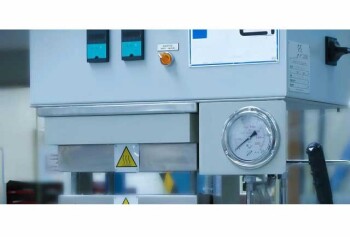
- Digital display pressure gauge, more accurate pressure control, pressure display accuracy of 0.01MPa
- Oil pool outside the host, easy to replace the oil, and the oil circuit increased the hydraulic oil filtration device
- Special plunger, using special custom sealing structure, excellent sealing effect
- Pressurizing device, placed in the lowermost corner of the mainframe, the angle is reasonable, pressurizing force does not tilt back
Technical specifications
| Instrument Model | PCAH-25T1818/1818G | PCAH-25T2020/2020G | PCAH-30T3030/3030G | PCAH-40T4040/4040G |
|---|---|---|---|---|
| Pressure Range | 0-25.0 tons | 0-25.0 tons | 0-30.0 tons | 0-40.0 tons |
| Pressurization Process | Program pressurization - Program holding - Timed pressure relief | Program pressurization - Program holding - Timed pressure relief | Program pressurization - Program holding - Timed pressure relief | Program pressurization - Program holding - Timed pressure relief |
| Mold Heating Temperature | Room temperature-300.0℃/500.0℃ | Room temperature-300.0℃/500.0℃ | Room temperature-300.0℃/500.0℃ | Room temperature-300.0℃ |
| Insulation Method | lmported insulation board | lmported insulation board | Imported insulation board | Imported insulation board |
| Cooling Method | Quick cooling with water cooling [optional water cooling machine] | Quick cooling with water cooling [optional water cooling machine] | Quick cooling with water cooling [optional water cooling machine] | Quick cooling with water cooling [optional water cooling machine] |
| Hot platen size | 180×180mm(M×N) | 200×200mm(M×N) | 300×300mm(M×N) | 400X400mm(M×N) |
| Dimensions | 300×390×560mm(L×W×H) | 300×390×560mm(L×W×H) | 400×490×580mm(L×W×H) | 500×550×620mm(L×W×H) |
| Powersupply | 1700 W (220V/110V can be customized) | 1700 W(220V/110V can be customized) | 3500 W(220V/110V can be customized) | 5500 W (220V/110V can be customized) |
| Weight | 140 Kg | 140 Kg | 280 Kg | 480 Kg |

Operating steps
How to replace accessories and precautions

Step 1: Place the sample into the heating mold.

Step 2: Press the "Pre pressing" button to clamp the sample between the upper and lower heating plates.

Step 3: Press the "Settings" button to enter the settings menu.

Step 4: Press the "+-" button to set the temperature of the heating plate.

Step 5: Press the "+-" button to set the pressure applied to the sample.

Step 6:Return to the operation menu, press the heating button on the upper and lower boards to start heating them.

Step 7: After the temperature reaches the set temperature, press the pressurization button to start pressurizing the sample at a fixed time.

Step 8: Remove the sample from the mold.
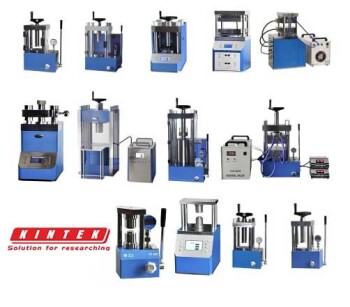
Full range of lab press types
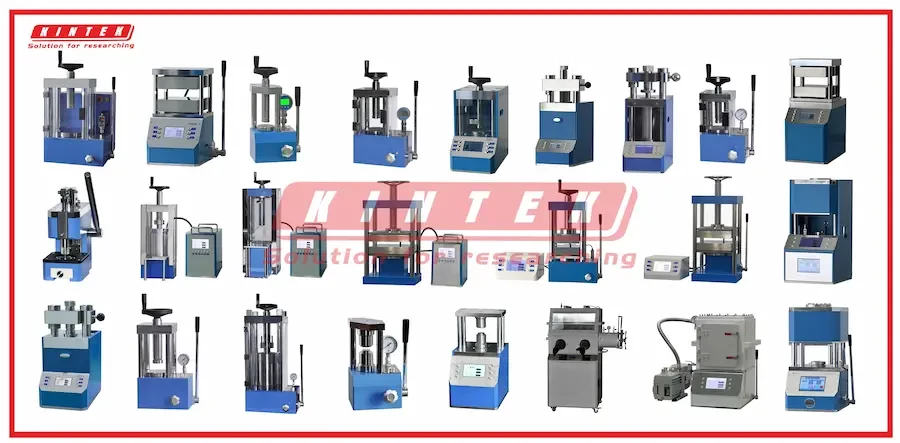
Click to view our full range of lab press products.
Any question? Our experts have helped many laboratories choose their lab press, contact us now!
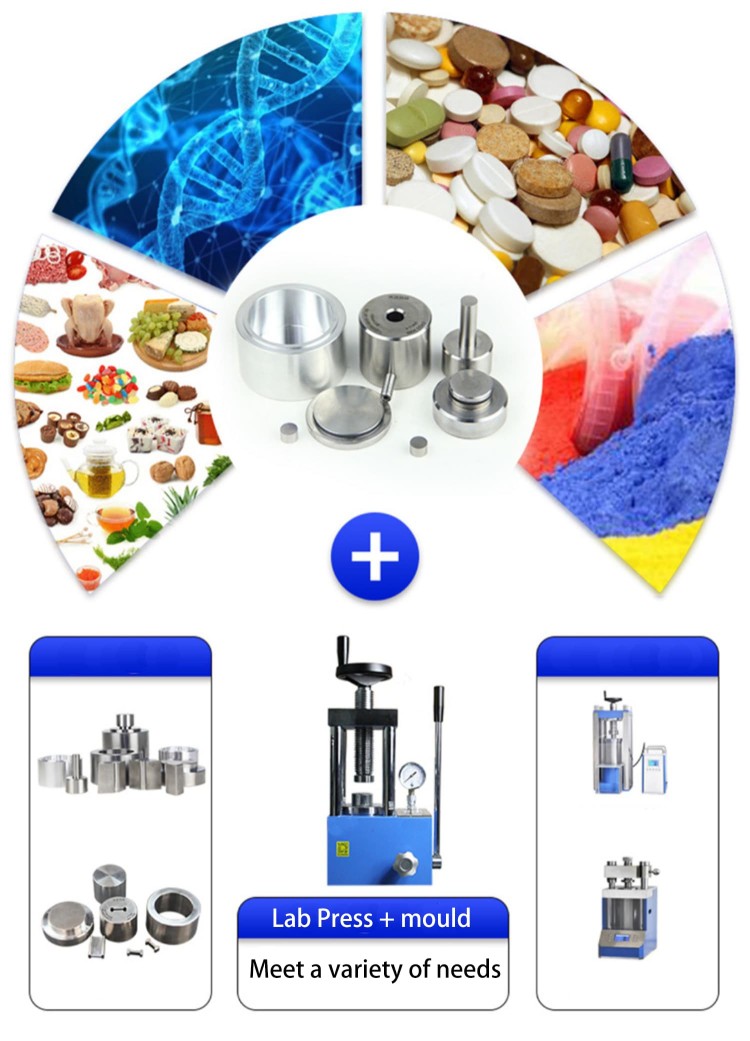
Full range of types of laboratory press molds
We have a full range of molds for you to choose from, and the molds fit the body perfectly.
If you need molds with special shapes, we can also customize them for you.
Warnings
Operator safety is the top important issue! Please operate the equipment with cautions. Working with inflammable& explosive or toxic gases is very dangerous, operators must take all necessary precautions before starting the equipment. Working with positive pressure inside the reactors or chambers is dangerous, operator must fellow the safety procedures strictly. Extra caution must also be taken when operating with air-reactive materials, especially under vacuum. A leak can draw air into the apparatus and cause a violent reaction to occur.
Designed for You
KinTek provide deep custom made service and equipment to worldwide customers, our specialized teamwork and rich experienced engineers are capable to undertake the custom tailoring hardware and software equipment requirements, and help our customer to build up the exclusive and personalized equipment and solution!
Would you please drop your ideas to us, our engineers are ready for you now!
Trusted by Industry Leaders

FAQ
What Is A Lab Press?
What Are The Advantages Of Using A Hydraulically Heated Laboratory Press?
What Are The Applications Of Pellet Presses?
What Is The Purpose Of A Hydraulic Press In Lab?
What Does A Hydraulic Lab Heat Press Do?
How Does A Pellet Press Work?
What Are Different Type Of Lab Presses?
What Is KBr Used For?
What Types Of Samples Or Materials Can Be Processed In A Hydraulically Heated Laboratory Press?
What Are The Benefits Of Using A Pellet Press?
What Is The KBr Pellet Method?
How Does A Hydraulically Heated Laboratory Press Work?
What Factors Should Be Considered When Selecting A Pellet Press?
Why KBr Is Used For Pellet?
How Can The Performance Of A Hydraulically Heated Laboratory Press Be Optimized?
How To Make KBr Pellets For FTIR?
REQUEST A QUOTE
Our professional team will reply to you within one business day. Please feel free to contact us!
Related Products

Automatic Heated Hydraulic Press Machine with Heated Plates for Laboratory Hot Press
The Automatic High Temperature Heat Press is a sophisticated hydraulic hot press designed for efficient temperature control and product quality processing.

30T 40T Split Automatic Heated Hydraulic Press Machine with Heated Plates for Laboratory Hot Press
Discover our split automatic heated lab press 30T/40T for precise sample preparation in material research, pharmacy, ceramics, and electronics industries. With a small footprint and heating up to 300°C, it's perfect for processing under vacuum environment.

Automatic High Temperature Heated Hydraulic Press Machine with Heated Plates for Lab
The High Temperature Hot Press is a machine specifically designed for pressing, sintering and processing materials in a high temperature environment. It is capable of operating in the range of hundreds of degrees Celsius to thousands of degrees Celsius for a variety of high temperature process requirements.

Manual Heated Hydraulic Press Machine with Heated Plates for Laboratory Hot Press
The Manual Heat Press is a versatile piece of equipment suitable for a variety of applications, operated by a manual hydraulic system that applies controlled pressure and heat to the material placed on the piston.

Manual High Temperature Heated Hydraulic Press Machine with Heated Plates for Lab
The High Temperature Hot Press is a machine specifically designed for pressing, sintering and processing materials in a high temperature environment. It is capable of operating in the range of hundreds of degrees Celsius to thousands of degrees Celsius for a variety of high temperature process requirements.

Heated Hydraulic Press Machine with Integrated Manual Heated Plates for Lab Use
Efficiently process heat-pressing samples with our Integrated Manual Heated Lab Press. With a heating range up to 500°C, it's perfect for various industries.

Heated Hydraulic Press Machine with Heated Plates Split Manual Laboratory Hot Press
Efficiently prepare your samples with our Split Manual Heated Lab Press. With a pressure range up to 40T and heating plates up to 300°C, it's perfect for various industries.

24T 30T 60T Heated Hydraulic Press Machine with Heated Plates for Laboratory Hot Press
Looking for a reliable Hydraulic Heated Lab Press? Our 24T / 40T model is perfect for material research labs, pharmacy, ceramics, and more. With a small footprint and the ability to work inside a vacuum glove box, it's the efficient and versatile solution for your sample preparation needs.

Heated Hydraulic Press Machine with Heated Plates for Vacuum Box Laboratory Hot Press
Enhance your lab's precision with our lab press for vacuum box. Press pills and powders with ease and precision in a vacuum environment, reducing oxidation and improving consistency. Compact and easy to use with a digital pressure gauge.

Electric Heated Hydraulic Vacuum Heat Press for Lab
The Electric Vacuum Heat Press is a specialized heat press equipment that operates in a vacuum environment, utilizing advanced infrared heating and precise temperature control for high quality, rugged and reliable performance.

Heated Hydraulic Press Machine with Heated Plates for Vacuum Box Laboratory Hot Press
The lab press for vacuum box is a specialized piece of equipment designed for laboratory use. Its main purpose is to press pills and powders according to specific requirements.

Automatic Laboratory Hydraulic Press for XRF & KBR Pellet Press
Fast and easy xrf sample pellet preparation with KinTek Automatic Lab Pellet Press. Versatile and accurate results for X-ray fluorescence analysis.
Automatic Laboratory Heat Press Machine
Precision automatic heat press machines for labs—ideal for material testing, composites, and R&D. Customizable, safe, and efficient. Contact KINTEK today!

Automatic Laboratory Hydraulic Pellet Press Machine for Lab Use
Experience efficient sample preparation with our Automatic Lab Press Machine. Ideal for material research, pharmacy, ceramics, and more. Features a compact size and hydraulic press functionality with heating plates. Available in various sizes.
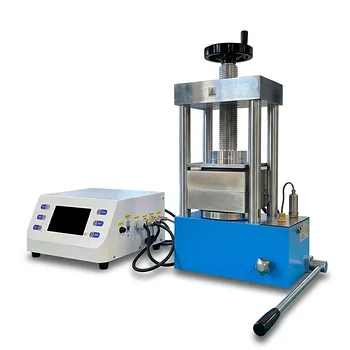
Manual Lab Heat Press
Manual hydraulic presses are mainly used in laboratories for various applications such as forging, molding, stamping, riveting and other operations. It allows the creation of complex shapes while saving material.

Ball Press Mold for Lab
Explore versatile Hydraulic Hot Press molds for precise compression molding. Ideal for creating various shapes and sizes with uniform stability.
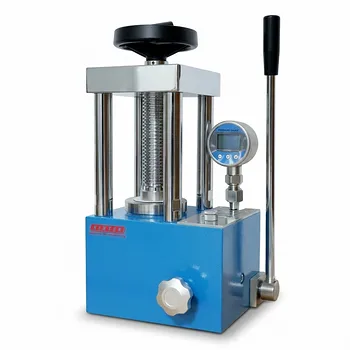
Laboratory Manual Hydraulic Pellet Press for Lab Use
Efficient sample preparation with small footprint Manual Lab Hydraulic Press. Ideal for material researching labs, pharmacy, catalytic reaction, and ceramics.

kbr pellet press 2t
Introducing the KINTEK KBR Press - a handheld laboratory hydraulic press designed for entry-level users.

Laboratory Hydraulic Pellet Press for XRF KBR FTIR Lab Applications
Efficiently prepare samples with the Electric Hydraulic Press. Compact and portable, it's perfect for labs and can work in a vacuum environment.

Laboratory Hydraulic Press Lab Pellet Press Machine for Glove Box
Controlled environment lab press machine for glove box. Specialized equipment for material pressing and shaping with high precision digital pressure gauge.
Related Articles
Why Your Composite and Polymer Parts Keep Failing: The Secret Is Simultaneous Heat and Pressure
Struggling with inconsistent composite or polymer bonding? Discover why separate heating and pressing fails and how a hot hydraulic press ensures repeatable, high-quality results.
The Physics of Flawless Materials: Deconstructing the Hydraulic Hot Press
Discover how the synergy of Pascal's Law and thermal energy in a hydraulic hot press enables precise, repeatable material bonding and forming.
Hydraulic Hot Press: Principles, Components, Features, Advantages, and Applications
An in-depth look at the hydraulic hot press, its components, features, advantages, and applications.
More Than a Squeeze: The Physics and Psychology of the Hydraulic Hot Press
An insight into the hydraulic hot press, where Pascal's Law meets thermodynamics to reshape materials. A story of force, heat, and control.
Comprehensive Guide to Hydraulic Hot Press: Function, Features and Applications
Hydraulic hot press is equipped with advanced electronic controls that allow for precise temperature selection and technical control. This enables the machine to automatically carry out processes such as stage temperature adjustment and film pressure control.
Precision Under Pressure: The Physics and Psychology of the Hydraulic Hot Press
Discover how the synergy of heat and pressure in a hydraulic hot press transforms materials, guided by the elegant physics of Pascal's Law.
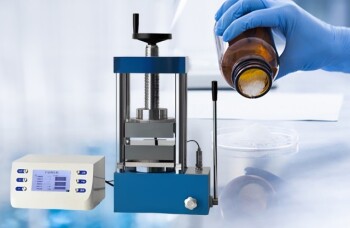
How to choose a laboratory hot press
The laboratory hot pressing machine is suitable for laboratory users who are strict about sample pressing temperature, pressure control accuracy and need a wide size mold for pressing samples. The new lab hot press of KINDLE TECH has a double-plate structure and a pressing force of 0~40 tons.
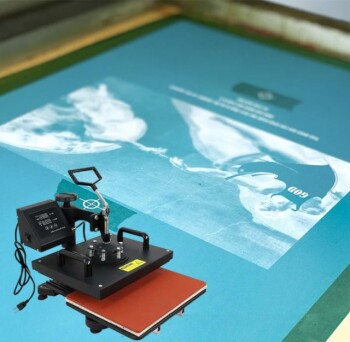
Comprehensive Guide to Heat Press Machine and Essential Supplies
Many people are familiar with using iron-on logos or graphics to customize apparel and other products. While iron-ons can be effective, using a heat press offers more consistent heat and pressure, resulting in higher-quality results. Heat presses also allow you to use transfer products that require higher temperatures and pressures than what can be achieved with an iron.
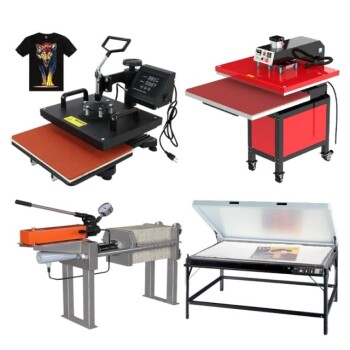
Comprehensive Guide to Heat Press Machines
A heat press is a machine designed to imprint a design or graphic on a substrate, such as a t-shirt, using heat and pressure for a specific duration. It is not limited to fabric applications; specialized heat presses can also imprint designs on mugs, plates, jigsaw puzzles, caps, and other products. Essentially, a heat press heats and presses materials, making it a valuable and versatile tool for any printing business.
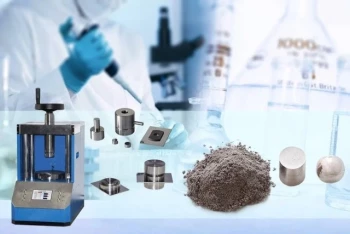
Choosing the Right Press for Your Laboratory Needs
Laboratory hydraulic presses are smaller versions of the hydraulic presses commonly used in manufacturing and industrial applications. These presses are designed to exert force and are easy to operate, offering more precision and control. In laboratory settings, hydraulic presses are used for a variety of applications that require pressure or heat.
The Unseen Physics of Perfection: Mastering Heat, Pressure, and Time
A deep dive into how hot press machines work, exploring the critical interplay of heat, pressure, and time that defines quality and prevents failure.
A Comprehensive Guide to Hot Press Machines: Functionality, Application, Features, Principles, Classification, and Technical Requirements
The hot Lab Press is a versatile and efficient tool used in material research, pharmacy, catalytic reactions, ceramics, and electronics. Its compact design allows for mobility in vacuum environments, making it ideal for research labs. Additionally, it can perform hot pressing functions, adding to its versatility in sample preparation.