The use of a benchtop ultrasonic cleaner or shaker is essential for stripping away the chemical byproducts of pyrolysis. This mechanical agitation ensures that ethanol and ultrapure water can penetrate the complex pore structure of Pickled Mustard Root Skin (PoBJ) biochar. By removing residual tars and incompletely carbonized organic matter, these tools expose the material's underlying framework for accurate scientific analysis.
Core Takeaway: Mechanical washing is the bridge between raw carbonization and a functional adsorbent. It removes soluble impurities that would otherwise clog the biochar’s pores, ensuring that subsequent experiments measure the material's true surface reactivity rather than the interference of residual contaminants.
The Necessity of Mechanical Agitation in Purification
Breaking Through Residual Tar Barriers
Pyrolysis naturally produces residual tars and heavy organic compounds that can coat the surface of the biochar. These substances are often viscous and adhere strongly to the carbon matrix, making simple rinsing ineffective.
Ultrasonic waves or consistent shaking provide the kinetic energy necessary to dislodge these tenacious layers. This allows the ethanol to dissolve the organic matter more efficiently than passive soaking.
Penetrating the Micro-Pore Network
Biochar derived from Mustard Root Skin possesses a complex, porous architecture that can trap incompletely carbonized matter. Without mechanical assistance, the surface tension of the washing solvent may prevent it from entering the smallest pores.
An ultrasonic cleaner uses cavitation bubbles to create localized pressure changes that "scrub" the interior of these pores. This ensures that the entire internal surface area—not just the outer shell—is thoroughly cleaned.
Impact on Biochar Performance and Research
Exposing Latent Active Sites
The primary goal of PoBJ biochar in a laboratory setting is often adsorption, which relies on available active sites. Residual impurities act as a physical mask, preventing target molecules from reaching these chemical bonding points.
By utilizing a shaker or ultrasonic bath, you ensure these sites are completely unoccupied. This allows the researcher to observe the biochar's maximum potential for chemical interaction.
Ensuring Data Integrity and Reproducibility
Incomplete washing introduces variables that can skew the results of adsorption experiments. If soluble impurities remain, they may leach back into the testing solution or provide false readings of surface area.
Standardizing the washing process with mechanical equipment ensures a consistent baseline. This makes the resulting data on surface reactivity both accurate and reproducible across different batches.
Understanding the Trade-offs and Pitfalls
Potential for Physical Degradation
While ultrasonic cleaning is highly effective, it is also aggressive. Excessive sonication can lead to the physical fragmentation of the biochar particles, potentially altering the particle size distribution unintendedly.
Researchers must balance the intensity of the cleaning with the structural integrity of the PoBJ biochar. A shaker is often a gentler alternative if the material is particularly brittle.
Solvent Efficiency vs. Energy Consumption
Using high-end equipment for washing increases the energy footprint of the material preparation. However, the trade-off is a significant reduction in the volume of ethanol and time required to reach a state of purity.
Relying on passive washing usually requires more solvent and significantly longer durations to achieve a fraction of the cleanliness provided by an ultrasonic cleaner.
How to Apply This to Your Project
When preparing PoBJ biochar, your choice of equipment should align with your specific research objectives and the physical characteristics of your sample.
- If your primary focus is maximum surface area exposure: Utilize an ultrasonic cleaner at a medium frequency to ensure deep penetration of the micropores.
- If your primary focus is maintaining particle size consistency: Opt for a benchtop shaker at a high RPM to provide agitation without the structural stress of cavitation.
- If your primary focus is removing heavy tar residues: Use a heated ultrasonic bath with ethanol to increase the solubility and removal rate of organic contaminants.
Thorough mechanical washing transforms raw biochar from a crude byproduct into a precision-engineered tool for advanced adsorption studies.
Summary Table:
| Washing Method | Key Mechanism | Best Used For | Primary Benefit |
|---|---|---|---|
| Ultrasonic Cleaner | Cavitation Bubbles | Deep pore cleaning & heavy tar removal | Maximum surface area exposure |
| Benchtop Shaker | Kinetic Agitation | Maintaining structural integrity | Particle size consistency |
| Ethanol Solvent | Chemical Dissolution | Dissolving organic byproducts | High-purity carbon matrix |
Precision Tools for Superior Biochar Research
Unlock the full potential of your carbon materials with KINTEK’s professional-grade laboratory equipment. From high-performance benchtop ultrasonic cleaners and shakers for meticulous purification to a comprehensive range of high-temperature furnaces (muffle, tube, vacuum) for precise pyrolysis, we provide the tools necessary for reproducible scientific excellence.
Whether you are focusing on adsorption studies or material synthesis, our portfolio—including crushing systems, hydraulic presses, and high-pressure reactors—is designed to meet the rigorous demands of modern research.
Ready to enhance your lab's efficiency? Contact KINTEK today for a tailored equipment consultation!
References
- Tao-Tao Shi, Jin‐Gang Yu. Efficient and Selective Removal of Organic Cationic Dyes by Peel of Brassica juncea Coss. var. gemmifera Lee et Lin-Based Biochar. DOI: 10.3390/molecules28083353
This article is also based on technical information from Kintek Solution Knowledge Base .
Related Products
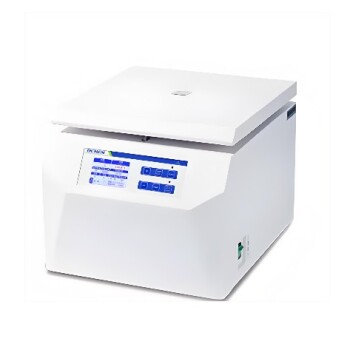
- Benchtop High Speed Small Lab Centrifuge for Serum Separation and Low Temperature Dehydration
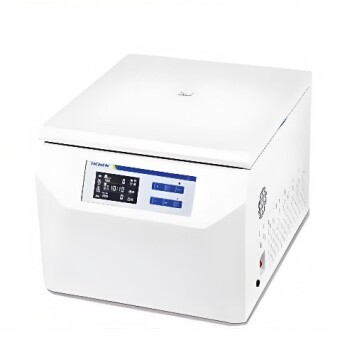
- Laboratory Benchtop High Speed Small Centrifuge for Low Temp Serum Separation Dehydration Research
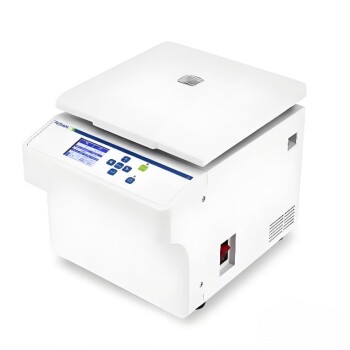
- High-Speed Desktop Centrifuge for Blood Sample Processing
People Also Ask
- How is a benchtop laboratory centrifuge used in the desorption and regeneration of composite adsorbent beads?
- What is the primary function of a laboratory centrifuge? Master PAAMP-b-PVK Block Copolymer Purification
- What role does a Laboratory Centrifuge play in the production of succinic acid? Critical Solid-Liquid Separation Guide
- What are the advantages and disadvantages of a centrifuge? Weighing Speed Against Cost and Risk
- How does a centrifuge work and for what purpose? Unlock the Power of Rapid Sample Separation