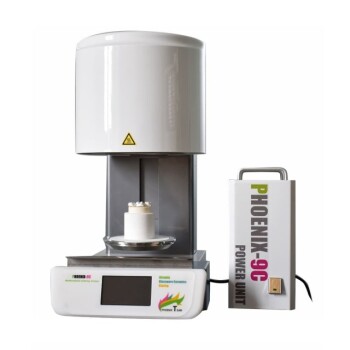
Precision ovens act as the catalyst for structural consolidation in Cf-MWCNT/SiC composite manufacturing. During the hydraulic impregnation and curing stage, these ovens provide a stable 130°C environment for approximately 6 hours to induce the thermal curing of phenolic resin. This critical step transforms discrete fabric layers into a rigid preform, providing the essential structural foundation for subsequent high-temperature Precursor Infiltration and Pyrolysis (PIP) cycles.
The precision oven bridges the gap between liquid impregnation and solid-state processing by ensuring uniform resin cross-linking. This stage is vital for establishing a stable physical matrix that holds carbon fibers and nanotubes in place before the composite undergoes extreme thermal transformation.
Establishing the Structural Preform
Inducing Phenolic Resin Cross-Linking
The primary role of the oven is to maintain a constant 130°C thermal field to trigger the chemical cross-linking of the phenolic resin. This duration—typically 6 hours—allows the polymer chains to form a dense, three-dimensional network throughout the fabric.
Transforming Discrete Layers into a Unit
Before curing, the composite consists of individual carbon fiber layers impregnated with resin and MWCNTs. The curing furnace consolidates these layers into a singular "preform" with initial structural strength, making it durable enough for handling and further processing.
Creating the Foundation for PIP
The structural integrity gained in the oven is a prerequisite for Precursor Infiltration and Pyrolysis (PIP). Without this initial thermal stabilization, the composite would lack the porosity control and shape retention required to withstand the high-temperature cycles that follow.
Maximizing Reinforcement and Quality
Enhancing Interfacial Bonding with MWCNTs
For nanocomposites, precision is necessary to ensure that the resin forms a strong interfacial bond with the multi-walled carbon nanotubes (MWCNTs). Accurate temperature control facilitates the interaction between the matrix and the nano-fillers, which maximizes the overall reinforcement effect.
Eliminating Micropores and Defects
A uniform thermal environment ensures that the curing agent reacts consistently throughout the material’s thickness. This uniformity is essential to eliminate micropores and internal defects that could otherwise compromise the final density and hardness of the SiC composite.
Mitigation of Thermal Stress
Controlled heating and cooling gradients within the furnace prevent the formation of micro-cracks. By managing the rate of thermal expansion during the resin's transition from liquid to solid, the oven protects the delicate bond between the carbon fibers and the matrix.
Understanding the Trade-offs and Pitfalls
Thermal Gradient Imbalances
If the oven fails to maintain temperature uniformity, the outer layers of the composite may over-cure while the core remains under-cured. This imbalance leads to internal stresses and potential delamination during the subsequent pyrolysis stages.
Volatile Management
Rapid heating can cause the resin's volatile components to evaporate too quickly, leading to bubbling or "bloating" of the preform. Precision ovens must allow for a controlled ramp-up to ensure that moisture and gases are released without damaging the structural integrity of the fabric layers.
Over-Curing vs. Under-Curing
Over-curing can make the preform excessively brittle, increasing the risk of brittle fracture during machining. Conversely, under-curing results in a "rubbery" state that lacks the dimensional stability required to maintain the complex geometry of a SiC component.
How to Apply This to Your Project
Recommendations for Precision Curing
Successful composite production depends on aligning your furnace parameters with your specific material goals.
- If your primary focus is structural stability for PIP: Ensure your oven can maintain a deviation of less than ±2°C over the full 6-hour cycle to guarantee uniform resin hardening.
- If your primary focus is nano-filler integration: Utilize specific temperature gradients to encourage molecular cross-linking between the resin and the MWCNT surfaces to prevent interface slippage.
- If your primary focus is defect reduction: Implement a slow thermal ramp-up to allow for the gradual escape of volatiles, preventing the formation of internal voids or surface bubbling.
The precision oven is the unsung hero of composite manufacturing, turning a saturated fabric into a sophisticated, high-strength technical preform.
Summary Table:
| Parameter/Function | Impact on Composite Quality | Key Requirement for Success |
|---|---|---|
| Resin Cross-linking | Transforms liquid resin into a 3D polymer network | Stable 130°C environment for ~6 hours |
| Structural Consolidation | Converts discrete fabric layers into a rigid preform | Uniform thermal field to prevent delamination |
| Interfacial Bonding | Enhances bond between matrix and MWCNT fillers | Precise temperature control to maximize reinforcement |
| Volatile Management | Eliminates micropores, bubbling, and internal defects | Controlled heating ramp for gradual gas escape |
| PIP Preparation | Establishes the foundation for high-temp pyrolysis | High dimensional stability and porosity control |
Elevate Your Composite Manufacturing with KINTEK Precision
Achieving the perfect structural foundation for Cf-MWCNT/SiC composites requires more than just heat—it requires absolute thermal precision. At KINTEK, we specialize in high-performance laboratory equipment designed to meet the rigorous demands of advanced material synthesis.
Our precision curing ovens and high-temperature furnaces (including muffle, vacuum, and CVD systems) provide the ±2°C uniformity and sophisticated ramp-rate control essential for uniform resin cross-linking and defect-free volatile management. Beyond curing, KINTEK offers a comprehensive suite of tools for the entire production cycle, including hydraulic presses for pelletizing, high-pressure reactors, and crushing systems.
Ready to eliminate internal stresses and maximize the reinforcement of your preforms?
Contact KINTEK today for a customized thermal solution!
References
- Kun Luan, Jianjun Liu. Frequency Characteristics of High Strain Rate Compressions of Cf-MWCNTs/SiC Composites. DOI: 10.3390/ceramics6040122
This article is also based on technical information from Kintek Solution Knowledge Base .
Related Products
- High Temperature Muffle Oven Furnace for Laboratory Debinding and Pre Sintering
- Laboratory Scientific Electric Heating Blast Drying Oven
- Dental Porcelain Zirconia Sintering Ceramic Furnace Chairside with Transformer
- 56L Vertical Laboratory Vacuum Drying Oven
- 23L Laboratory Vacuum Drying Oven
People Also Ask
- Why is the annealing treatment in a high-temperature muffle furnace critical for the preparation of an Sb-SnO2 interlayer?
- What function does a high-temperature muffle furnace serve in Ti3AlC2 MAX phase synthesis? Master Molten Salt Diffusion
- What is the primary function of high-temperature muffle or tube furnaces for ceramic coatings? Ensure Peak Durability
- What role does a calcination furnace play in preparing hollow core-shell particles? Achieve Perfect Nano-Structures
- Why is a high-temp muffle furnace essential for ZnO-WO3 & ZnO-BiOI? Optimize Heterojunction Catalyst Performance