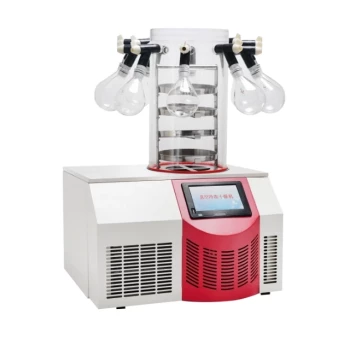
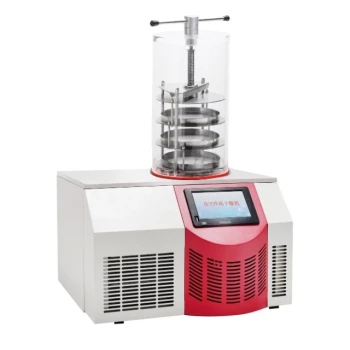
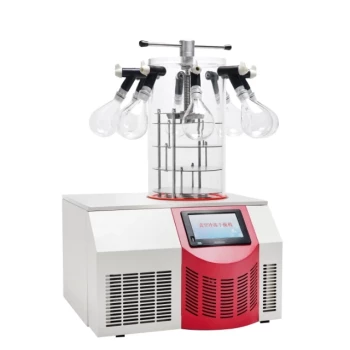
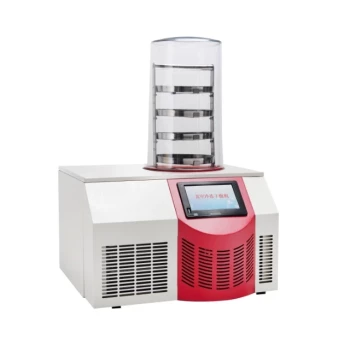
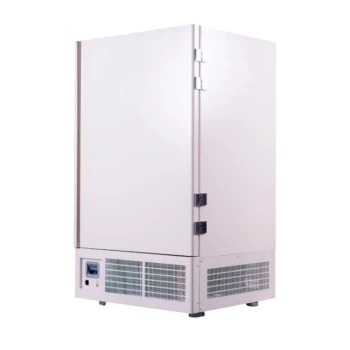
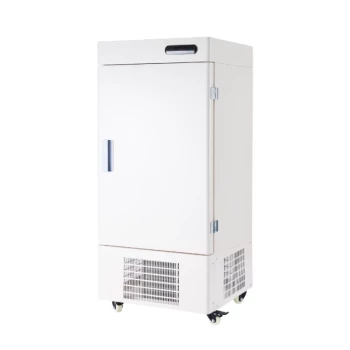
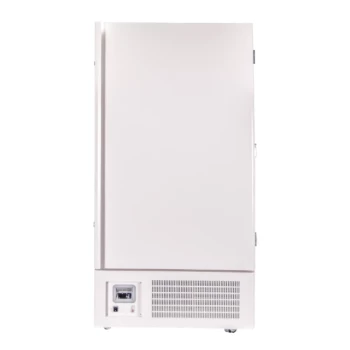
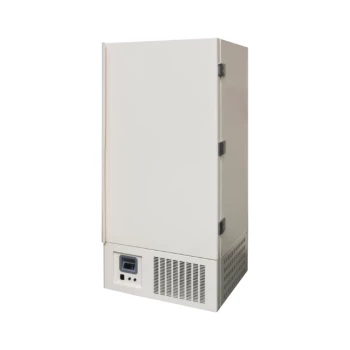
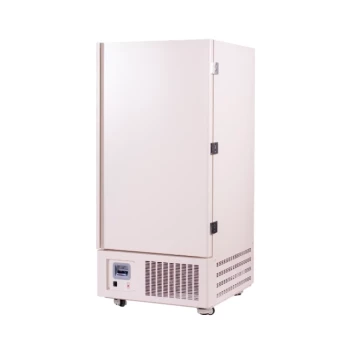
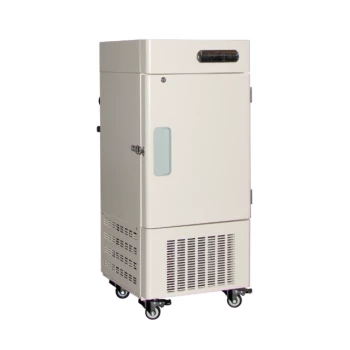
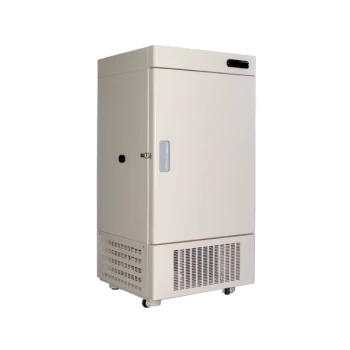
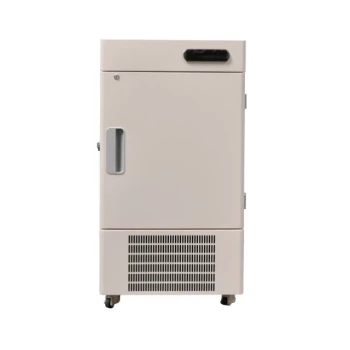
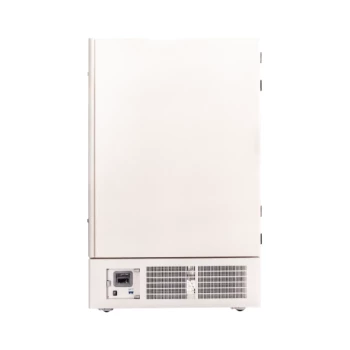
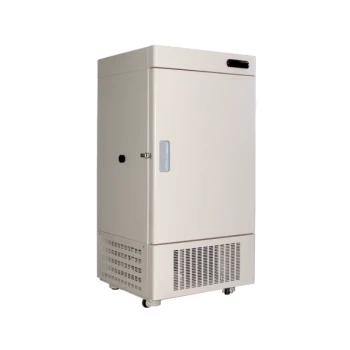
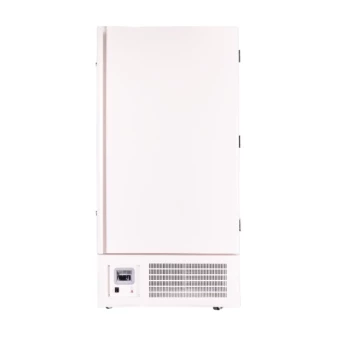
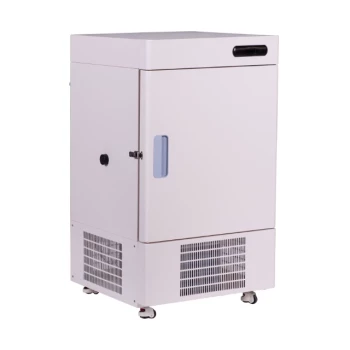
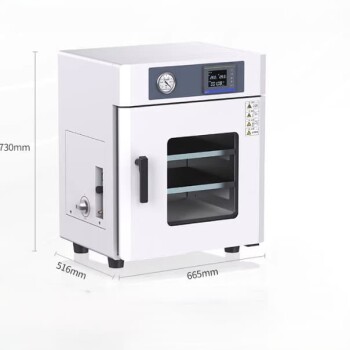
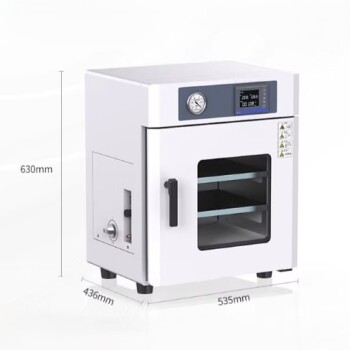
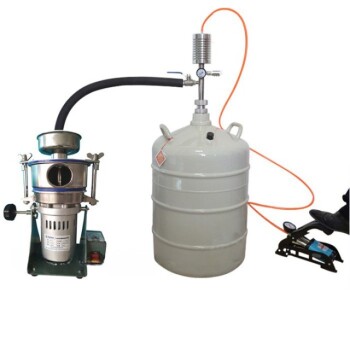
A laboratory freeze dryer optimizes graphitic carbon nitride precursors by leveraging sublimation to eliminate the structural collapse inherent in liquid-phase drying.
By removing moisture under vacuum at low temperatures, the device prevents particle agglomeration and the destructive effects of surface tension. This physical dehydration produces a fine-grained, sponge-like powder that retains high chemical reactivity. Consequently, the final product exhibits a larger specific surface area and superior electronic transport properties after sintering.
Freeze drying transforms precursor solutions into high-surface-area powders by bypassing the liquid phase. This preserves the material’s skeletal architecture and ensures the final sintered product achieves optimal porosity and electronic performance.
Overcoming the Limitations of Thermal Drying
Avoiding Surface Tension and Structural Collapse
Conventional heating relies on liquid evaporation, where surface tension forces pull particles together as the liquid recedes. This often causes the delicate pore networks of carbon precursors to collapse into dense, low-surface-area clumps. Freeze drying avoids this by transitioning moisture directly from solid ice to gas.
Preventing Solute Recrystallization and Agglomeration
As liquid evaporates during thermal drying, solutes often concentrate and recrystallize unevenly, leading to agglomeration. Freeze drying locks the precursor components in a frozen matrix, ensuring they remain uniformly dispersed throughout the resulting powder.
Enhancing Precursor Reactivity and Morphology
The Creation of a Sponge-Like Architecture
The sublimation process leaves behind a loose, sponge-like physical state in the precursor. This morphology provides a significant increase in the available specific surface area before the material undergoes thermal polymerization.
Facilitating Gas Escape During Sintering
A freeze-dried precursor is highly porous, creating clear channels for gas escape during the subsequent heating process. This prevents internal pressure build-up and promotes the formation of a rich, interconnected porous structure in the final graphitic carbon nitride.
Preserving Chemical Reactivity
By maintaining a fine-grained and non-aggregated state, the precursor retains high reactivity. This ensures more efficient conversion during the sintering phase, leading to a final material with higher density and better electronic transport properties.
Understanding the Trade-offs
Processing Time and Resource Intensity
Freeze drying is significantly slower than conventional thermal drying, often requiring 24 to 72 hours to complete. It also requires specialized vacuum equipment and refrigeration systems, which increases both energy consumption and capital costs.
Scale-up Complexity
While highly effective in a laboratory setting, transitioning freeze-drying protocols to industrial-scale production is difficult. Maintaining uniform vacuum and temperature conditions across large volumes requires complex engineering and high operational overhead.
How to Apply This to Your Synthesis Workflow
Selecting a drying method depends on the specific performance requirements of your final graphitic carbon nitride material.
- If your primary focus is maximum surface area: Utilize freeze drying to maintain a loose, porous precursor state that prevents sheet agglomeration.
- If your primary focus is high-throughput production: Consider traditional thermal drying if the resulting structural density does not critically impede your specific application.
- If your primary focus is enhanced electronic transport: Prioritize freeze drying to ensure a uniform, fine-grained precursor that optimizes the final material's density and charge mobility.
By fundamentally altering how moisture is removed, freeze drying serves as a critical bridge between raw chemical precursors and high-performance carbon-based materials.
Summary Table:
| Feature | Conventional Thermal Drying | Laboratory Freeze Drying |
|---|---|---|
| Mechanism | Liquid Evaporation | Sublimation (Ice to Gas) |
| Structural Integrity | Prone to collapse/agglomeration | Preserved skeletal architecture |
| Morphology | Dense, low-surface-area clumps | Loose, sponge-like powder |
| Reactivity | Reduced due to sintering/fusion | High; uniform dispersion |
| Gas Escape | Restricted internal pressure | Porous channels for easy escape |
| Processing Time | Fast (Hours) | Slow (24–72 Hours) |
Elevate Your Material Synthesis with KINTEK Precision
Unlock the full potential of your graphitic carbon nitride research with KINTEK’s industry-leading laboratory solutions. We specialize in providing high-performance freeze dryers and cold traps that preserve delicate material architectures, alongside precision high-temperature furnaces (muffle, vacuum, and CVD) for optimal sintering results.
Whether you are a researcher aiming for maximum specific surface area or a lab manager streamlining high-throughput workflows, KINTEK offers the specialized equipment—from crushing systems to PTFE consumables—necessary to ensure superior electronic transport and structural integrity in your final products.
Ready to optimize your synthesis workflow? Contact our technical experts today to find the perfect equipment tailored to your specific research goals!
References
- Ganesh Kesavan, Alexander Star. Optimizing dicyandiamide pretreatment conditions for enhanced structure and electronic properties of polymeric graphitic carbon nitride. DOI: 10.1039/d3tc02412a
This article is also based on technical information from Kintek Solution Knowledge Base .
Related Products
- High Performance Laboratory Freeze Dryer
- High Performance Laboratory Freeze Dryer for Research and Development
- Benchtop Laboratory Freeze Dryer for Lab Use
- Benchtop Laboratory Vacuum Freeze Dryer
- 808L Precision Laboratory Vertical Ultra Low Temperature Freezer
People Also Ask
- What role does a laboratory freeze dryer play in the synthesis of graphene-based electrocatalysts? Preserve 3D Structures
- What are the technical advantages of using a laboratory freeze dryer for porous carbon precursors? Preserve 3D Networks
- What types of liquid samples can be processed using a laboratory freeze dryer? Preserve Your Sensitive Materials
- How do laboratory freeze dryers support scientific research? Preserve Sample Integrity for Reproducible Results
- Why is a laboratory freeze dryer preferred over traditional heating? Preserve Biochar Structure & Maximize Porosity