The primary function of a cold trap is gas-liquid separation through rapid thermal condensation.
By creating an ultra-low temperature environment, the cold trap forces water vapor and unreacted liquid reactants, such as ethanol, out of the gas stream and into a liquid or solid state. This purification step ensures that the gas sample entering downstream analytical instruments is clean, dry, and free of condensable components that could compromise data or hardware.
A cold trap acts as a critical protective barrier and purification stage, isolating gaseous products from condensable vapors to maintain system integrity, protect expensive equipment, and ensure high-precision analytical measurements.
Ensuring Analytical Integrity and Accuracy
Protecting Gas Chromatography (GC) Columns
In bio-ethanol reforming, unreacted ethanol and water vapor can severely damage or contaminate gas chromatography columns. The cold trap removes these liquid-phase components before they reach the GC, preventing column degradation and extending the life of the stationary phase.
Improving Detection Precision
Removing condensable vapors ensures that the gas sample is concentrated and consistent. This lack of moisture and unreacted liquid improves the detection accuracy of gas components like hydrogen, carbon monoxide, and methane by preventing the dilution or masking of signals.
Preventing Interference in Infrared Analyzers
In methane reforming processes like Dry Reforming of Methane (DRM), side reactions often produce moisture. A cold trap prevents this water vapor from entering infrared gas analyzers, where it could cause signal interference or physical damage to the optical sensors.
Product Collection and System Maintenance
Quantitative Product Recovery
In high-temperature reactions, gaseous effluents may contain valuable products like levulinic acid or gamma-valerolactone. The cold trap efficiently condenses these components, preventing the loss of light components through volatilization and ensuring accurate calculations for conversion rates and selectivity.
Vacuum System Preservation
For experiments involving vacuum systems, the cold trap captures vapors that bypass the main condenser. This prevents abrasive or corrosive chemical vapors from entering the vacuum pump, which significantly prolongs the pump's lifespan and maintains stable vacuum levels.
Isotopic and Background Separation
In specialized methane oxidation experiments, liquid nitrogen cold traps are used to solidify and capture background carbon dioxide. This ensures that any carbon measured later in the process originates exclusively from the specific reactants under study, rather than environmental contamination.
Understanding the Trade-offs
Temperature Calibration Risks
Selecting the wrong temperature for a cold trap can lead to experimental errors. If the trap is not cold enough, vapors may pass through and damage equipment; if it is too cold, it may inadvertently condense the gaseous products you intend to measure, such as CO2.
Maintenance and Saturation
Cold traps are not "set and forget" components; they have a finite capacity. Once a trap becomes saturated with liquid or ice, its efficiency drops sharply, potentially allowing vapors to "break through" into sensitive downstream instruments.
How to Apply This to Your Project
Making the Right Choice for Your Goal
- If your primary focus is Equipment Longevity: Prioritize the placement of the cold trap immediately before the vacuum pump or sensitive IR sensors to catch corrosive moisture.
- If your primary focus is Analytical Precision: Use a liquid nitrogen or dry ice bath to ensure the complete removal of trace vapors that could skew GC or mass spectrometry results.
- If your primary focus is Mass Balance and Yield: Ensure the cold trap is designed for easy drainage and volume measurement to accurately quantify the liquid products recovered.
Integrating a properly calibrated cold trap is the most effective way to bridge the gap between high-temperature reforming reactions and delicate room-temperature analysis.
Summary Table:
| Feature | Benefit in Reforming Experiments |
|---|---|
| Gas-Liquid Separation | Removes water and unreacted reactants (ethanol) via rapid condensation. |
| Equipment Protection | Prevents contamination and damage to GC columns, IR analyzers, and vacuum pumps. |
| Analytical Accuracy | Ensures clean gas samples for high-precision detection of H2, CO, and CH4. |
| Product Recovery | Captures valuable liquid products for accurate mass balance and selectivity data. |
| Vacuum Preservation | Traps corrosive/abrasive vapors to prolong pump life and maintain stable pressure. |
Optimize Your Research Accuracy with KINTEK
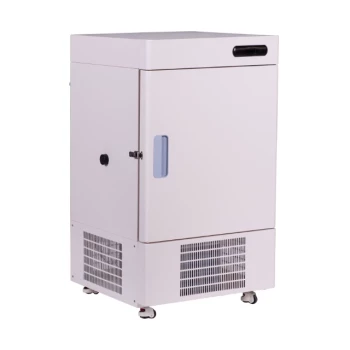
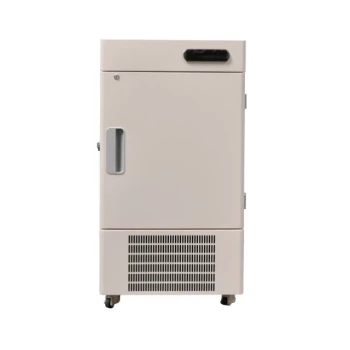
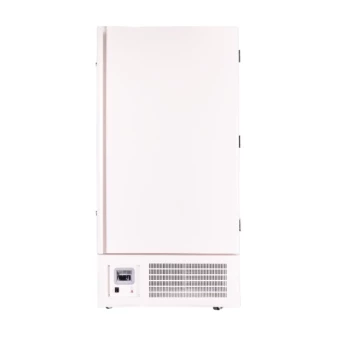
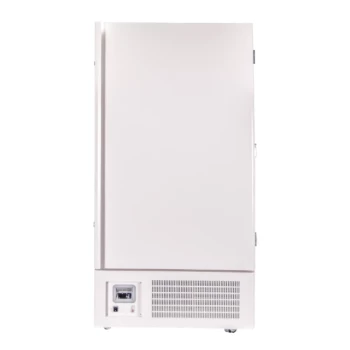
Elevate your experimental precision with KINTEK’s industry-leading laboratory solutions. Whether you are conducting complex bio-ethanol reforming or methane oxidation, our high-performance cold traps, ULT freezers, and cooling solutions are engineered to ensure maximum gas purity and safeguard your sensitive analytical hardware.
Beyond gas purification, KINTEK offers a comprehensive suite of tools for chemical research, including:
- High-Temperature & High-Pressure Reactors and Autoclaves for rigorous reforming studies.
- Advanced Furnaces (CVD, Vacuum, and Atmosphere) for material synthesis.
- Precision Hydraulic Presses and Crushing Systems for catalyst preparation.
Don't let moisture or unreacted vapors compromise your data or damage your expensive GC columns. Contact our technical experts today to find the perfect integrated solution for your laboratory’s unique requirements!
References
- Hao‐Yu Lian, Ai‐Min Zhu. Warm plasma catalytic coreforming of dilute bioethanol and methane for hydrogen production. DOI: 10.1002/ppap.202300062
This article is also based on technical information from Kintek Solution Knowledge Base .
Related Products
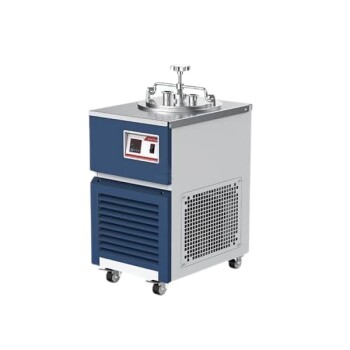
- Vacuum Cold Trap Direct Cold Trap Chiller
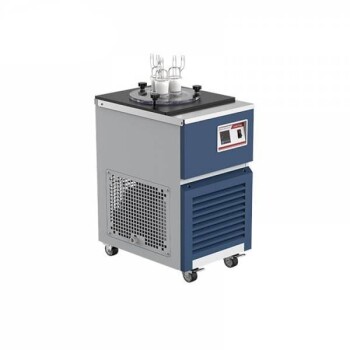
- Vacuum Cold Trap Chiller Indirect Cold Trap Chiller
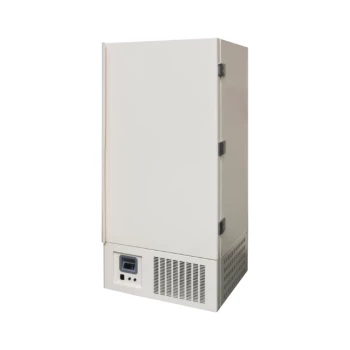
- 608L Essential Laboratory Ultra Low Temperature Freezer For Critical Sample Preservation
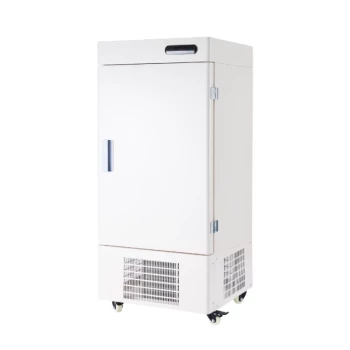
- 158L Precision Vertical Ultra Low Freezer for Laboratory Applications
- 108L Vertical Ultra Low Temperature ULT Freezer
People Also Ask
- What is the role of glass condensation components in arsenic collection? Optimize Niccolite Roasting & Kinetics
- Why is it necessary to configure efficient cold traps in membrane distillation? Ensure Flux Stability & Data Accuracy
- What is the purpose of connecting a cold trap at the reactor outlet? Protect Equipment and Analyze Liquid Products
- What is the primary purpose of a cold trap at a reactor outlet? Protect Analyzers & Ensure Data Integrity
- Why is a cold trap system containing isopropanol required for pyrolysis gas? Capture Elusive Volatiles Effectively