The configuration of efficient cold traps or condensation recovery equipment is not optional; it is fundamental to the function of membrane distillation. These components are necessary to rapidly condense water vapor into liquid form, which sustains the pressure differential required for the process to run continuously while enabling the physical collection of pure water.
Efficient condensation is the mechanism that keeps membrane distillation running. By rapidly liquefying vapor, the cold trap maintains the necessary pressure gradient across the membrane and captures the product for critical analysis.
The Mechanics of Vapor Recovery
Completing the Phase Change
In membrane distillation, water vapor permeates through a hydrophobic membrane, such as Ethylene Chlorotrifluoroethylene (ECTFE).
Once this vapor passes through the membrane, it must be captured. The cold trap provides a low-temperature surface that acts as a condenser.
This surface rapidly converts the energetic water vapor back into liquid pure water.
Driving Continuous Operation
The condensation process does more than just collect water; it drives the system.
By turning vapor into liquid, the cold trap prevents back-pressure buildup.
This helps maintain the specific pressure differential across the membrane that is required for continuous, stable operation.
The Necessity of Accurate Measurement
Validating Production Rates
To evaluate the efficiency of a membrane, you must measure the water production rate.
Vapor is difficult to measure dynamically. Condensing it into liquid allows for precise volumetric or gravimetric measurement.
Analyzing Water Quality
The ultimate goal of membrane distillation is often water purification.
The cold trap recovers the final product in a state suitable for laboratory analysis.
This allows you to verify the purity of the water and the effectiveness of the hydrophobic membrane barrier.
Common Pitfalls to Avoid
Inefficient Heat Transfer
If the cold trap is not "efficient"—meaning it is not cold enough or lacks surface area—vapor will not condense instantly.
This leads to a loss of the pressure gradient, causing the distillation flux to drop or stall entirely.
Compromised Data Integrity
A poor recovery setup may let vapor escape or re-evaporate before measurement.
This results in underreporting the system's actual performance capabilities.
Making the Right Choice for Your Goal
To ensure your membrane distillation setup delivers reliable results, configure your recovery equipment based on your specific analytical needs:
- If your primary focus is Process Stability: Ensure your cold trap maintains a temperature significantly lower than the vapor stream to sustain a constant pressure differential.
- If your primary focus is Data Accuracy: Verify that the condensation surface area is large enough to capture 100% of the permeate flux for precise rate calculations.
Efficient recovery turns a theoretical evaporation process into a measurable, functioning loop.
Summary Table:
| Feature | Role in Membrane Distillation | Impact of Inefficiency |
|---|---|---|
| Phase Change | Rapidly converts energetic vapor into liquid pure water | Loss of product and inability to collect samples |
| Pressure Gradient | Prevents back-pressure buildup across the membrane | Distillation flux drops or the process stalls entirely |
| Data Validation | Enables precise volumetric/gravimetric measurement | Underreporting of system performance and flux rates |
| Product Quality | Collects purified water for laboratory analysis | Inability to verify membrane rejection efficiency |
Maximize Your Distillation Efficiency with KINTEK
Precision in membrane distillation requires more than just high-quality membranes; it demands a perfectly integrated recovery system. KINTEK specializes in high-performance laboratory equipment designed to maintain the rigorous conditions your research requires. From advanced cooling solutions like cold traps, ULT freezers, and freeze dryers to our specialized PTFE and ceramic consumables, we provide the tools necessary to ensure stable pressure differentials and 100% permeate recovery.
Whether you are working on water purification, battery research, or complex chemical synthesis, KINTEK’s comprehensive range—including high-temperature reactors, vacuum furnaces, and hydraulic presses—is engineered for reliability and accuracy.
Ready to optimize your laboratory workflow? Contact our technical experts today to find the perfect condensation and thermal management solutions for your specific application.
References
- Zhangbin Liao, Enrico Drioli. Preparation, Modification, and Application of Ethylene-Chlorotrifluoroethylene Copolymer Membranes. DOI: 10.3390/membranes14020042
This article is also based on technical information from Kintek Solution Knowledge Base .
Related Products
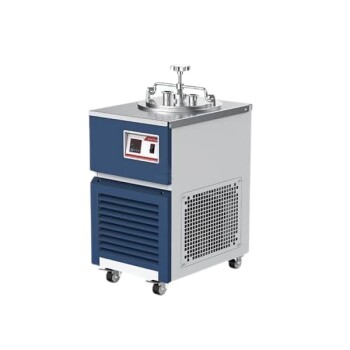
- Vacuum Cold Trap Direct Cold Trap Chiller
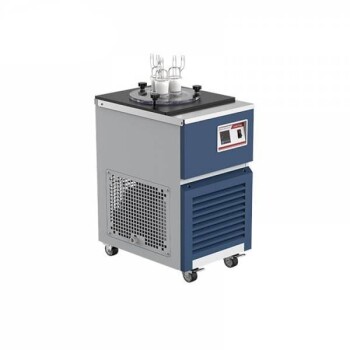
- Vacuum Cold Trap Chiller Indirect Cold Trap Chiller
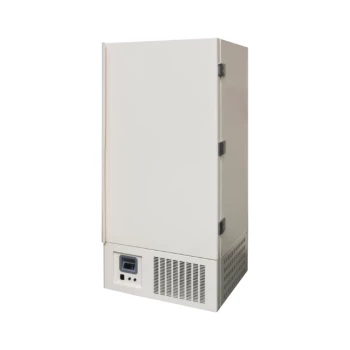
- 608L Essential Laboratory Ultra Low Temperature Freezer For Critical Sample Preservation
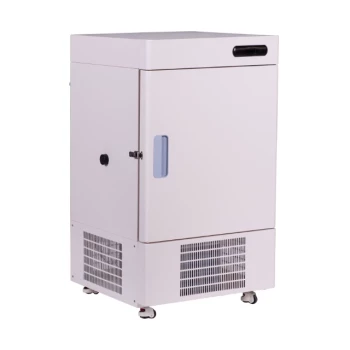
- 108L Vertical Ultra Low Temperature ULT Freezer
People Also Ask
- What is the role of glass condensation components in arsenic collection? Optimize Niccolite Roasting & Kinetics
- What is the purpose of connecting a cold trap at the reactor outlet? Protect Equipment and Analyze Liquid Products
- What is the primary purpose of a cold trap at a reactor outlet? Protect Analyzers & Ensure Data Integrity
- What is the function of a cold trap in bio-ethanol and methane reforming experiments? Optimize Purity & Protect Systems
- Why is a cold trap system containing isopropanol required for pyrolysis gas? Capture Elusive Volatiles Effectively