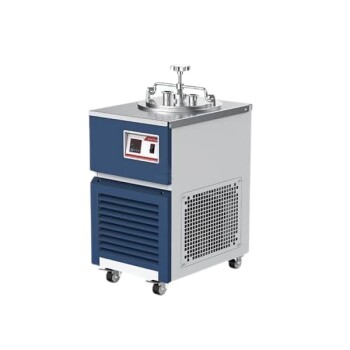
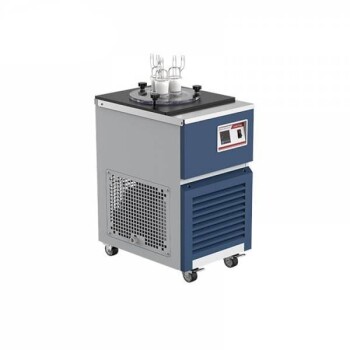
In the context of high-temperature corrosion studies, the laboratory cold trap acts as a precision phase-control device installed at the outlet of a tube reactor. Its specific role is to induce a sharp temperature gradient through forced cooling, compelling volatile magnesium vapor to condense into a liquid phase at a targeted location.
Core Takeaway By forcing magnesium vapor to condense into a liquid state within a specific zone, the cold trap allows researchers to accurately simulate industrial environments where liquid magnesium contacts container walls. This setup is essential for isolating and analyzing specific failure modes, such as selective leaching and infiltration, on heat-resistant alloys.
The Mechanism of Phase Control
To understand the cold trap's utility, one must look beyond its traditional role of simply "trapping" waste. In these experiments, it serves as an active component of the simulation environment.
Inducing the Temperature Gradient
The tube reactor relies on a high-temperature furnace to generate the necessary thermal environment for vaporization.
At the reactor's outlet, the cold trap introduces forced cooling. This creates a deliberate and significant temperature drop relative to the heated reaction zone.
Physical Condensation
This thermal shock forces a phase change. The magnesium, which exists as a volatile vapor inside the heated reactor, physically condenses into a liquid phase.
Crucially, the setup allows this condensation to occur in a specific, controlled area, rather than randomly throughout the exhaust system.
Simulating Industrial Failure Modes
The primary value of this setup is its ability to mimic the harsh reality of industrial magnesium processing.
Replicating Wall Contact
In actual industrial applications, magnesium vapor often condenses on cooler container walls.
The laboratory cold trap replicates this exact scenario. It ensures that liquid magnesium—not just vapor—comes into direct contact with the test materials (simulating the container walls).
Analyzing Selective Leaching
By maintaining this liquid contact, researchers can observe how magnesium interacts with heat-resistant alloys over time.
This exposure reveals specific corrosion mechanisms, most notably selective leaching. This is where the liquid magnesium extracts specific elements from the alloy, compromising its structural integrity.
Studying Infiltration
The setup also permits the study of infiltration failure.
This occurs when liquid magnesium penetrates the microstructure of the alloy, a phenomenon that is difficult to replicate if the magnesium remains in a vapor state.
Operational Prerequisites and Constraints
While the cold trap drives the condensation, the validity of the experiment depends on the stability of the entire thermal system.
Dependence on Thermal Stability
The cold trap cannot function in isolation. It relies on the upstream furnace to maintain a stable baseline temperature (e.g., specific nodes like 723 K or 823 K) to ensure consistent vaporization rates.
If the furnace temperature fluctuates, the volume of vapor reaching the cold trap changes, leading to inconsistent liquid formation.
Positioning Accuracy
The "specific area" of condensation is critical.
If the cooling is applied too early or too late in the gas flow, the liquid magnesium may not form on the target specimen, rendering the corrosion data invalid. The gradient must be positioned precisely where the simulated "container wall" is located.
Making the Right Choice for Your Goal
When designing your experiment, align the cold trap setup with your specific research objectives.
- If your primary focus is corrosion mechanism analysis: Ensure the cold trap is positioned to force condensation directly onto the alloy sample to trigger selective leaching.
- If your primary focus is verifying containment materials: Use the cold trap to simulate long-term exposure to liquid magnesium, specifically looking for signs of microstructural infiltration.
Success in these experiments relies not just on generating high temperatures, but on controlling the transition from hot vapor to aggressive liquid.
Summary Table:
| Feature | Role in Magnesium Corrosion Experiments |
|---|---|
| Phase Control | Forces volatile vapor to condense into a reactive liquid phase. |
| Simulation Goal | Replicates industrial liquid-metal contact with container walls. |
| Failure Analysis | Enables study of selective leaching and microstructural infiltration. |
| Key Constraint | Requires precise temperature gradients and furnace thermal stability. |
Elevate Your Materials Research with KINTEK
Precision is paramount when simulating harsh industrial environments. KINTEK specializes in providing high-performance laboratory equipment, including tube furnaces and cold traps, designed to maintain the rigorous thermal stability required for high-temperature corrosion studies.
Whether you are analyzing selective leaching in heat-resistant alloys or testing containment materials for magnesium processing, our comprehensive range of high-temperature furnaces, crushing and milling systems, and ceramic consumables ensures your experimental results are both accurate and reproducible.
Ready to optimize your lab's thermal control? Contact our technical experts today to find the perfect solution for your research goals.
References
- Namurata Sathirachinda Pålsson, Sinthu Chanthapan. Effect of liquid magnesium on high temperature failure of heat resistant alloy. DOI: 10.1016/j.engfailanal.2017.03.021
This article is also based on technical information from Kintek Solution Knowledge Base .
Related Products
- Vacuum Cold Trap Direct Cold Trap Chiller
- Vacuum Cold Trap Chiller Indirect Cold Trap Chiller
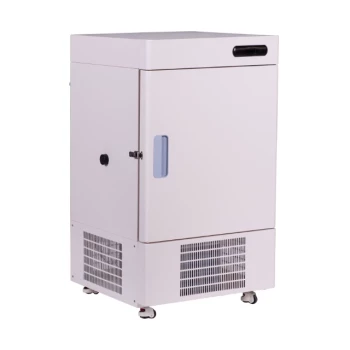
- 608L Essential Laboratory Ultra Low Temperature Freezer For Critical Sample Preservation
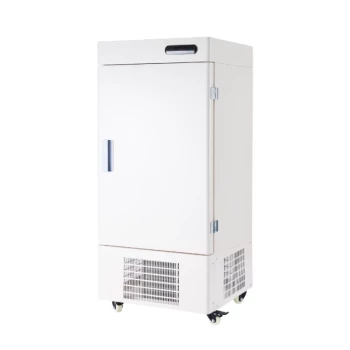
- 108L Vertical Ultra Low Temperature ULT Freezer
- 158L Precision Vertical Ultra Low Freezer for Laboratory Applications
People Also Ask
- What is the role of glass condensation components in arsenic collection? Optimize Niccolite Roasting & Kinetics
- Why is it necessary to configure efficient cold traps in membrane distillation? Ensure Flux Stability & Data Accuracy
- What is the purpose of connecting a cold trap at the reactor outlet? Protect Equipment and Analyze Liquid Products
- What is the primary purpose of a cold trap at a reactor outlet? Protect Analyzers & Ensure Data Integrity
- What is the function of a cold trap in bio-ethanol and methane reforming experiments? Optimize Purity & Protect Systems