A high-efficiency cold trap functions as a critical thermal barrier in the pervaporation system. It operates by exposing the vapor-phase permeate exiting the membrane to an extremely low-temperature surface. This drastic temperature difference forces the vapor molecules to undergo an immediate phase change, condensing them into liquid or depositing them as solid frost to ensure total collection and system protection.
In pervaporation, the cold trap serves a dual purpose: it guarantees the quantitative recovery of the product for accurate analysis and acts as a shield to prevent volatile vapors from damaging the downstream vacuum pump.
The Physics of Capture
Rapid Phase Transition
During pervaporation, components permeate through the membrane specifically in a vapor phase. The cold trap intercepts these gas molecules before they travel further downstream.
Crystallization and Frost Formation
Upon contact with the cold metal surface of the trap, the gas molecules lose thermal energy instantly. This often causes them to bypass the liquid phase entirely and transform directly into a solid crystalline phase. This phenomenon appears visually as "frost" accumulating on the trap's interior surfaces.
Ensuring Quantitative Analysis
For a pervaporation experiment to be valid, you must measure exactly how much product passed through the membrane. A high-efficiency trap ensures that virtually 100% of the vapor is captured. Without this rapid and complete condensation, vapors would escape, leading to inaccurate data regarding membrane performance.
System Protection Mechanics
Shielding the Vacuum Source
The vacuum pump is the engine driving the pervaporation pressure gradient. However, it is highly susceptible to damage from solvents and corrosive vapors.
The Condensation Barrier
By locking the vapors into a liquid or solid state within the trap, the device prevents chemicals from entering the pump mechanism. This prevents oil contamination and corrosion, significantly extending the lifespan of your vacuum equipment.
Common Pitfalls to Avoid
Inadequate Cooling Capacity
A cold trap is only as effective as its ability to maintain temperature. A common point of failure occurs when the cooling source—whether a mechanical chiller or dry ice—is insufficient. If a chiller is set too high, or if dry ice is allowed to deplete, the trap loses its ability to hold the condensate.
The Consequence of Warming
If the trap warms up during operation, the captured "frost" will sublimate back into a gas. This results in the loss of your experimental sample and sends a surge of harmful vapor directly into the vacuum pump.
Making the Right Choice for Your Goal
To maximize the effectiveness of your cold trap, align your operating procedures with your specific objectives:
- If your primary focus is Data Accuracy: rigorous monitoring of the coolant level is required to ensure no sample is lost to re-vaporization during the collection period.
- If your primary focus is Equipment Longevity: Ensure the trap temperature is significantly lower than the freezing point of your most volatile permeate to prevent pump corrosion.
The success of a pervaporation setup relies not just on the membrane, but on the unyielding thermal stability of the cold trap.
Summary Table:
| Feature | Mechanism | Benefit to Pervaporation |
|---|---|---|
| Thermal Barrier | Drastic temperature differential | Immediate phase change from vapor to liquid/solid |
| Phase Transition | Desublimation / Crystallization | Captures 100% of permeate for accurate quantitative analysis |
| Pump Shielding | Condensation of volatile vapors | Prevents oil contamination and extends vacuum pump lifespan |
| System Stability | Constant low-temp maintenance | Prevents sublimation and loss of experimental samples |
Maximize Your Lab’s Precision with KINTEK
Don't let inaccurate data or equipment failure stall your research. KINTEK specializes in high-performance laboratory solutions designed for the most demanding applications. Whether you are conducting pervaporation, distillation, or material synthesis, our comprehensive range of cold traps, cooling solutions (ULT freezers, freeze dryers), and vacuum equipment ensures your system remains protected and your results remain precise.
From high-temperature furnaces and reactors to essential consumables like PTFE and ceramics, KINTEK provides the tools you need to push the boundaries of science. Contact us today to find the perfect cooling or vacuum solution for your laboratory!
References
- Cédric Van Goethem, Ivo F.J. Vankelecom. Stability of Filled PDMS Pervaporation Membranes in Bio-Ethanol Recovery from a Real Fermentation Broth. DOI: 10.3390/membranes13110863
This article is also based on technical information from Kintek Solution Knowledge Base .
Related Products
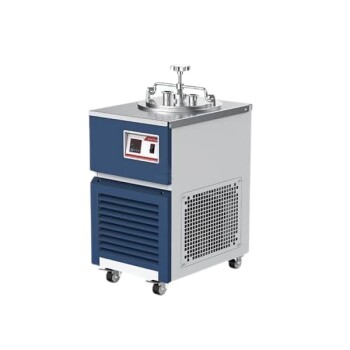
- Vacuum Cold Trap Direct Cold Trap Chiller
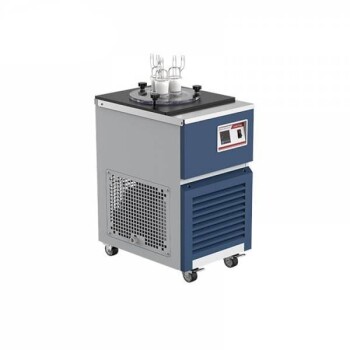
- Vacuum Cold Trap Chiller Indirect Cold Trap Chiller
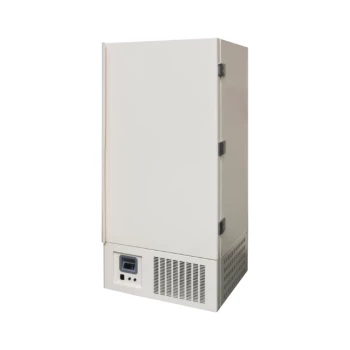
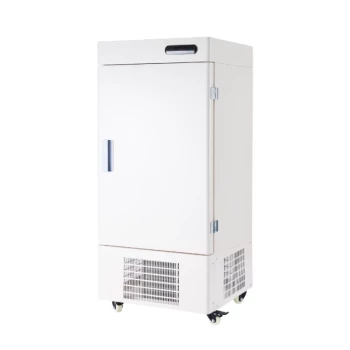
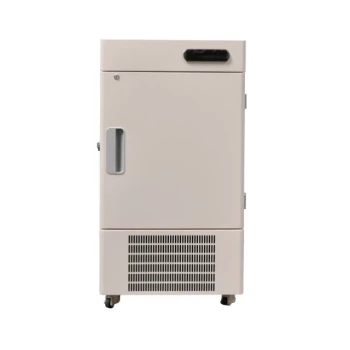
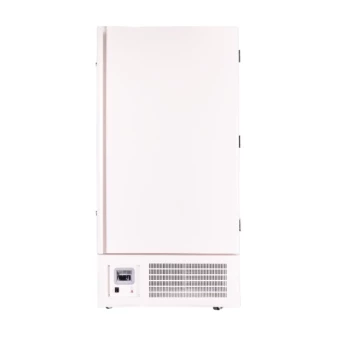
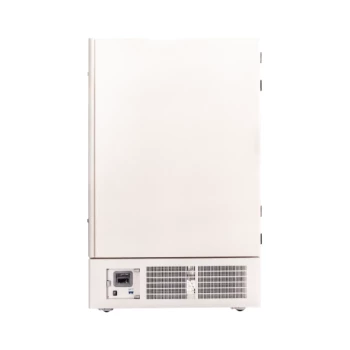
- 608L Essential Laboratory Ultra Low Temperature Freezer For Critical Sample Preservation
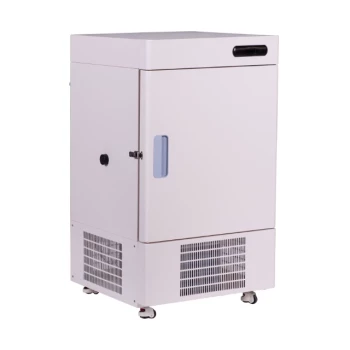
- 108L Vertical Ultra Low Temperature ULT Freezer
- 158L Precision Vertical Ultra Low Freezer for Laboratory Applications
People Also Ask
- What is the role of glass condensation components in arsenic collection? Optimize Niccolite Roasting & Kinetics
- Why is it necessary to configure efficient cold traps in membrane distillation? Ensure Flux Stability & Data Accuracy
- What is the purpose of connecting a cold trap at the reactor outlet? Protect Equipment and Analyze Liquid Products
- What is the primary purpose of a cold trap at a reactor outlet? Protect Analyzers & Ensure Data Integrity
- What is the function of a cold trap in bio-ethanol and methane reforming experiments? Optimize Purity & Protect Systems