The primary purpose of an ice water bath condensation system in microwave-assisted pyrolysis is to rapidly quench hot volatile vapors, converting them into a stable liquid bio-oil for collection and analysis. By establishing a significant temperature gradient, this system effectively reduces the vapor pressure of the bio-oil components to prevent their escape.
Core Takeaway: This cooling method is not just about collection; it is an analytical necessity. It safeguards data accuracy by preventing the loss of light fractions (volatile components) and halting secondary chemical reactions, ensuring the calculated bio-oil yield represents the true output of the experiment.
The Mechanics of Efficient Collection
Establishing a Temperature Gradient
The fundamental mechanism of the ice water bath is the creation of a large temperature gradient.
Pyrolysis generates vapors at high temperatures. By passing these vapors immediately into a condensation system immersed in an ice water bath (often around 0°C), the system forces a rapid phase change from gas to liquid.
Reducing Vapor Pressure
A critical function of this setup is the reduction of vapor pressure.
If the collection vessel remains warm, volatile components retain high vapor pressure and can escape as gas. The ice water bath suppresses this pressure, keeping the bio-oil in a liquid state for physical measurement.
Preserving Sample Integrity
Preventing the Loss of Light Fractions
Bio-oil is a complex mixture containing both heavy and light chemical compounds.
Without adequate cooling, the light fractions—components with lower boiling points—would evaporate and be lost to the exhaust system. The ice water bath captures these specific fractions, which is essential for determining the total mass balance of the experiment.
Minimizing Secondary Cracking
High temperatures promote secondary cracking, where bio-oil vapors break down further into non-condensable gases.
By utilizing a "quenching" method—rapidly dropping the temperature—the system stabilizes the chemical components. This preserves the original structure of the bio-oil, allowing for a more accurate assessment of the primary pyrolysis products.
The Role of Solvents
Enhancing Capture Efficiency
The primary reference notes that these systems are often used in conjunction with solvents like dichloromethane.
The solvent acts as a trapping medium within the cooled vessel. It helps dissolve and capture condensable components that might otherwise remain in the vapor phase, further improving the recovery rate.
Understanding the Trade-offs
System Complexity vs. Efficiency
While a single ice water bath is effective, it may not capture 100% of all aerosols or extremely volatile compounds.
Supplementary data suggests that multi-stage cooling systems (combining different temperatures) are sometimes required for maximum recovery. Relying solely on a simple ice bath may result in a minor loss of the most elusive compounds compared to ultra-low temperature setups (e.g., -10°C or lower).
Solvent Handling Requirements
Using solvents like dichloromethane aids collection but introduces chemical handling variables.
Researchers must account for the solvent mass when calculating yields and ensure that the solvent does not interfere with subsequent chemical analysis techniques, such as GC-MS.
Making the Right Choice for Your Goal
To maximize the effectiveness of your pyrolysis experiment, align your cooling strategy with your analytical priorities:
- If your primary focus is Mass Balance Accuracy: Ensure your system uses a solvent trap within the ice bath to capture the elusive light fractions that significantly impact yield calculations.
- If your primary focus is Chemical Characterization: Prioritize the speed of the temperature drop (quenching) to "freeze" the chemical composition and prevent the oil from degrading into secondary gases.
Effective bio-oil collection relies on the speed of cooling as much as the final temperature reached.
Summary Table:
| Feature | Purpose | Impact on Experiment |
|---|---|---|
| Temperature Gradient | Rapid quenching of hot vapors | Forces phase change from gas to liquid |
| Vapor Pressure Reduction | Suppresses evaporation of volatiles | Ensures maximum physical mass collection |
| Light Fraction Capture | Traps low-boiling point compounds | Maintains accurate mass balance & yield |
| Stabilization | Minimizes secondary cracking | Prevents breakdown into non-condensable gases |
| Solvent Synergy | Trapping medium (e.g., dichloromethane) | Dissolves complex vapors for higher recovery |
Elevate Your Pyrolysis Research with KINTEK Precision
Maximize the accuracy of your bio-oil characterization with cooling solutions designed for high-stakes research. KINTEK specializes in advanced laboratory equipment, including cooling solutions (ULT freezers, cold traps) and high-temperature furnaces, tailored for microwave-assisted pyrolysis and material science.
Whether you are focusing on mass balance or complex chemical analysis, our comprehensive range—from high-pressure reactors to PTFE consumables—ensures your experimental setup is optimized for excellence.
Ready to refine your collection efficiency? Contact KINTEK today to discuss your equipment needs!
References
- Kaiqi Shi, Tao Wu. Production of H2-Rich Syngas From Lignocellulosic Biomass Using Microwave-Assisted Pyrolysis Coupled With Activated Carbon Enabled Reforming. DOI: 10.3389/fchem.2020.00003
This article is also based on technical information from Kintek Solution Knowledge Base .
Related Products
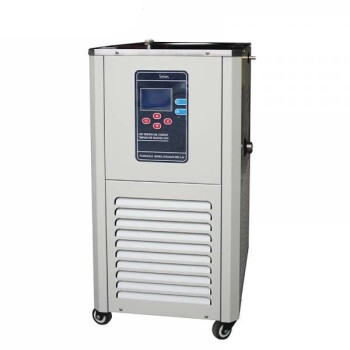
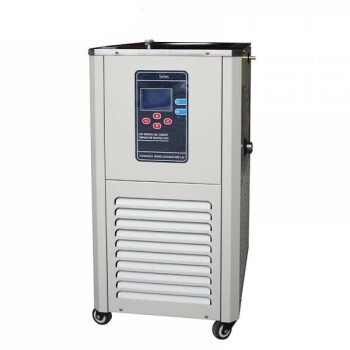
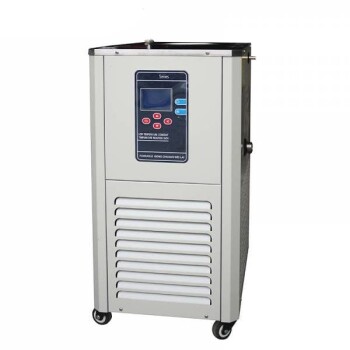
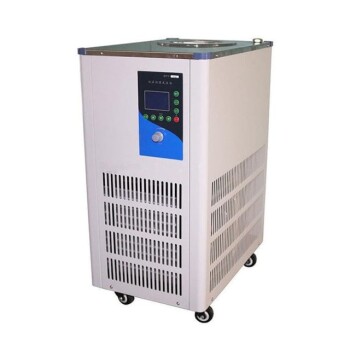
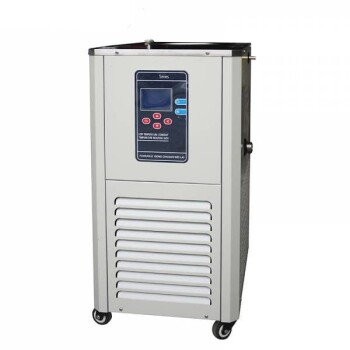
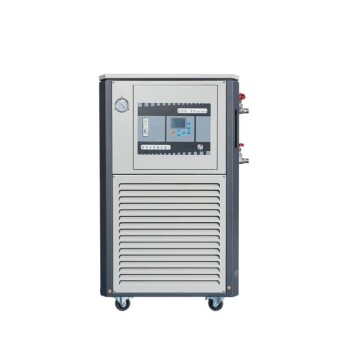
- 50L Chiller Water Bath Cooling Circulator Low Temperature Constant Temperature Reaction Bath
- 20L Chiller Water Bath Cooling Circulator Low Temperature Constant Temperature Reaction Bath
- 40L Chiller Water Bath Cooling Circulator Low Temperature Constant Temperature Reaction Bath
- 10L Chilling Circulator Cooling Water Bath Low Temperature Constant Temperature Reaction Bath
- 30L Chiller Water Bath Cooling Circulator Low Temperature Constant Temperature Reaction Bath
People Also Ask
- For which types of substances are water baths and chillers considered ideal? Essential Care for Sensitive Samples
- What is the necessity of a circulating water bath in chlorate production? Optimize Yield & Purity with Precision
- Why is a circulating water chiller required for Prussian Blue nanoparticles? Ensure Stability & Batch Reproducibility
- What function does a circulating cooling chiller perform during the gas adsorption isotherm testing of nanoporous carbon?
- What is the primary function of water baths and chillers? Mastering Precise Thermal Stability for Liquid Samples