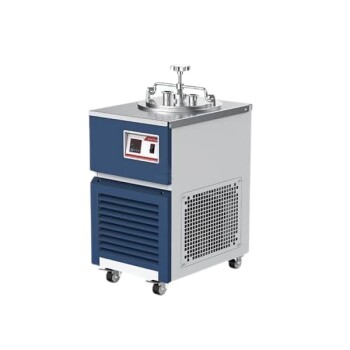
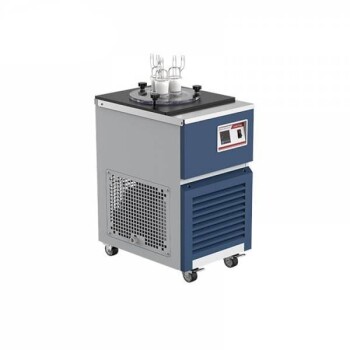
Efficient cooling systems and cold traps serve as the critical fractionation engines within a plastic pyrolysis recovery setup. Installed immediately downstream of the reactor, these components rapidly process high-temperature vapors to separate valuable liquid hydrocarbons from permanent gases, defining the quality and yield of the final output.
Core Takeaway By precisely controlling temperatures across multiple stages, these systems segregate products based on their carbon number distributions. This ensures that commercially viable heavy components like oils and waxes are captured, while light gases like methane and hydrogen are separated for distinct energy applications.
The Mechanics of Product Separation
Separation Based on Carbon Number
The primary function of the cooling system is to act as a filter for molecular weight.
Pyrolysis vapors contain a mix of hydrocarbon chains with varying lengths. Efficient cooling systems separate these chains based on their carbon number distributions.
By manipulating the temperature, the system determines which compounds condense into liquids and which remain as gases.
Isolating Condensable Components
The system is designed to target and capture condensable heavy components.
As the vapors cool, heavier hydrocarbons undergo a phase change from gas to liquid.
This results in the recovery of tangible products such as pyrolysis oils and synthetic waxes, which hold significant economic value as fuels or chemical feedstocks.
Managing Permanent Gases
Not all vapors can be condensed.
The cooling system isolates non-condensable permanent gases, including methane, hydrogen, and light olefins.
Because these gases do not liquefy in standard cold traps, they pass through the system, allowing them to be collected separately for use as process fuel or energy generation.
The Critical Role of Cold Traps
Enabling Rapid Condensation
In both industrial and laboratory settings, speed is essential.
Cold traps provide an extremely low-temperature environment that forces volatile components to condense rapidly.
This prevents light, volatile oils from remaining in a vapor state and escaping the capture system.
Preventing Component Loss
Without sufficient cooling, lighter fractions of the oil yield are lost to the atmosphere or the gas stream.
Cold traps capture these fugitive emissions, maximizing the total volume of recovered material.
Ensuring Analytical Accuracy
In a research or laboratory context, the cold trap serves a specific diagnostic function.
By ensuring nearly all condensable matter is captured, it guarantees the accuracy of product yield analysis. Researchers can rely on the data, knowing the mass balance has not been skewed by escaping vapors.
Common Pitfalls to Avoid
Inadequate Cooling Stages
A single-stage cooling system often lacks the precision to separate products effectively.
If the temperature gradient is not controlled, heavy waxes may mix with lighter oils, reducing the quality of the final fuel product.
Temperature Management Failures
If the system is not cold enough, you risk "carry-over."
Valuable light components will fail to condense and will act as permanent gases, artificially inflating gas yields while decreasing the recovery of valuable liquid oil.
Making the Right Choice for Your Goal
To optimize your pyrolysis setup, align your cooling strategy with your operational objectives:
- If your primary focus is Commercial Recovery: Prioritize multi-stage cooling systems that can precisely fractionate products into distinct grades of oil and wax for maximum market value.
- If your primary focus is Research and Analysis: distinct Focus on high-performance cold traps that offer the lowest possible temperatures to prevent the loss of volatiles and ensure precise mass balance data.
Ultimately, the efficiency of your cooling system dictates whether your pyrolysis output is a high-value commodity or a mixed stream of low-grade byproducts.
Summary Table:
| Component | Primary Function | Target Output |
|---|---|---|
| Cooling System | Temperature-based fractionation | Pyrolysis oils and synthetic waxes |
| Cold Trap | Rapid condensation of volatiles | Volatile light oils and condensable fractions |
| Gas Scrubber | Isolation of permanent gases | Methane, hydrogen, and light olefins |
| Multi-stage Units | Precise carbon number separation | High-purity fuels and refined feedstocks |
Optimize Your Pyrolysis Recovery with KINTEK Precision
Don't let valuable hydrocarbons escape your system. At KINTEK, we specialize in high-performance laboratory equipment designed to maximize your material recovery and analytical accuracy. From advanced cold traps and cooling solutions (ULT freezers, freeze dryers) to the high-temperature furnaces and reactors that drive the pyrolysis process, we provide the tools necessary for superior fractionation.
Whether you are scaling a commercial recovery operation or conducting precise laboratory research, our comprehensive range of crushing systems, vacuum furnaces, and specialized consumables ensures you achieve the highest quality yields.
Ready to enhance your lab's efficiency and product purity? Contact our technical experts today to find the perfect solution for your setup!
References
- Onur Dogu, Kevin M. Van Geem. The chemistry of chemical recycling of solid plastic waste via pyrolysis and gasification: State-of-the-art, challenges, and future directions. DOI: 10.1016/j.pecs.2020.100901
This article is also based on technical information from Kintek Solution Knowledge Base .
Related Products
- Vacuum Cold Trap Direct Cold Trap Chiller
- Vacuum Cold Trap Chiller Indirect Cold Trap Chiller
- lab cryogenic grinding use liquid-nitrogen for pulverizing plastic raw materials and heat sensitive materials
People Also Ask
- What is the role of glass condensation components in arsenic collection? Optimize Niccolite Roasting & Kinetics
- Why is it necessary to configure efficient cold traps in membrane distillation? Ensure Flux Stability & Data Accuracy
- What is the purpose of connecting a cold trap at the reactor outlet? Protect Equipment and Analyze Liquid Products
- What is the primary purpose of a cold trap at a reactor outlet? Protect Analyzers & Ensure Data Integrity
- What is the function of a cold trap in bio-ethanol and methane reforming experiments? Optimize Purity & Protect Systems