The primary function of a Cold Trap in a pervaporation-assisted membrane reactor is to capture and condense volatile components that have permeated through the membrane in a gaseous state. By utilizing extremely low temperatures, the trap rapidly liquefies substances such as methanol or reaction byproducts, preventing them from entering the vacuum pump while simultaneously enabling solvent recovery.
The Cold Trap serves as a critical stabilization point in the system, converting vapor to liquid to maintain the necessary driving vacuum force while allowing for the reclamation of valuable solvents.
The Role of the Cold Trap in Separation
Rapid Liquefaction of Permeates
The pervaporation process relies on a vacuum to pull specific components through a membrane. The Cold Trap is positioned downstream to intercept this flow.
It utilizes extremely low temperatures to instantly convert these gaseous vapors back into a liquid or solid state. This phase change is essential for capturing the mass that has passed through the membrane.
Managing Volatile Components
This mechanism is specifically designed to handle volatile components.
Common targets include solvents like methanol or specific reaction byproducts. Without the thermal shock provided by the Cold Trap, these substances would remain gaseous and difficult to contain.
Operational Benefits
Maintaining Vacuum Integrity
One of the most critical functions of the Cold Trap is supporting the system's pressure gradient.
By condensing high-volume vapors into low-volume liquids, the trap effectively "removes" gas from the headspace. This helps maintain the system vacuum level, which is the primary driving force behind the entire pervaporation process.
Resource Recovery and Reuse
The Cold Trap turns waste streams into recoverable assets.
By capturing the permeate in a discrete vessel, the system enables the recovery and reuse of solvents. This is vital for economic efficiency and reducing chemical waste in the reactor process.
Common Pitfalls to Avoid
Temperature Insufficiency
If the Cold Trap is not cold enough relative to the vapor pressure of the specific permeate, capture efficiency drops.
Incomplete condensation allows vapors to bypass the trap, potentially damaging the vacuum pump or reducing the driving force across the membrane.
Capacity Limitations
The Cold Trap is a physical collection vessel with a finite volume.
If the trap fills with condensate or becomes blocked by frozen buildup, it can restrict flow. This requires careful monitoring to ensure the vacuum line remains unobstructed during long operational cycles.
Making the Right Choice for Your Goal
To maximize the effectiveness of your pervaporation-assisted reactor, align your Cold Trap strategy with your specific objectives:
- If your primary focus is process stability: Ensure your Cold Trap maintains a temperature well below the freezing point of your target volatile to guarantee consistent vacuum pressure.
- If your primary focus is solvent economy: Implement a collection protocol that allows for the frequent, sterile removal of captured liquids to facilitate immediate reuse.
The Cold Trap is not just a passive collector; it is the active engine that sustains the vacuum and closes the loop on chemical recovery.
Summary Table:
| Feature | Primary Function | Impact on Process |
|---|---|---|
| Phase Conversion | Rapidly liquefies gaseous permeates (e.g., methanol) | Facilitates mass capture and collection |
| Vacuum Support | Removes vapor volume from system headspace | Maintains the driving force for separation |
| Pump Protection | Prevents volatile vapors from entering vacuum equipment | Extends pump lifespan and prevents contamination |
| Resource Recovery | Captures permeates in a discrete vessel | Enables solvent reuse and reduces chemical waste |
Maximize Your Lab’s Recovery Efficiency with KINTEK
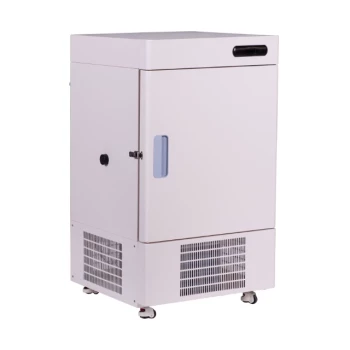
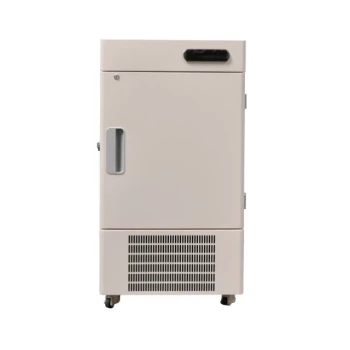
Ensure your pervaporation processes achieve peak performance with high-performance cooling solutions from KINTEK. As specialists in advanced laboratory equipment, we provide the precision cold traps, ULT freezers, and freeze dryers necessary to maintain critical vacuum integrity and maximize solvent reclamation.
Whether you are managing complex chemical reactions or routine separations, KINTEK offers a comprehensive range of laboratory tools—from high-temperature furnaces and reactors to crushing systems and hydraulic presses—designed for the most demanding research environments.
Ready to optimize your reactor system? Contact KINTEK today to discover how our expert-grade cooling and recovery solutions can enhance your laboratory's productivity and sustainability.
References
- I. G. B. N. Makertihartha, I Gede Wenten. SIMULTANEOUS METHYL ESTER PRODUCTION AND CAROTENE RECOVERY FROM CRUDE PALM OIL USING MEMBRANE REACTOR. DOI: 10.11113/jt.v81.12539
This article is also based on technical information from Kintek Solution Knowledge Base .
Related Products
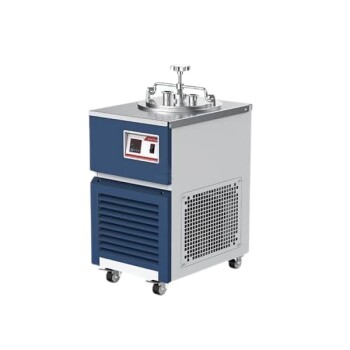
- Vacuum Cold Trap Direct Cold Trap Chiller
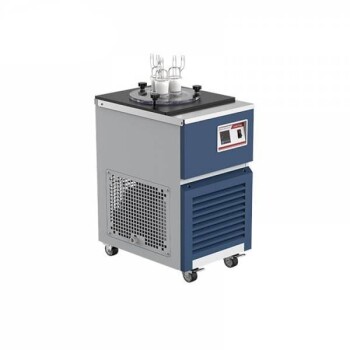
- Vacuum Cold Trap Chiller Indirect Cold Trap Chiller
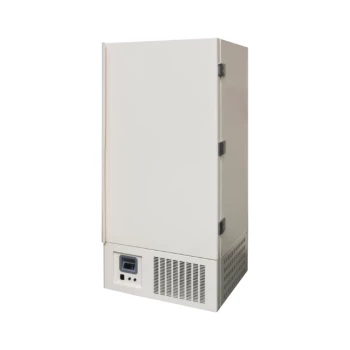
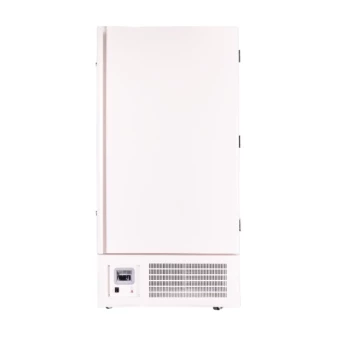
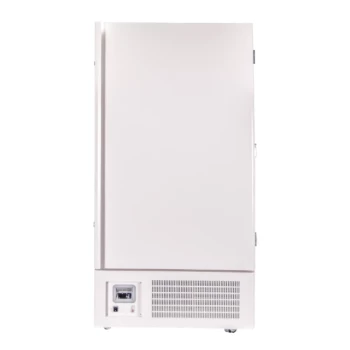
- 608L Essential Laboratory Ultra Low Temperature Freezer For Critical Sample Preservation
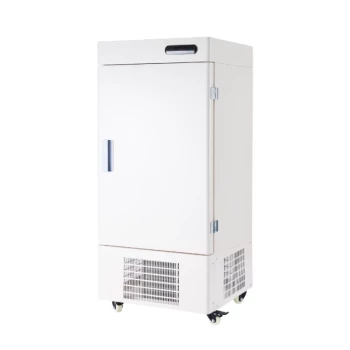
- 158L Precision Vertical Ultra Low Freezer for Laboratory Applications
- 108L Vertical Ultra Low Temperature ULT Freezer
People Also Ask
- What is the role of glass condensation components in arsenic collection? Optimize Niccolite Roasting & Kinetics
- Why is it necessary to configure efficient cold traps in membrane distillation? Ensure Flux Stability & Data Accuracy
- What is the purpose of connecting a cold trap at the reactor outlet? Protect Equipment and Analyze Liquid Products
- What is the primary purpose of a cold trap at a reactor outlet? Protect Analyzers & Ensure Data Integrity
- What is the function of a cold trap in bio-ethanol and methane reforming experiments? Optimize Purity & Protect Systems