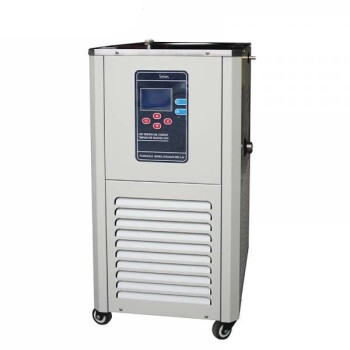
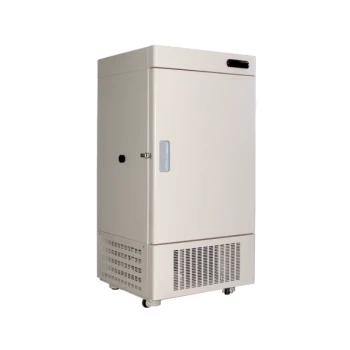
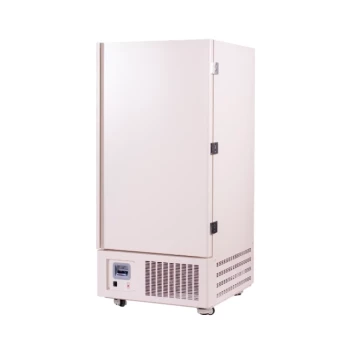
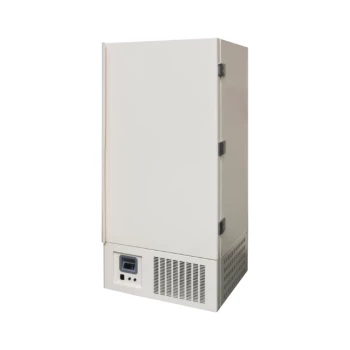
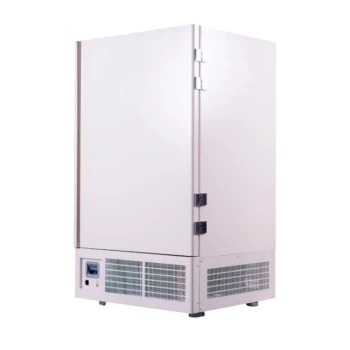
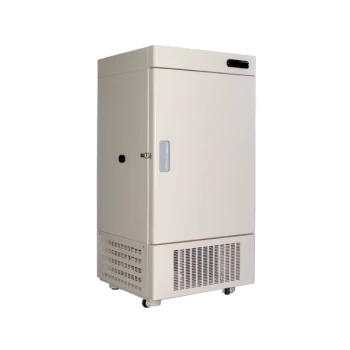
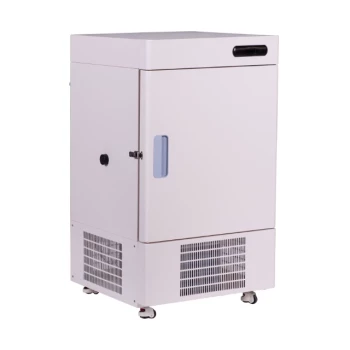
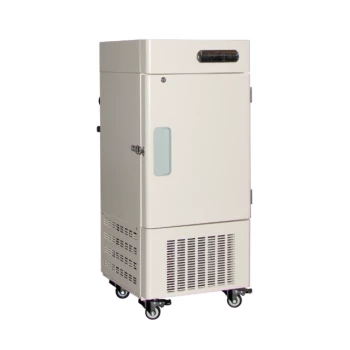
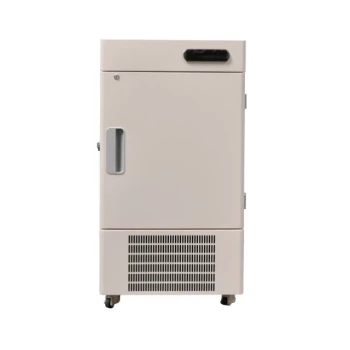
Maintaining a low-temperature cooling solution is a fundamental requirement for validating toxicity studies involving nanoparticles in wastewater. By refrigerating samples at approximately 4 °C, researchers stabilize the complex wastewater matrix, preventing biological and chemical changes that would otherwise skew experimental results.
Cooling wastewater samples is not just about storage; it is a critical control measure. By inhibiting secondary microbial growth and slowing particle-pollutant interactions, cooling ensures that the toxicity results reflect the true environmental conditions of the specific treatment stage rather than artifacts of the storage container.
The Mechanisms of Stabilization
Preventing Biological Overgrowth
Wastewater matrices are biologically active environments. Without intervention, the microbes present in the sample will continue to reproduce.
A low-temperature solution inhibits this secondary microbial growth. This preservation is essential to maintain the original biological profile of the synthetic wastewater or treated effluent.
Slowing Chemical Kinetics
Nanoparticles, such as aluminum oxide, are chemically reactive when introduced to organic pollutants found in wastewater.
Heat accelerates these chemical interactions. By cooling the sample, you significantly slow down the reaction rate, ensuring the chemical state of the mixture remains stable prior to the exposure experiment.
The Risks of Inadequate Preservation
Loss of Environmental Representativeness
The validity of a toxicity study depends on the sample accurately mimicking the real world.
If a sample is allowed to warm, its physical and chemical characteristics shift. The resulting data will no longer accurately reflect the specific stage of the wastewater treatment process you intended to study.
Compromised Baseline Data
Any changes in the matrix prior to the experiment introduce uncontrolled variables.
This makes it impossible to distinguish between the toxicity caused by the nanoparticles and effects caused by sample degradation or microbial blooms.
Ensuring Valid Toxicity Data
If your primary focus is biological accuracy: Maintain samples at 4 °C to prevent secondary microbial populations from altering the composition of the wastewater matrix.
If your primary focus is chemical characterization: Use cooling to inhibit premature reactions between nanoparticles and organic pollutants, preserving the original chemical state.
Proper thermal preservation is the only way to ensure your laboratory data accurately translates to real-world environmental impact.
Summary Table:
| Factor | Impact of Low Temperature (4°C) | Risk of Inadequate Cooling |
|---|---|---|
| Microbial Activity | Inhibits secondary growth; maintains biological profile | Microbial blooms alter sample composition |
| Chemical Kinetics | Slows interactions between nanoparticles & pollutants | Accelerated reactions lead to chemical instability |
| Data Integrity | Preserves real-world environmental representation | Introduction of uncontrolled variables/artifacts |
| Matrix Stability | Stabilizes the complex wastewater matrix | Loss of representativeness of treatment stage |
Secure the Integrity of Your Environmental Research with KINTEK
Precise thermal control is the backbone of reliable nanoparticle toxicity data. At KINTEK, we specialize in providing high-performance laboratory equipment designed to meet the rigorous demands of environmental science. Whether you need advanced cooling solutions (ULT freezers, cold traps, and freeze dryers) to stabilize wastewater matrices or high-temperature high-pressure reactors for chemical synthesis, our comprehensive portfolio has you covered.
From centrifuges and homogenizers to essential PTFE products and ceramics, KINTEK empowers researchers to eliminate variables and achieve reproducible results. Don't let sample degradation compromise your findings.
References
- Nina Doskocz, Monika Załęska‐Radziwiłł. Molecular Response of Bacteria Exposed to Wastewater-Borne Nanoparticles. DOI: 10.3390/app15147746
This article is also based on technical information from Kintek Solution Knowledge Base .
Related Products
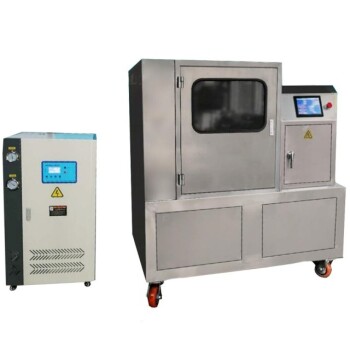
- Low-Temperature Water-Cooled Touchscreen Vibratory Ultrafine Pulverizer
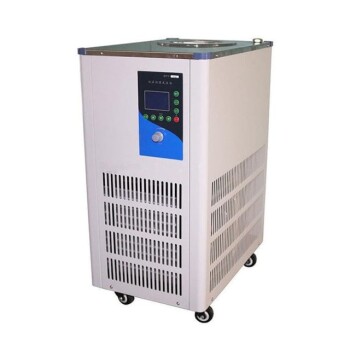
- 100L Chilling Circulator Cooling Water Circulator for Low Temperature Constant Temperature Reaction Bath Water Bath Cooling
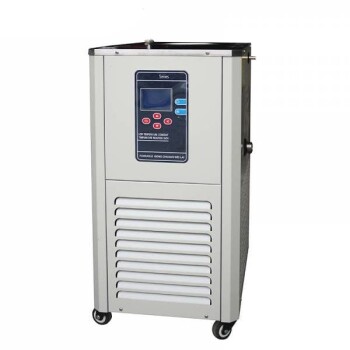
- 30L Chiller Water Bath Cooling Circulator Low Temperature Constant Temperature Reaction Bath
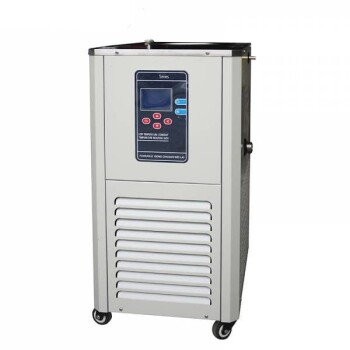
- 40L Chiller Water Bath Cooling Circulator Low Temperature Constant Temperature Reaction Bath
- 80L Chilling Circulator Cooling Water Circulator for Water Bath Cooling and Low Temperature Constant Temperature Reaction Bath
People Also Ask
- What is the function of an industrial vibratory mill? Optimize Fe-Cr-Al Alloy Powder Production
- How does a Vibratory Mill improve niobium recovery efficiency? Optimize Waste Pre-treatment for Maximum Yield
- Why use stainless steel jars and balls for solid-state battery slurries? Maximize Dispersion and Conductivity
- What role does ultra-low temperature cooling equipment play in hydrogel preparation? Master Light-Driven Actuation
- What is the difference between grinder and pulverizer? A Guide to Particle Size and Efficiency