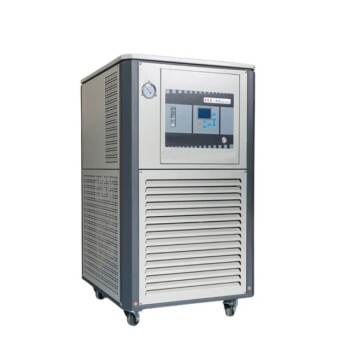
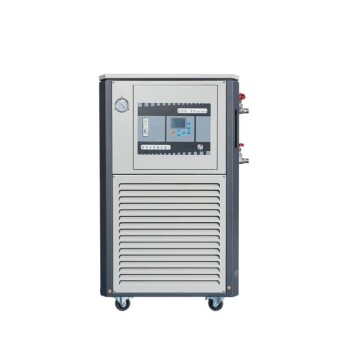
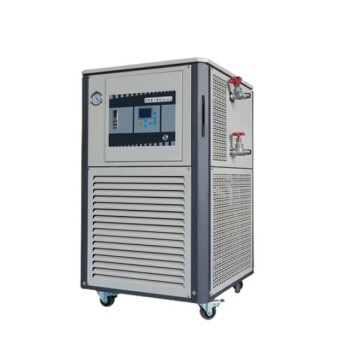
The primary role of low-temperature cooling baths and condensation systems is to rapidly quench high-temperature vapors generated during pyrolysis, forcing an immediate phase change into liquid bio-oil. By utilizing coolants such as isopropyl alcohol to maintain temperatures around -10°C, these systems capture volatiles before they degrade, directly preserving the quantity and quality of the final product.
Rapid cooling is not merely a collection method; it is a preservation strategy. By instantly dropping vapor temperatures, you minimize secondary cracking reactions, ensuring higher bio-oil yields and protecting the chemical integrity of the liquid components.
The Mechanics of Vapor Quenching
Preventing Secondary Cracking
The most critical function of the cooling system is to halt chemical reactions. High-temperature vapors are unstable; if they remain hot, they undergo secondary cracking.
This process breaks down valuable volatiles into smaller, less useful molecules. A rapid quench effectively "freezes" the chemical state of the vapor, preserving the integrity of the liquid product components.
Facilitating Phase Transformation
Condensation systems act as the bridge between the gaseous and liquid states. They convert brown pyrolysis vapors into liquid bio-oil through a sudden temperature drop.
This phase transformation is essential for effective separation. While the bio-oil condenses into a liquid, non-condensable gases—such as hydrogen and methane—remain in a gaseous state, allowing them to be easily separated from the final oil product.
System Configurations and Temperature Ranges
Low-Temperature Baths (-10°C)
To achieve the most rapid capture of volatiles, cooling baths often utilize refrigerants like isopropyl alcohol.
These systems maintain condensation vessels at approximately -10°C. This aggressive cooling approach is designed to maximize the capture rate of high-temperature vapors immediately as they exit the reactor.
Multi-Stage and Series Condensation
Alternative configurations employ a series of condensers to step down temperatures gradually but quickly. These may involve circulating water baths at 5°C followed by ice baths at 0°C.
Some systems maintain a constant temperature of 0.5°C across a series. This method ensures that high-boiling-point oxygenated compounds and hydrocarbons condense quickly, which directly influences the recovery rate and stability of the bio-oil.
Understanding the Trade-offs
The Risk of Inefficient Cooling
If the cooling system cannot maintain low temperatures (e.g., rising above 0°C to 5°C range during operation), the quenching effect diminishes.
This allows secondary cracking to re-initiate. The result is a lower yield of liquid bio-oil and a higher production of non-condensable gases, effectively wasting the raw material.
Complexity vs. Product Stability
Achieving temperatures as low as -10°C requires specialized refrigerants like isopropyl alcohol, which adds operational complexity compared to simple water cooling.
However, relying solely on milder cooling (above 5°C) may compromise the chemical stability of the components. You must balance the engineering cost of deep-freeze systems against the requirement for high-integrity chemical preservation.
Making the Right Choice for Your Goal
Selecting the right condensation strategy depends on your specific yield and purity requirements.
- If your primary focus is Chemical Integrity: Prioritize low-temperature baths using isopropyl alcohol at -10°C to minimize secondary cracking and preserve volatile structures.
- If your primary focus is Efficient Phase Separation: Utilize a series condensation system maintained near 0.5°C to ensure distinct separation between liquid bio-oil and non-condensable gases like methane.
- If your primary focus is Recovery Rate: Implement a multi-stage cooling system (5°C water to 0°C ice) to target the rapid condensation of high-boiling-point hydrocarbons.
Effective bio-oil collection relies less on the heat of the reactor and more on the speed and intensity of the quench.
Summary Table:
| Feature | Low-Temperature Bath (-10°C) | Multi-Stage Condensation (0°C to 5°C) |
|---|---|---|
| Primary Goal | Maximize chemical integrity & capture volatiles | Efficient phase separation & recovery rate |
| Coolant Used | Isopropyl Alcohol | Water and Ice baths |
| Reaction Control | Halts secondary cracking instantly | Step-down cooling for boiling point targeting |
| Key Outcome | High-integrity chemical preservation | High separation of liquid from non-condensable gas |
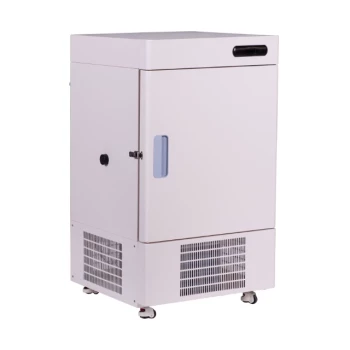
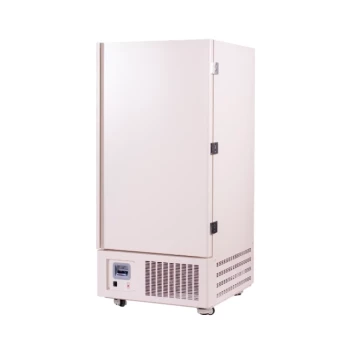
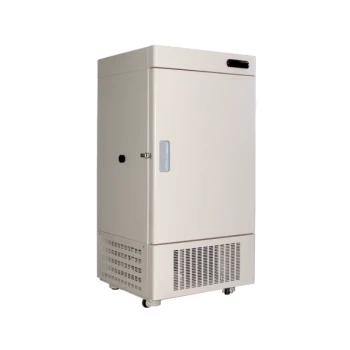
Precision cooling is the secret to high-quality bio-oil recovery. KINTEK specializes in advanced laboratory solutions, including high-performance cooling systems (ULT freezers, cold traps, and chillers) and pyrolysis reactor components designed to ensure your research yields the highest stability and purity. Whether you are optimizing biomass conversion or refining chemical synthesis, our comprehensive range of high-temperature furnaces, hydraulic presses, and specialized consumables like PTFE and ceramics provide the reliability your lab demands. Contact KINTEK today to optimize your condensation workflow!
References
- L.I. Gurevich Messina, Ana Lea Cukierman. Effect of acid pretreatment and process temperature on characteristics and yields of pyrolysis products of peanut shells. DOI: 10.1016/j.renene.2017.07.065
This article is also based on technical information from Kintek Solution Knowledge Base .
Related Products
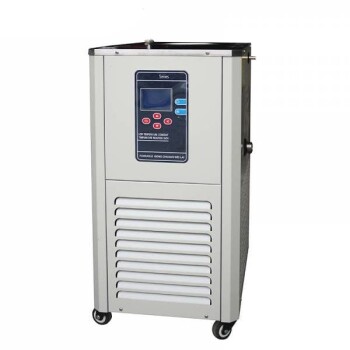
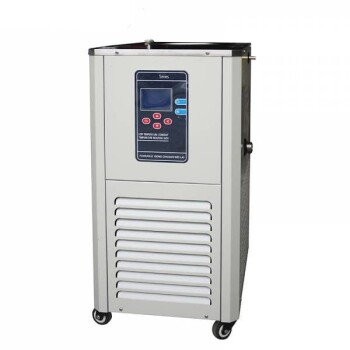
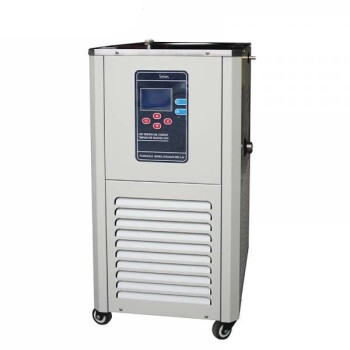
- 10L Chilling Circulator Cooling Water Bath Low Temperature Constant Temperature Reaction Bath
- 30L Chiller Water Bath Cooling Circulator Low Temperature Constant Temperature Reaction Bath
- 50L Chiller Water Bath Cooling Circulator Low Temperature Constant Temperature Reaction Bath
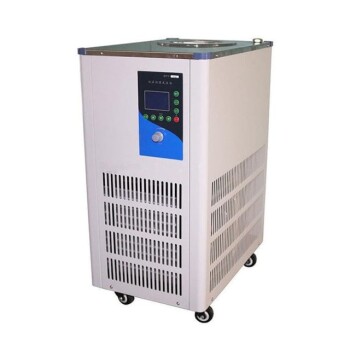
- 5L Chilling Circulator Cooling Water Bath Circulator for Low Temperature Constant Temperature Reaction Bath
- 20L Chiller Water Bath Cooling Circulator Low Temperature Constant Temperature Reaction Bath
People Also Ask
- What is the necessity of a circulating water bath in chlorate production? Optimize Yield & Purity with Precision
- What is the purpose of a cooling circulation water bath system in electrochemical experiments? Enhance Lab Precision
- Why is a circulating water chiller required for Prussian Blue nanoparticles? Ensure Stability & Batch Reproducibility
- What function does a circulating cooling chiller perform during the gas adsorption isotherm testing of nanoporous carbon?
- For which types of substances are water baths and chillers considered ideal? Essential Care for Sensitive Samples