The primary purpose of an ice water bath cold trap is to create a thermal barrier that forces water vapor within a gas stream to condense into liquid. By aggressively chilling the gas-liquid separator, the trap captures moisture before it can pass downstream, ensuring that the gas entering your analytical instrumentation is as dry as possible.
The cold trap acts as a critical filter for moisture, protecting sensitive systems like Inductively Coupled Plasma Mass Spectrometry (ICP-MS) from excess water. This reduces plasma load and prevents condensation in transmission lines, directly resulting in improved signal stability and data accuracy.
Protecting Downstream Instrumentation
Reducing Plasma Load
In systems like ICP-MS, the introduction of excess water is detrimental to performance.
By stripping moisture at the separator, the cold trap significantly lowers the amount of water vapor entering the plasma. This reduction ensures the plasma energy is utilized for ionizing the sample rather than dissociating water molecules.
Preserving Transmission Lines
Moisture that bypasses the separator can condense later in the transmission lines.
This downstream condensation is not merely a physical blockage; it creates surfaces where analytes can adhere. The cold trap prevents this by removing the water early, keeping the lines dry and chemically inert.
Enhancing Signal Quality
Preventing Analyte Adsorption
When moisture condenses in the transfer tubing, it creates a mechanism for analyte adsorption.
This means the target elements you are trying to measure get "stuck" in the water droplets inside the tube rather than reaching the detector. The cold trap eliminates this condensation risk, ensuring the full sample volume reaches the instrument.
Improving Signal-to-Noise Ratio
The ultimate goal of using the cold trap is data optimization.
By reducing plasma load and preventing sample loss through adsorption, the system achieves a higher signal-to-noise ratio. This allows for the detection of lower concentrations with greater confidence.
Operational Considerations
Manual Maintenance Requirements
While effective, an ice water bath is a passive system that requires manual intervention.
To maintain efficiency, the bath must be monitored to ensure the ice has not melted, as a rise in temperature will immediately allow moisture to pass through.
Stability Limitations
The temperature of an ice bath is physically limited to approximately 0°C.
If your method requires lower temperatures to condense specific solvents other than water, a simple ice bath may be insufficient compared to electronic Peltier coolers or cryogenic traps.
Optimizing Your Setup for Precision
The decision to implement a cold trap depends on your specific analytical requirements.
- If your primary focus is Signal Sensitivity: Use the trap to maximize the signal-to-noise ratio by preventing analyte loss in transmission lines.
- If your primary focus is Instrument Stability: Rely on the trap to minimize plasma load, ensuring consistent ionization energy during long runs.
By controlling moisture at the source, you transform a variable environment into a stable platform for high-precision analysis.
Summary Table:
| Feature | Function in Cold Trap | Impact on Analysis |
|---|---|---|
| Thermal Barrier | Condenses water vapor into liquid | Protects downstream sensors from moisture |
| Plasma Load Reduction | Minimizes energy spent on water dissociation | Improves ionization efficiency of target analytes |
| Adsorption Prevention | Keeps transmission lines dry | Prevents sample loss and improves signal-to-noise ratio |
| Temperature Control | Maintains stable 0°C environment | Ensures consistent condensation of aqueous vapors |
Maximize Your Analytical Precision with KINTEK Solutions
In high-stakes laboratory environments, signal stability is everything. KINTEK specializes in premium laboratory equipment designed to eliminate variables and protect your sensitive instrumentation. Whether you are managing moisture with our high-performance cold traps and cooling solutions, preparing samples with our crushing and milling systems, or conducting advanced research using our CVD and vacuum furnaces, we provide the tools necessary for repeatable, high-accuracy results.
Don't let moisture interference compromise your ICP-MS data or damage your transmission lines. Our experts can help you select the ideal cooling solutions, ULT freezers, and freeze dryers to optimize your workflow.
Contact KINTEK today to upgrade your lab's performance!
References
- Shuzhen Li, Ying Gao. Direct Determination of Trace Lead in Seawater by Inductively Coupled Plasma Mass Spectrometry After Photochemical Vapor Generation. DOI: 10.46770/as.2017.03.001
This article is also based on technical information from Kintek Solution Knowledge Base .
Related Products
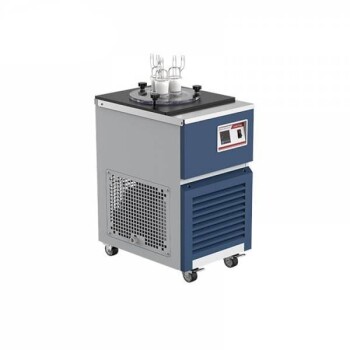
- Vacuum Cold Trap Chiller Indirect Cold Trap Chiller
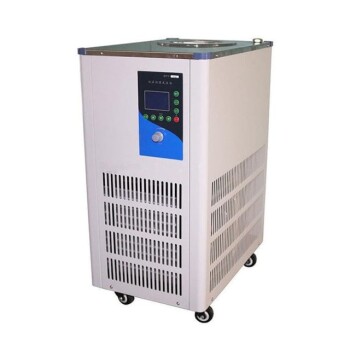
- 10L Chilling Circulator Cooling Water Bath Low Temperature Constant Temperature Reaction Bath
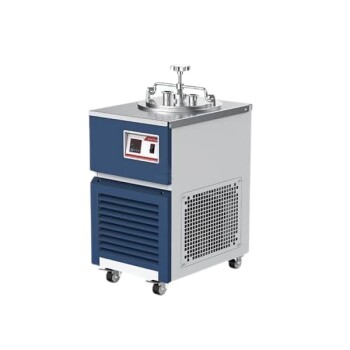
- Vacuum Cold Trap Direct Cold Trap Chiller
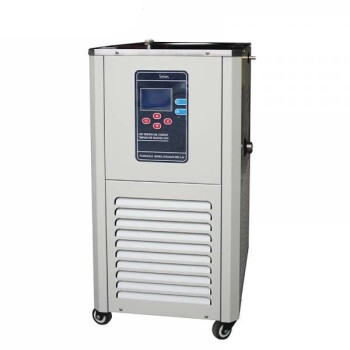
- 50L Chiller Water Bath Cooling Circulator Low Temperature Constant Temperature Reaction Bath
- 20L Chiller Water Bath Cooling Circulator Low Temperature Constant Temperature Reaction Bath
People Also Ask
- Why are precision Condensers and Cold Traps necessary at the collection end of a pyrolysis system? Maximize Yield & Purity
- Why is it necessary to configure efficient cold traps in membrane distillation? Ensure Flux Stability & Data Accuracy
- What is the purpose of connecting a cold trap at the reactor outlet? Protect Equipment and Analyze Liquid Products
- What is the role of glass condensation components in arsenic collection? Optimize Niccolite Roasting & Kinetics
- What is the function of a cold trap in bio-ethanol and methane reforming experiments? Optimize Purity & Protect Systems