Configuring a condensing device and cooling unit at the reaction vessel outlet is a critical engineering requirement to manage solvent volatility during the CO2 desorption process. When the system heats to approximately 88°C to release captured CO2, amine-based solvents like Monoethanolamine (MEA) naturally vaporize; the cooling and condensing apparatus captures these vapors and returns them to the liquid phase, preventing substantial chemical loss.
By recapturing volatile amines, this configuration serves two non-negotiable functions: it maintains the economic viability of the operation by recycling solvent and prevents the atmospheric release of carcinogenic decomposition byproducts.
The Mechanics of Vapor Capture
The Thermal Threshold
The CO2 desorption process requires elevated temperatures, typically reaching around 88°C. While this heat is necessary to break the bond between the solvent and the CO2, it also pushes the solvent (specifically MEA) past its stability point regarding volatility.
Vapor Recovery via Cooling
Without intervention, the solvent would escape the reactor as a gas alongside the CO2. The cooling unit lowers the temperature of the exit stream immediately at the outlet.
The Condensation Loop
Once cooled, the condensing device facilitates the phase change of the amine vapor back into a liquid state. This recovered liquid is then routed back into the reactor, creating a closed-loop system that preserves the chemical medium.
Economic and Operational Implications
Preventing Solvent Loss
Amine-based solvents represent a significant operational cost. Without a condensing system, the continuous volatilization at 88°C would deplete the solvent inventory rapidly.
Ensuring Process Continuity
Constantly replenishing lost solvent is not only expensive but operationally disruptive. The condenser ensures the reactor maintains the correct volume and concentration of MEA required for consistent CO2 capture performance.
Environmental Safety Standards
Mitigating Health Risks
The most critical function of this configuration is safety. Amine decomposition byproducts are frequently carcinogenic and pose severe health risks to personnel and the surrounding environment.
Controlling Emissions
A simple vent would allow these hazardous compounds to enter the atmosphere. The condensing unit acts as a primary containment barrier, ensuring that while CO2 is released for collection or storage, the harmful chemical agents remain trapped within the processing loop.
Operational Considerations and Trade-offs
Energy Consumption vs. Recovery
While the condensing unit is essential, it introduces an additional energy load to the system. You must balance the energy required to run the cooling unit against the cost of replacing solvent and the legal costs of environmental non-compliance.
Maintenance Dependencies
The reliability of the entire desorption process hinges on the cooler's efficiency. If the cooling unit underperforms or fouls, the immediate result is not just reduced efficiency, but a potential safety violation due to toxic emissions.
Making the Right Choice for Your Project
The inclusion of these devices is not optional for standard amine-based carbon capture, but your specific focus will dictate your monitoring strategy.
- If your primary focus is Economic Efficiency: Prioritize the heat transfer efficiency of the cooling unit to maximize solvent recovery rates and minimize replenishment costs.
- If your primary focus is Environmental Compliance: Implement redundant temperature monitoring at the outlet to ensure the condenser never allows carcinogenic vapors to bypass the capture system.
This configuration is the industry standard for transforming a potentially hazardous, expensive chemical process into a sustainable and safe operation.
Summary Table:
| Feature | Purpose | Impact on Process |
|---|---|---|
| Condensing Device | Facilitates phase change of amine vapors | Recycles solvent and maintains concentration |
| Cooling Unit | Lowers exit stream temperature at outlet | Prevents chemical loss at high thermal thresholds |
| Closed-loop System | Returns liquid solvent to the reactor | Reduces operational costs and ensures continuity |
| Emission Barrier | Traps carcinogenic decomposition byproducts | Ensures environmental safety and regulatory compliance |
Enhance Your Carbon Capture Research with KINTEK Precision
Don't let volatile solvents compromise your project's economic viability or environmental safety. KINTEK specializes in advanced laboratory solutions designed for rigorous chemical processes. From high-temperature high-pressure reactors and autoclaves to precise cooling systems like ULT freezers and cold traps, we provide the tools needed to maintain a secure and efficient closed-loop system.
Whether you are scaling CO2 desorption or optimizing amine-based capture, our high-performance equipment ensures process continuity and operator protection. Contact KINTEK today to discover how our comprehensive range of reactors, cooling units, and high-quality consumables can elevate your laboratory standards.
References
- Qinghua Lai, Maohong Fan. Catalyst-TiO(OH)2 could drastically reduce the energy consumption of CO2 capture. DOI: 10.1038/s41467-018-05145-0
This article is also based on technical information from Kintek Solution Knowledge Base .
Related Products
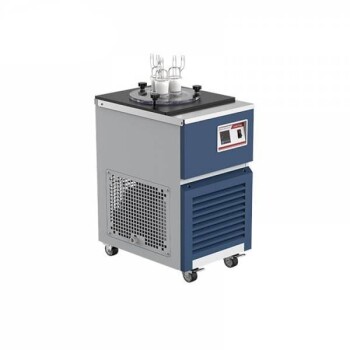
- Vacuum Cold Trap Chiller Indirect Cold Trap Chiller
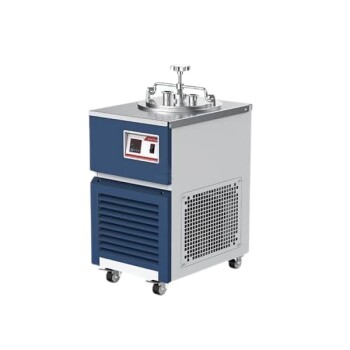
- Vacuum Cold Trap Direct Cold Trap Chiller
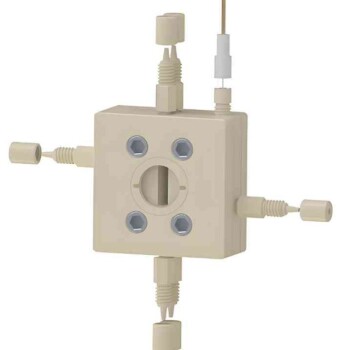
- Customizable CO2 Reduction Flow Cell for NRR ORR and CO2RR Research
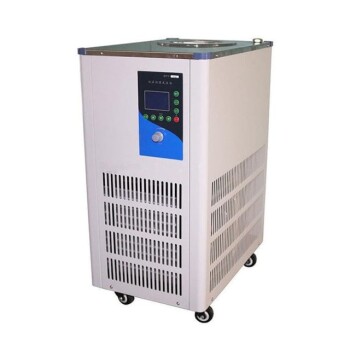
- 100L Chilling Circulator Cooling Water Circulator for Low Temperature Constant Temperature Reaction Bath Water Bath Cooling
People Also Ask
- Why are precision Condensers and Cold Traps necessary at the collection end of a pyrolysis system? Maximize Yield & Purity
- Why is it necessary to configure efficient cold traps in membrane distillation? Ensure Flux Stability & Data Accuracy
- What is the purpose of connecting a cold trap at the reactor outlet? Protect Equipment and Analyze Liquid Products
- What is the role of glass condensation components in arsenic collection? Optimize Niccolite Roasting & Kinetics
- What is the function of a cold trap in bio-ethanol and methane reforming experiments? Optimize Purity & Protect Systems