The fundamental function of a cold trap is phase separation via rapid thermal condensation. In gaseous hydrogenation, it serves as a critical bridge between the reactor and the analytical equipment, cooling the gaseous effluent to liquefy reactants and products such as levulinic acid, gamma-valerolactone, or methanol. This process prevents the loss of volatile components, ensuring that mass balance calculations for conversion and selectivity remain accurate.
The cold trap acts as a "physical filter" that captures condensable liquid products from a gas stream. By doing so, it protects sensitive downstream instruments and provides a concentrated liquid sample for precise quantitative analysis.
Enhancing Analytical Precision and Data Integrity
Ensuring Accurate Mass Balance
A cold trap prevents the loss of "light" or volatile reaction components through volatilization. By rapidly cooling the gas stream—often using an ice-water or dry ice-alcohol bath—the trap ensures that every gram of product is accounted for. This is essential for calculating the conversion rate and product selectivity with high precision.
Facilitating Multi-Phase Analysis
By separating the effluent into gas and liquid phases, the cold trap allows for specialized testing of each. The captured liquid can be analyzed via Nuclear Magnetic Resonance (NMR) or offline Gas Chromatography-Mass Spectrometry (GC-MS). Meanwhile, the remaining non-condensable gases (like unreacted hydrogen) continue to an online Gas Chromatograph (GC) for real-time monitoring.
Purifying Detector Signals
In techniques like Hydrogen Temperature-Programmed Reduction (H2-TPR), a cold trap is placed upstream of the Thermal Conductivity Detector (TCD). It removes water vapor generated during the reaction, ensuring the TCD signal purely reflects changes in gas concentration rather than moisture interference. This significantly increases the reliability of the resulting redox data.
Protection of Sensitive Instrumentation
Preventing Column and Detector Damage
Moisture and high-boiling point organic compounds can be devastating to high-precision analytical instruments. A cold trap condenses these substances before they reach the GC columns, preventing contamination and degradation of column efficiency. This pre-treatment extends the lifespan of the equipment and reduces maintenance downtime.
Avoiding Pressure Fluctuations
Accumulated liquid in gas lines can lead to erratic pressure fluctuations, which disrupt the stability of the reaction and the accuracy of flow controllers. The cold trap systematically removes these liquids at a designated point in the system. This ensures a smooth, continuous flow of gas through the analytical bench.
Maintaining System Vacuum
In specific applications like pervaporation, a cold trap is used to maintain the vacuum level by liquefying volatile components driven through a membrane. By removing these vapors from the gas phase, the trap prevents them from entering and potentially damaging the vacuum pump, while also enabling solvent recovery.
Understanding the Trade-offs
Selection of Cooling Media
The effectiveness of a cold trap depends entirely on the temperature differential between the gas and the coolant. While an ice-water bath is sufficient for heavy organics, it may fail to capture highly volatile components like ethanol or propanol. In such cases, dry ice or liquid nitrogen may be required, though these increase operational costs and complexity.
The Risk of Component "Breakthrough"
If the flow rate of the carrier gas is too high, the residence time within the cold trap may be insufficient for complete condensation. This "breakthrough" results in liquid products entering the gas phase analysis, leading to underestimated yields and potential instrument fouling. Proper trap sizing and flow management are critical to prevent this.
Maintenance and Saturation
Cold traps are not "set and forget" components; they have a finite capacity before they become saturated or clogged. Regular drainage and cleaning are necessary to prevent the accumulation of high-boiling by-products or carbon deposits. Failure to maintain the trap can lead to blockages that cause dangerous over-pressure events in the reactor.
How to Apply This to Your Project
Recommendations for Setup
- If your primary focus is high-precision mass balance: Utilize a dual-stage cold trap with a dry ice-acetone mixture to ensure even the most volatile products are fully captured for weighing.
- If your primary focus is instrument longevity: Install the cold trap as close to the reactor outlet as possible to prevent condensation and "slugging" in the transport lines leading to your GC.
- If your primary focus is catalyst characterization (TPR/TPD): Use a high-efficiency moisture trap specifically to protect the TCD filament from oxidation and signal noise.
- If your primary focus is solvent recovery or vacuum stability: Integrate a large-volume trap with a clear sight glass to monitor accumulation levels without breaking the system vacuum.
By strategically implementing a cold trap, you transform a raw, complex effluent into clean, measurable data streams while shielding your laboratory’s most expensive assets.
Summary Table:
| Feature | Function in Hydrogenation | Impact on Research |
|---|---|---|
| Phase Separation | Condenses gaseous products into liquids | Enables offline NMR/GC-MS analysis |
| Mass Balance | Captures volatile components like methanol | Ensures precise conversion & selectivity data |
| Instrument Protection | Removes moisture & heavy organics | Prevents GC column fouling & TCD damage |
| Flow Stability | Eliminates liquid accumulation in gas lines | Prevents pressure fluctuations & flow errors |
| Vacuum Maintenance | Liquefies vapors before the pump | Protects vacuum systems & solvent recovery |
Optimize Your Hydrogenation Workflow with KINTEK
Precision in gaseous hydrogenation requires more than just a reactor; it demands reliable cooling and separation solutions. KINTEK specializes in high-performance laboratory equipment designed for the most demanding research environments.
Whether you need robust cooling solutions (cold traps, ULT freezers, freeze dryers) to protect your analytical instruments, or high-precision reactors and autoclaves for your synthesis, our portfolio is built to ensure data integrity and system longevity. We also provide specialized PTFE products, ceramics, and crucibles to support your full experimental lifecycle.
Ready to enhance your lab's analytical precision? Contact KINTEK today to consult with our experts on the perfect equipment configuration for your specific hydrogenation and catalyst research needs.
References
- Prem Kumar Seelam, Sungtak Kim. Selective Hydrogenation of Levulinic Acid Over a Highly Dispersed and Stable Copper Particles Embedded into the Ordered Mesoporous Carbon Supported Catalyst. DOI: 10.2139/ssrn.4367237
This article is also based on technical information from Kintek Solution Knowledge Base .
Related Products
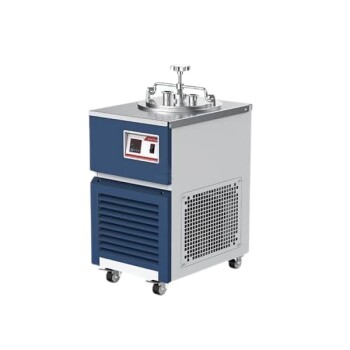
- Vacuum Cold Trap Direct Cold Trap Chiller
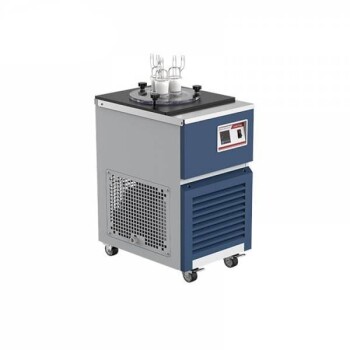
- Vacuum Cold Trap Chiller Indirect Cold Trap Chiller
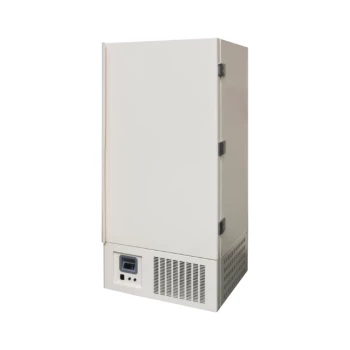
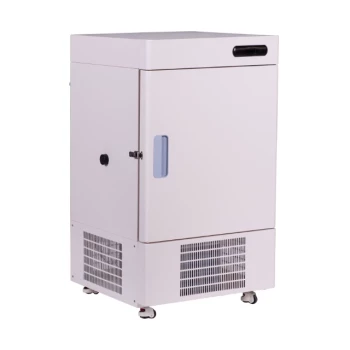
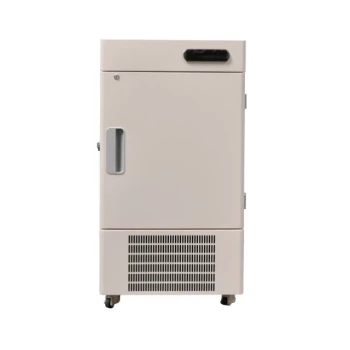
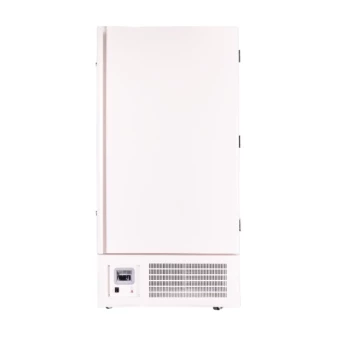
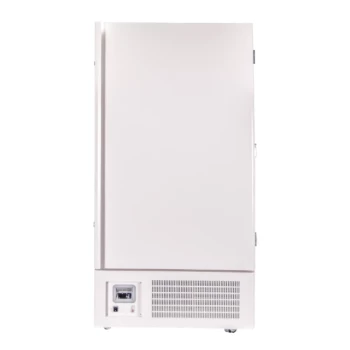
- 608L Essential Laboratory Ultra Low Temperature Freezer For Critical Sample Preservation
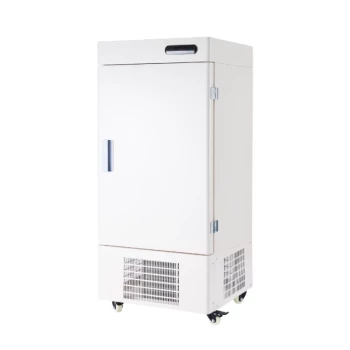
- 158L Precision Vertical Ultra Low Freezer for Laboratory Applications
- 108L Vertical Ultra Low Temperature ULT Freezer
People Also Ask
- What is the role of glass condensation components in arsenic collection? Optimize Niccolite Roasting & Kinetics
- Why is it necessary to configure efficient cold traps in membrane distillation? Ensure Flux Stability & Data Accuracy
- What is the purpose of connecting a cold trap at the reactor outlet? Protect Equipment and Analyze Liquid Products
- What is the primary purpose of a cold trap at a reactor outlet? Protect Analyzers & Ensure Data Integrity
- What is the function of a cold trap in bio-ethanol and methane reforming experiments? Optimize Purity & Protect Systems