The primary purpose of a cold trap installed at a chemical reactor outlet is to selectively condense and remove specific vapors—most frequently water moisture—from the product gas stream before it reaches analytical instruments.
By effectively "freezing out" these components, the trap ensures that the gas fed into devices like an online gas chromatograph (GC) is dry and stable, preventing damage to the equipment and ensuring data integrity.
A cold trap serves as a critical protective barrier, utilizing low-temperature condensation to eliminate moisture interference and pressure fluctuations, while simultaneously capturing volatile by-products for deeper chemical analysis.
Protecting Analytical Precision
The most immediate function of a cold trap is safeguarding the sensitive components of your analytical hardware. Without this protection, the reliability of your data is compromised.
Preserving Column Efficiency
Moisture is detrimental to many analytical setups. In an online gas chromatograph, water vapor can severely degrade column efficiency.
By condensing water out of the stream immediately after the reactor, the cold trap ensures that only the relevant dry gases enter the column, maintaining the separation capability required for accurate component analysis.
Preventing Pressure Fluctuations
When moisture is left in the gas stream, it can accumulate in cooler parts of the system downstream.
This accumulation often leads to erratic condensation, causing pressure fluctuations within the instrument lines. These spikes destabilize the baseline of your analysis, making it difficult to distinguish real signal peaks from noise.
Blocking High-Boiling Contaminants
Beyond water, reactor exhaust often contains high-boiling organic components or unreacted materials (such as furfural).
The cold trap condenses these heavier organic compounds before they can coat or clog delicate downstream sensors. This extends the lifespan of your equipment and reduces maintenance frequency.
Enabling Advanced Chemical Insight
While protection is the "surface" need, the "deep" value of a cold trap lies in its ability to capture valuable chemical information that would otherwise be lost.
Capturing Unstable Intermediates
For complex research, such as plasma reactions, a simple water trap is insufficient. Here, liquid nitrogen cold traps are often employed to create extreme low-temperature environments.
These traps rapidly freeze unstable intermediate products and unreacted monomers. By preventing these volatile compounds from escaping, researchers can analyze the reaction pathways and mechanisms with greater clarity.
Facilitating Offline Analysis
The material collected inside the cold trap is not merely waste; it is a concentrated sample of the reaction's by-products.
By retaining liquids and solids derived from the gas stream, the trap provides a high-concentration sample for offline analysis (e.g., via GC-MS). This helps identify the origins of carbon deposition and verify mass balance calculations.
Understanding the Trade-offs
Implementing a cold trap is not a passive decision; it requires careful management to avoid introducing new errors.
The Risk of Over-Trapping
If the temperature of the trap is too low for your specific application, you risk condensing gases that you actually intend to analyze.
You must ensure the trap temperature is low enough to catch contaminants (like water or heavy organics) but high enough to let your target analyte gases pass through to the detector.
Maintenance Dependencies
A cold trap is a collection vessel, not a disposal unit. It requires regular monitoring.
If the trap fills with ice or frozen organic material, it can block the flow entirely or lose its cooling efficiency, leading to a sudden "breakthrough" of contaminants into your analyzer.
Making the Right Choice for Your Goal
The specific configuration of your cold trap depends heavily on what you need to protect or measure.
- If your primary focus is Equipment Longevity: Prioritize a temperature setting that targets water removal to prevent column degradation and pressure spikes in your online GC.
- If your primary focus is Reaction Mechanism Research: Utilize a liquid nitrogen trap to rapidly capture unstable intermediates and monomers for detailed pathway analysis.
- If your primary focus is Mass Balance: Ensure the trap is designed to recover high-boiling organics effectively for subsequent offline GC-MS verification.
A properly configured cold trap transforms your exhaust line from a simple vent into a sophisticated separation stage, ensuring both the safety of your instruments and the accuracy of your science.
Summary Table:
| Function | Key Benefit | Target Contaminants |
|---|---|---|
| Equipment Protection | Prevents column degradation & pressure spikes | Water vapor, high-boiling organics |
| Data Accuracy | Stabilizes baseline signal & removes noise | Moisture, condensable vapors |
| Research Insight | Captures unstable intermediates for analysis | Volatile by-products, unreacted monomers |
| Sample Recovery | Enables offline GC-MS verification | Heavy organics, carbon-rich compounds |
Maximize Your Analytical Precision with KINTEK
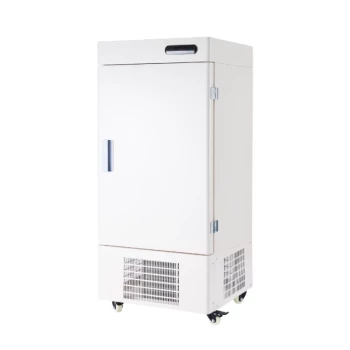
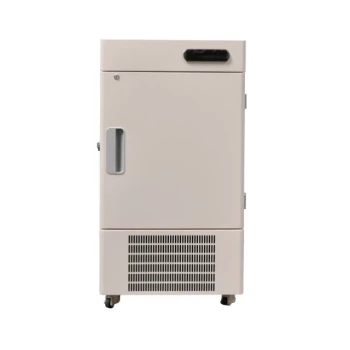
Don't let moisture and contaminants compromise your research. KINTEK specializes in high-performance laboratory solutions, including advanced cooling systems (ULT freezers, cold traps, freeze dryers) and chemical reactor components designed to safeguard your analytical hardware.
Whether you are conducting complex battery research, synthesis in high-temperature high-pressure reactors, or precise gas analysis, our comprehensive range of equipment—from vacuum furnaces to precision cold traps—ensures your system remains clean and your data stays accurate.
Ready to optimize your lab's workflow? Contact our technical experts today to find the perfect cold trap and reactor configuration for your specific application.
References
- Sri Hari Kumar A, Sai Prasad P.S.. Low Temperature Conversion of Ethane to Ethylene Using Zirconia Supported Molybdenum Oxide Catalysts. DOI: 10.30919/es8e710
This article is also based on technical information from Kintek Solution Knowledge Base .
Related Products
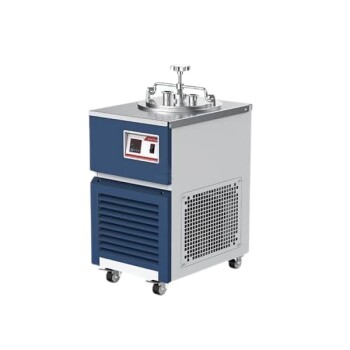
- Vacuum Cold Trap Direct Cold Trap Chiller
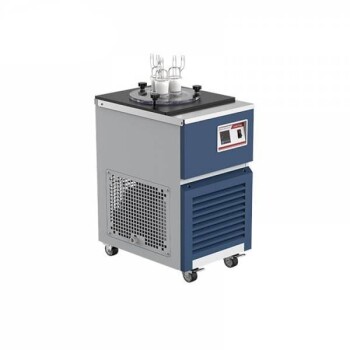
- Vacuum Cold Trap Chiller Indirect Cold Trap Chiller
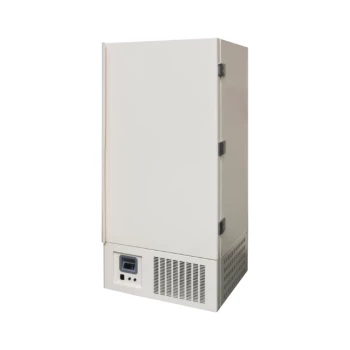
- 608L Essential Laboratory Ultra Low Temperature Freezer For Critical Sample Preservation
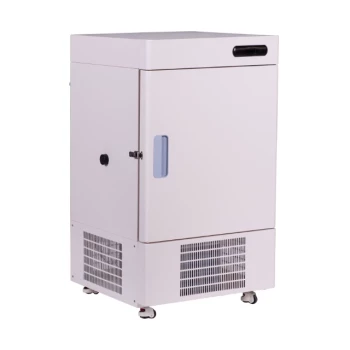
- 108L Vertical Ultra Low Temperature ULT Freezer
- 158L Precision Vertical Ultra Low Freezer for Laboratory Applications
People Also Ask
- What is the role of glass condensation components in arsenic collection? Optimize Niccolite Roasting & Kinetics
- Why is it necessary to configure efficient cold traps in membrane distillation? Ensure Flux Stability & Data Accuracy
- What is the purpose of connecting a cold trap at the reactor outlet? Protect Equipment and Analyze Liquid Products
- What is the function of a cold trap in bio-ethanol and methane reforming experiments? Optimize Purity & Protect Systems
- Why is a cold trap system containing isopropanol required for pyrolysis gas? Capture Elusive Volatiles Effectively