
Manual Lab Press
Laboratory manual slicer
Item Number : PT10
Price varies based on specs and customizations
- Mold material
- 3Cr13 (quenched stainless steel)
- Slice size
- Φ10,Φ12,Φ14,Φ15,Φ16,Φ18,Φ19(d)
- Overall dimensions
- 120*200*280mm(L*W*H)

Shipping:
Contact us to get shipping details Enjoy On-time Dispatch Guarantee.
Why Choose Us
Easy ordering process, quality products, and dedicated support for your business success.
Introduction
The manual slicer is a high-precision cutting device designed for laboratories, industry and medical fields. It is suitable for the preparation of thin slices of various materials such as paraffin samples, biological tissues, battery materials, food, etc. Its core design combines mechanical stability and operational convenience, supports flexible manual control mode, and can meet the stringent requirements of scientific research analysis, pathological diagnosis, material testing and other scenarios.
Detail & Parts
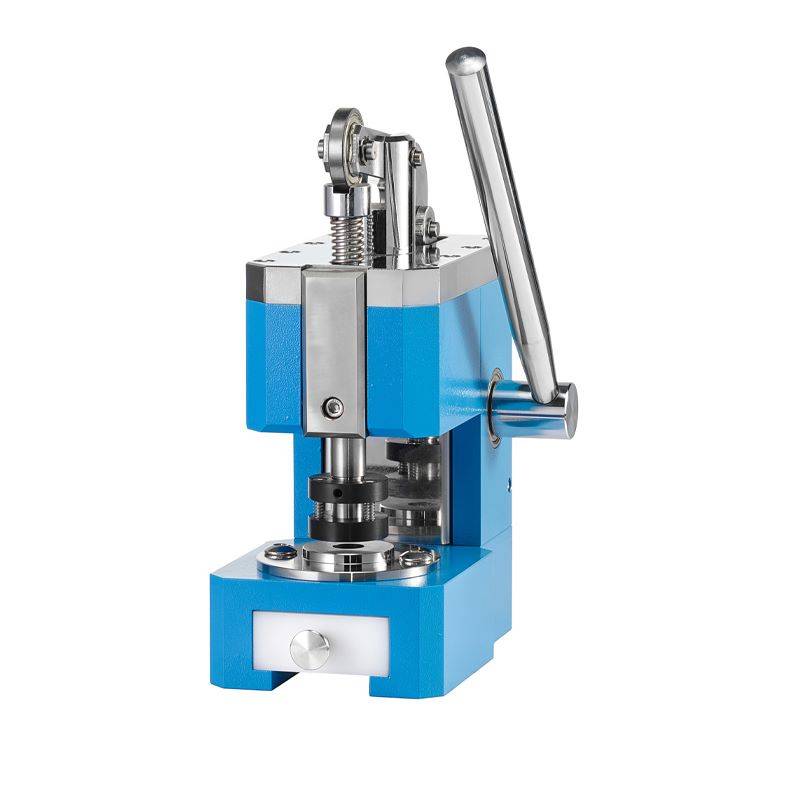

Applications
Manual slicers are widely used in the following scenarios:
- Laboratory research: biological tissue slicing (such as pathological testing), plant sample preparation, polymer material thin slice processing.
- Food industry: uniform slicing of vegetables, meat, cheese and other foods to improve processing efficiency and product consistency.
- Industrial manufacturing: precision slicing of materials such as rubber, plastic, and soft metal for quality inspection or small parts production.
- Education and training: practical teaching in medical schools and vocational schools to help students master basic slicing techniques.
Features
- Easy to operate and flexible to adapt
- The manual rotating wheel or lever design is adopted, and no electric drive is required. The cutting rhythm can be controlled by one hand, which is suitable for power-free environments.
-
- Equipped with a thickness adjustment knob, the slicing range covers 0.1-10mm, and the accuracy reaches ±0.05mm, which meets the diverse cutting needs.
- High-precision cutting performance
- Equipped with high-hardness stainless steel blades, it supports quick disassembly and replacement, and the blade angle is adjustable (10°-30°) to adapt to different material hardness.
- The non-slip sample fixing groove design ensures that there is no displacement during the material cutting process, and the slices are flat and without burrs.
- Safe and durable, simple maintenance
- The body adopts an all-metal frame and anti-corrosion coating, which has strong load-bearing capacity and long service life.
- Built-in safety shield and blade locking device to avoid the risk of accidental touch during operation, in line with industrial safety standards.
- Low cost investment
- Only cleaning the blade and lubricating the track are required on a daily basis, and the maintenance cost is extremely low.
Technical specifications
| Instrument model | PT10 |
| Mold material | 3Cr13 (quenched stainless steel) |
| Slice size | Φ10,Φ12,Φ14,Φ15,Φ16,Φ18,Φ19(d) |
| Overall dimensions | 120*200*280mm(L*W*H) |
| Equipment weight | 10kg |
| Machine size diagram | 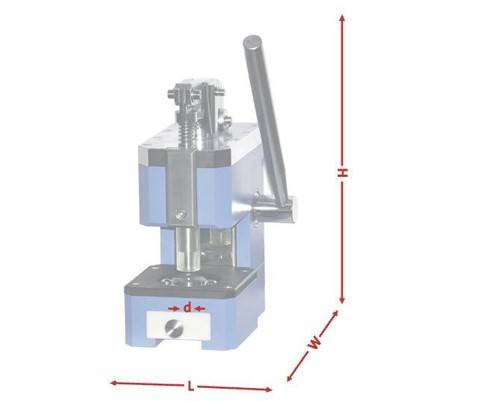 |
Operating steps

1. Install the upper punch into the slicer.

2. Tighten the front locking screw to fix the upper punch.
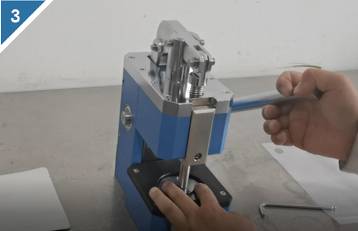
3. Put in the matching lower die.

4. After the punch is aligned, tighten the fixing screw of the lower die.

5. Put the sample into the slicer for punching

6. Take out the cut sample.
Trusted by Industry Leaders

FAQ
What Are The Advantages Of Using A Manual Press?
How Does A Manual Press Work?
What Types Of Tasks Can Be Performed Using A Manual Press?
What Is Manually Operated Lab Press?
REQUEST A QUOTE
Our professional team will reply to you within one business day. Please feel free to contact us!
Related Products

Manual button battery sealing machine
The manual button battery sealing machine is a high-precision packaging device designed specifically for small button batteries (such as CR2032, LR44 and other models). It is suitable for laboratory research and development, small batch production and teaching demonstrations.
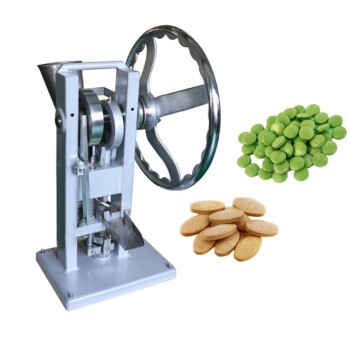
Single Punch Manual Tablet Press Machine TDP Tablet Punching Machine
Single punch manual tablet punching machine can press various granular, crystal or powdery raw materials with good fluidity into disc-shaped, cylindrical, spherical, convex, concave and other various geometric shapes (such as square, triangle, ellipse, capsule shape, etc.), and can also press products with text and patterns.
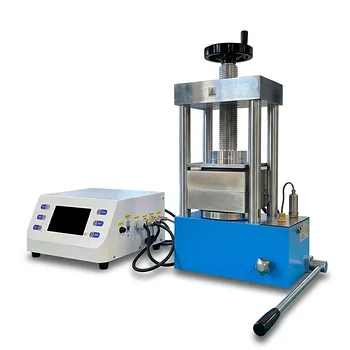
Manual Lab Heat Press
Manual hydraulic presses are mainly used in laboratories for various applications such as forging, molding, stamping, riveting and other operations. It allows the creation of complex shapes while saving material.

Laboratory Manual Hydraulic Pellet Press for Lab Use
Efficient sample preparation with small footprint Manual Lab Hydraulic Press. Ideal for material researching labs, pharmacy, catalytic reaction, and ceramics.

Laboratory Micro Tissue Grinding Mill Grinder
KT-MT10 is a miniature ball mill with a compact structure design. The width and depth are only 15X21 cm, and the total weight is only 8 kg. It can be used with a minimum 0.2ml centrifuge tube or a maximum 15ml ball mill jar.
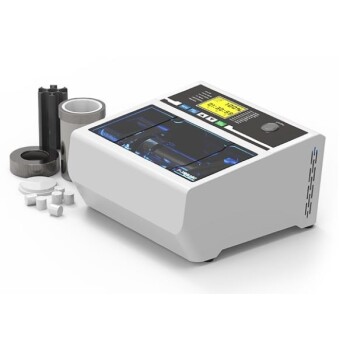
Laboratory Micro Horizontal Jar Mill for Precision Sample Preparation in Research and Analysis
Discover the Micro Horizontal Jar Mill for precise sample preparation in research and analysis. Ideal for XRD, geology, chemistry, and more.
Related Articles

Key Features of the Micro Tissue Grinder: Usage, Advantages, and Applications
Discover the key features of the Micro Tissue Grinder, including usage instructions, advantages, and application fields. Learn the principles and structure of the Micro Tissue Grinder, and explore its benefits in sample preparation and industrial settings.
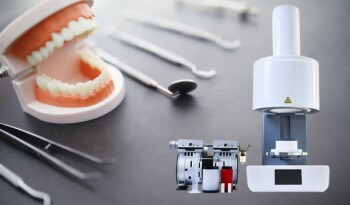
Major Equipment in a Dental Laboratory
Overview of essential dental lab equipment including casting, porcelain, polishing, and more.

Basic Laboratory Culture Equipment
Overview of essential laboratory equipment for biological and microbiological research.
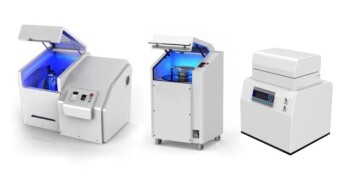
Development and Principles of Frozen Tissue Crushers
Explore the history, classification, and principles of frozen tissue crushers, including grinding ball selection and how to choose the right crusher.
Why Your Laminator Keeps Ruining Documents—And How to Stop It for Good
Tired of your laminator turning thermal prints or photos into black smudges? Discover the simple reason it happens and how to choose the right method.