Blog The Thermodynamics of a Perfect Seal: A Component-Level Approach to Sterilization
The Thermodynamics of a Perfect Seal: A Component-Level Approach to Sterilization

The Thermodynamics of a Perfect Seal: A Component-Level Approach to Sterilization

13 hours ago

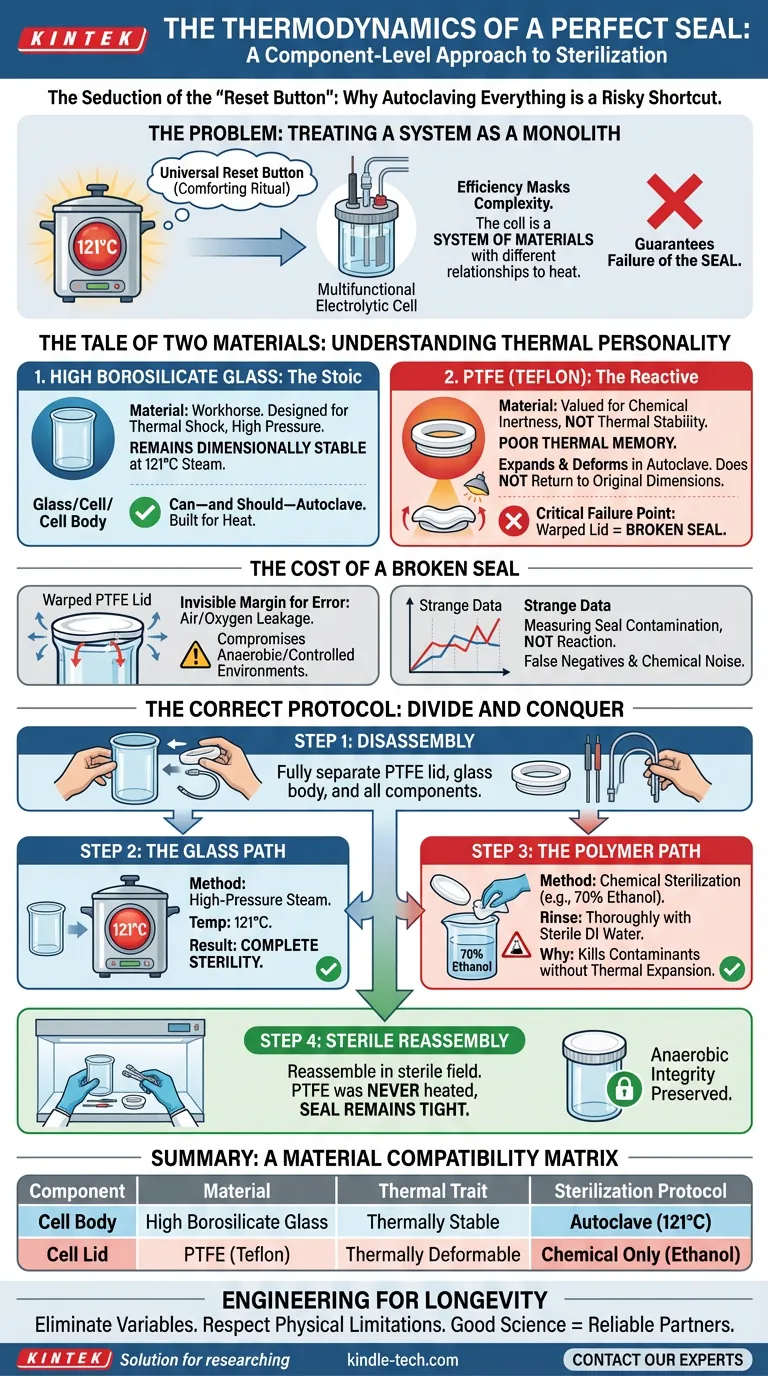
The Seduction of the "Reset Button"

In the laboratory, the autoclave is often viewed as a universal reset button.

It creates a sense of safety. You put equipment in, run a cycle at 121°C, and pull it out sterile. It is a comforting ritual of efficiency.

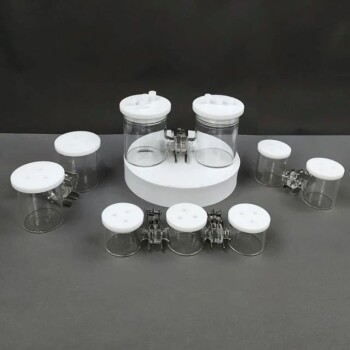
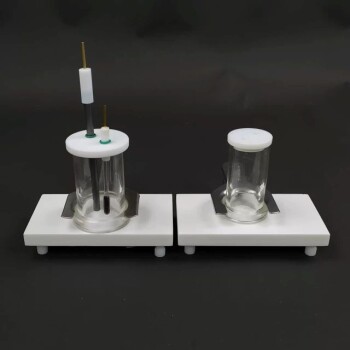
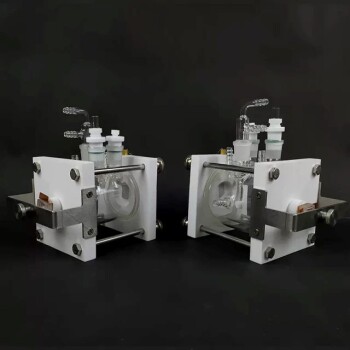
However, efficiency in science often masks complexity. When we treat a multifunctional electrolytic cell as a single object, we are making a category error. The cell is not one object; it is a system of materials with vastly different relationships to heat.

Treating the system as a monolith doesn't just risk damaging the equipment. It guarantees the failure of the experiment’s most critical requirement: the seal.

The Tale of Two Materials

To preserve the integrity of your research, you must understand the "thermal personality" of the two primary components in your cell.

1. High Borosilicate Glass: The Stoic

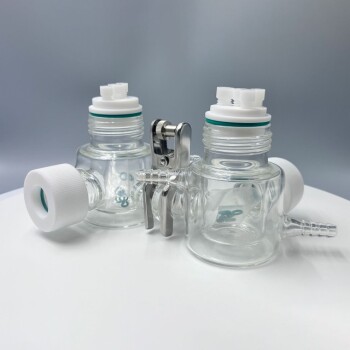
The body of the cell is engineered from high borosilicate glass.

This material is the workhorse of the chemical world. It is designed for thermal shock. It handles high pressure. When exposed to 121°C steam, it remains dimensionally stable.

You can—and should—autoclave the glass body. It is built for the heat.

2. PTFE (Teflon): The Reactive

The lid, however, is typically made of Polytetrafluoroethylene (PTFE).

We value PTFE for its chemical inertness, not its thermal stability. Under the intense heat of an autoclave, PTFE undergoes significant thermal expansion.

Here is the critical engineering failure point: PTFE has poor thermal memory.

When it expands in the autoclave, it deforms. Upon cooling, it does not return to its original micrometric dimensions. The lid warps. The threading shifts.

The result? A lid that fits onto the cell but no longer seals the cell.

The Cost of a Broken Seal

The damage to a PTFE lid is rarely catastrophic in appearance. It might look fine to the naked eye.

But in electrochemistry, the margin for error is invisible.

A deformed lid fails to create an airtight seal with the glass body. If your experiment requires an anaerobic environment or a controlled atmosphere, that environment is compromised the moment you close the lid.

You are no longer measuring the reaction of your electrolyte; you are measuring the contamination of your seal.

The Correct Protocol: Divide and Conquer

The solution requires a shift in mindset. You must stop sterilizing the unit and start sterilizing the components.

Here is the component-specific workflow:

Step 1: Disassembly

The cell must be fully disassembled. Separate the PTFE lid from the glass body. Remove electrodes and tubing.

Step 2: The Glass Path

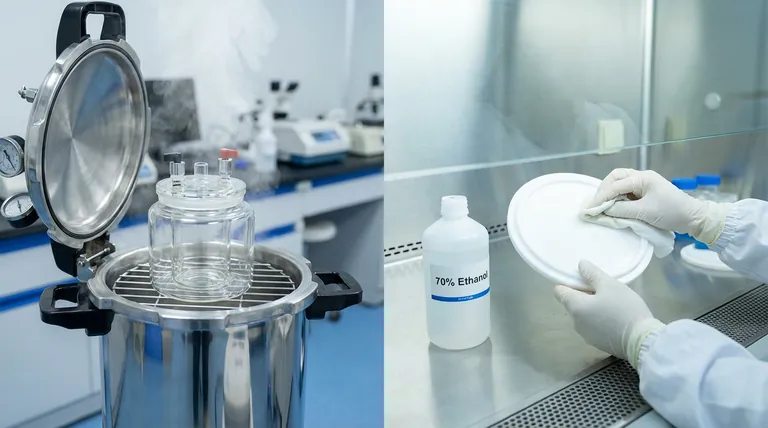
Place the high borosilicate glass body into the autoclave.

  • Method: High-pressure steam.
  • Temp: 121°C.
  • Result: Complete sterility.

Step 3: The Polymer Path

Treat the PTFE lid chemically.

  • Method: Chemical sterilization (e.g., 70% ethanol immersion or wipe).
  • Rinse: Thoroughly rinse with sterile deionized water.
  • Why: This kills contaminants without triggering thermal expansion.

Step 4: Sterile Reassembly

Reassemble the components in a laminar flow hood or sterile field. Because the PTFE was never heated, the seal remains tight, and the anaerobic integrity is preserved.

The Risks of Shortcuts

Why do researchers still autoclave the whole unit? Because it is faster.

But consider the hidden risks of this "shortcut":

  • Equipment Attrition: A warped lid renders the entire cell unusable. The cost of replacement far exceeds the time saved.
  • The "False Negative": You may run an experiment assuming the cell is sealed, only to get strange data caused by oxygen leakage. You blame the chemistry, but the culprit was the physics of the lid.
  • Chemical Noise: If you choose chemical sterilization for the lid but fail to rinse it properly, residual ethanol can alter electrochemical signals.

Summary: A Material Compatibility Matrix

Component Material Thermal Trait Sterilization Protocol
Cell Body High Borosilicate Glass Thermally Stable Autoclave (121°C)
Cell Lid PTFE (Teflon) Thermally Deformable Chemical Only (Ethanol)

Engineering for Longevity

Good science is about eliminating variables. By respecting the physical limitations of your equipment materials, you eliminate the variable of mechanical failure.

At KINTEK, we design our laboratory equipment to withstand the rigors of research, but we also believe in empowering scientists with the knowledge to use them correctly. A well-maintained electrolytic cell is not just a tool; it is a reliable partner in your discovery process.

Contact Our Experts

Visual Guide

The Thermodynamics of a Perfect Seal: A Component-Level Approach to Sterilization Visual Guide

Related Products

Related Articles

Related Products

Portable Digital Display Automatic Laboratory Sterilizer Lab Autoclave for Sterilization Pressure

Portable Digital Display Automatic Laboratory Sterilizer Lab Autoclave for Sterilization Pressure

Portable autoclave sterilization pressure is a device that uses pressure saturated steam to quickly and effectively sterilize items.

Portable High Pressure Laboratory Autoclave Steam Sterilizer for Lab Use

Portable High Pressure Laboratory Autoclave Steam Sterilizer for Lab Use

Portable autoclave sterilization pressure is a device that uses pressure saturated steam to quickly and effectively sterilize items.

Laboratory High Pressure Steam Sterilizer Vertical Autoclave for Lab Department

Laboratory High Pressure Steam Sterilizer Vertical Autoclave for Lab Department

Vertical pressure steam sterilizer is a kind of sterilization equipment with automatic control, which is composed of heating system, microcomputer control system and overheating and overpressure protection system.

Laboratory High Pressure Horizontal Autoclave Steam Sterilizer for Lab Use

Laboratory High Pressure Horizontal Autoclave Steam Sterilizer for Lab Use

The horizontal autoclave steam sterilizer adopts the gravity displacement method to remove the cold air in the inner chamber, so that the inner steam and cold air content is less, and the sterilization is more reliable.

Laboratory Sterilizer Lab Autoclave Pulsating Vacuum Desktop Steam Sterilizer

Laboratory Sterilizer Lab Autoclave Pulsating Vacuum Desktop Steam Sterilizer

The pulsating vacuum desktop steam sterilizer is a compact and reliable device used for rapid sterilization of medical, pharmaceutical, and research items.

Desktop Fast High Pressure Laboratory Autoclave Sterilizer 16L 24L for Lab Use

Desktop Fast High Pressure Laboratory Autoclave Sterilizer 16L 24L for Lab Use

The desktop fast steam sterilizer is a compact and reliable device used for rapid sterilization of medical, pharmaceutical, and research items.

Desktop Fast Laboratory Autoclave Sterilizer 35L 50L 90L for Lab Use

Desktop Fast Laboratory Autoclave Sterilizer 35L 50L 90L for Lab Use

The desktop fast steam sterilizer is a compact and reliable device used for rapid sterilization of medical, pharmaceutical, and research items. It efficiently sterilizes surgical instruments, glassware, medicines, and resistant materials, making it suitable for various applications.

Laboratory Sterilizer Lab Autoclave Pulse Vacuum Lifting Sterilizer

Laboratory Sterilizer Lab Autoclave Pulse Vacuum Lifting Sterilizer

The pulse vacuum lifting sterilizer is a state-of-the-art equipment for efficient and precise sterilization. It uses pulsating vacuum technology, customizable cycles, and a user-friendly design for easy operation and safety.

Benchtop Laboratory Freeze Dryer for Lab Use

Benchtop Laboratory Freeze Dryer for Lab Use

Premium benchtop laboratory freeze dryer for lyophilization, preserving samples with ≤ -60°C cooling. Ideal for pharmaceuticals & research.

Custom PTFE Teflon Parts Manufacturer for PTFE Mesh F4 Sieve

Custom PTFE Teflon Parts Manufacturer for PTFE Mesh F4 Sieve

PTFE mesh sieve is a specialized test sieve designed for particle analysis in various industries, featuring a non-metallic mesh woven from PTFE filament. This synthetic mesh is ideal for applications where metal contamination is a concern . PTFE sieves are crucial for maintaining the integrity of samples in sensitive environments, ensuring accurate and reliable results in particle size distribution analysis.

Automatic Lab Cold Isostatic Press CIP Machine Cold Isostatic Pressing

Automatic Lab Cold Isostatic Press CIP Machine Cold Isostatic Pressing

Efficiently prepare samples with our Automatic Lab Cold Isostatic Press. Widely used in material research, pharmacy, and electronic industries. Provides greater flexibility and control compared to electric CIPs.

Warm Isostatic Press WIP Workstation 300Mpa for High Pressure Applications

Warm Isostatic Press WIP Workstation 300Mpa for High Pressure Applications

Discover Warm Isostatic Pressing (WIP) - A cutting-edge technology that enables uniform pressure to shape and press powdered products at a precise temperature. Ideal for complex parts and components in manufacturing.

Graphite Vacuum Furnace Negative Material Graphitization Furnace

Graphite Vacuum Furnace Negative Material Graphitization Furnace

Graphitization furnace for battery production has uniform temperature and low energy consumption. Graphitization furnace for negative electrode materials: an efficient graphitization solution for battery production and advanced functions to enhance battery performance.

Vacuum Hot Press Furnace Machine for Lamination and Heating

Vacuum Hot Press Furnace Machine for Lamination and Heating

Experience clean and precise lamination with Vacuum Lamination Press. Perfect for wafer bonding, thin-film transformations, and LCP lamination. Order now!

Custom PTFE Teflon Parts Manufacturer for Centrifuge Tubes

Custom PTFE Teflon Parts Manufacturer for Centrifuge Tubes

PTFE centrifugal tubes are highly valued for their exceptional chemical resistance, thermal stability, and non-stick properties, making them indispensable in various high-demand sectors. These tubes are particularly useful in environments where exposure to corrosive substances, high temperatures, or stringent cleanliness requirements are prevalent.

Circulating Water Vacuum Pump for Laboratory and Industrial Use

Circulating Water Vacuum Pump for Laboratory and Industrial Use

Efficient circulating water vacuum pump for labs - oil-free, corrosion-resistant, quiet operation. Multiple models available. Get yours now!

Laboratory manual slicer

Laboratory manual slicer

Manual microtome is a high-precision cutting device designed for laboratories, industry and medical fields. It is suitable for the preparation of thin slices of various materials such as paraffin samples, biological tissues, battery materials, food, etc.

Platinum Sheet Electrode for Battery Lab Applications

Platinum Sheet Electrode for Battery Lab Applications

Platinum sheet is composed of platinum, which is also one of the refractory metals. It is soft and can be forged, rolled and drawn into rod, wire, plate, tube and wire.

Infrared Heating Quantitative Flat Plate Press Mold

Infrared Heating Quantitative Flat Plate Press Mold

Discover advanced infrared heating solutions with high-density insulation and precise PID control for uniform thermal performance in various applications.


Leave Your Message