Connecting a cold trap to the reactor outlet serves to actively condense and capture volatile organic compounds from the post-reaction gas stream. This prevents high-boiling point components—specifically unreacted furfural, the product furfuryl alcohol, and various by-products—from remaining in the vapor phase as they exit the system.
The cold trap performs two essential functions: it acts as a protective barrier for sensitive downstream equipment and provides the necessary liquid condensate to investigate reaction mechanisms and carbon deposition.
Protecting Analytical Integrity
Shielding Online Equipment
The gas stream leaving a furfural hydrogenation reactor contains organic components with high boiling points. If these components remain in the vapor phase, they travel downstream toward online analytical instruments.
Preventing Sensor Contamination
The cold trap uses low temperatures to condense these organics before they can proceed further. This protects your online gas analyzers from becoming contaminated or clogged by heavy organic residues.
Maintaining Continuous Operations
By removing these high-boiling compounds, you ensure that continuous monitoring equipment functions correctly. This reduces maintenance downtime caused by organic buildup in sensitive detectors.
Enabling Comprehensive Data Analysis
Bridging the Gap to Offline Analysis
Online gas analysis often cannot identify or quantify heavier liquid products. The cold trap accumulates these components into a liquid sample suitable for offline testing.
Facilitating GC-MS Studies
The collected condensate provides the physical sample required for techniques like Gas Chromatography-Mass Spectrometry (GC-MS). This allows for a detailed breakdown of the product distribution that gas-phase analysis alone would miss.
Investigating Carbon Deposition
A critical application of these collected samples is studying the origins of carbon deposition. By analyzing the specific by-products trapped in the condensate, researchers can trace the chemical pathways leading to catalyst fouling.
Understanding the Operational Trade-offs
The Limitation of Online-Only Data
Relying exclusively on downstream gas analyzers creates a blind spot regarding heavy by-products. The cold trap is necessary because high-boiling organics will not be detected—or will damage the detectors—if not removed first.
Batch vs. Continuous Monitoring
While the reactor acts continuously, the cold trap introduces a batch sampling element. The liquid samples represent an accumulation over time, meaning they provide an average composition rather than a real-time snapshot of the liquid product formation.
Optimizing Your Experimental Setup
To get the most value from your furfural hydrogenation experiments, align your use of the cold trap with your specific analytical needs:
- If your primary focus is Equipment Safety: Ensure the trap temperature is sufficiently low to condense all high-boiling point organics before they reach the gas analyzers.
- If your primary focus is Mechanism Study: Prioritize the rigorous collection and GC-MS analysis of the trapped liquid to identify precursors to carbon deposition.
The cold trap is not merely a waste collection vessel; it is a critical interface that secures your equipment while capturing the chemical evidence needed to understand catalyst performance.
Summary Table:
| Feature | Primary Function | Benefit to Experiment |
|---|---|---|
| Equipment Protection | Condenses high-boiling organics | Prevents sensor contamination and detector clogging |
| Data Integrity | Collects liquid condensate | Enables detailed offline GC-MS and product distribution analysis |
| Catalyst Research | Traps reaction by-products | Facilitates study of carbon deposition and fouling pathways |
| Process Safety | Volatile compound capture | Ensures stable operation of downstream analytical instruments |
Maximize Your Research Precision with KINTEK
Elevate your chemical engineering and material science workflows with KINTEK’s specialized laboratory solutions. Whether you are conducting furfural hydrogenation or complex thermal processing, our high-performance cold traps, high-temperature high-pressure reactors, and gas-liquid separators are designed to ensure analytical integrity and equipment longevity.
Why choose KINTEK?
- Comprehensive Equipment Range: From advanced CVD/PECVD systems to precision crushing and milling tools.
- Built for Durability: Our PTFE products, ceramics, and crucibles withstand the most demanding experimental environments.
- Expert Support: We help you select the right cooling solutions and autoclaves to optimize your reaction mechanisms.
Don't let equipment downtime or data gaps hinder your discovery. Contact our technical experts today to build a more efficient and reliable laboratory setup.
References
- Kathryn MacIntosh, Simon K. Beaumont. Nickel-Catalysed Vapour-Phase Hydrogenation of Furfural, Insights into Reactivity and Deactivation. DOI: 10.1007/s11244-020-01341-9
This article is also based on technical information from Kintek Solution Knowledge Base .
Related Products
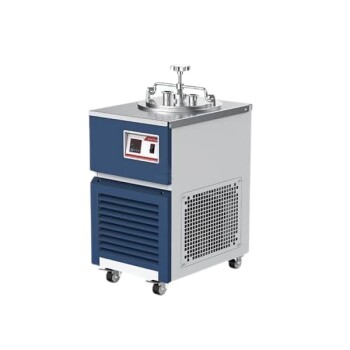
- Vacuum Cold Trap Direct Cold Trap Chiller
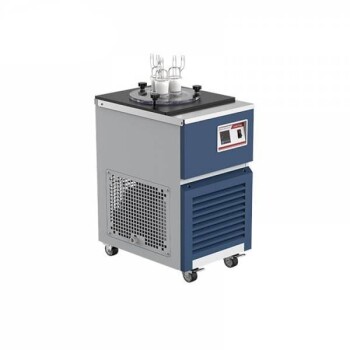
- Vacuum Cold Trap Chiller Indirect Cold Trap Chiller
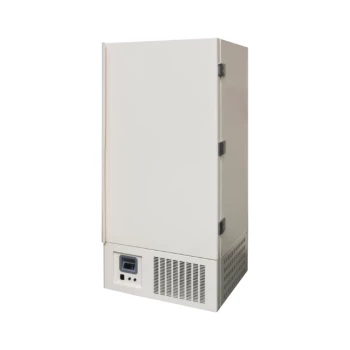
- 608L Essential Laboratory Ultra Low Temperature Freezer For Critical Sample Preservation
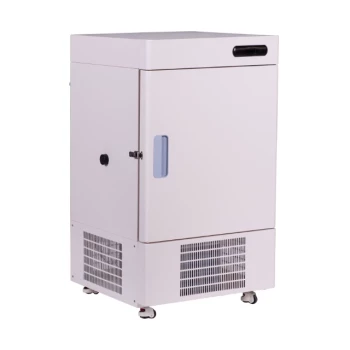
- 108L Vertical Ultra Low Temperature ULT Freezer
People Also Ask
- What is the role of glass condensation components in arsenic collection? Optimize Niccolite Roasting & Kinetics
- Why is it necessary to configure efficient cold traps in membrane distillation? Ensure Flux Stability & Data Accuracy
- What is the primary purpose of a cold trap at a reactor outlet? Protect Analyzers & Ensure Data Integrity
- What is the function of a cold trap in bio-ethanol and methane reforming experiments? Optimize Purity & Protect Systems
- Why is a cold trap system containing isopropanol required for pyrolysis gas? Capture Elusive Volatiles Effectively