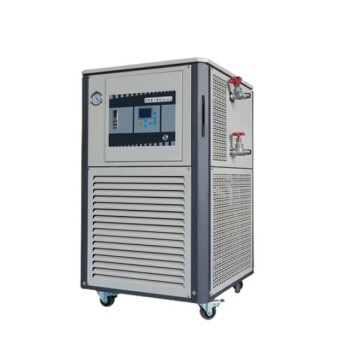
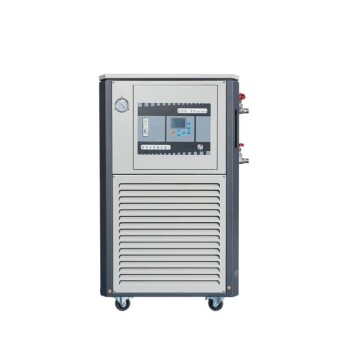
High-temperature and high-pressure hydrothermal reactors are the critical mechanism for overcoming the physical and chemical defenses of food waste to enable energy extraction. By operating between 100–300 °C and 1–7 MPa, these reactors effectively dissolve recalcitrant biomass structures—specifically hemicellulose and lignin—which significantly accelerates the hydrolysis rate necessary for successful hydrogen production during downstream fermentation.
Core Insight: The value of these reactors lies in their ability to maintain water in a "superheated liquid state." In this unique state, water acts as both a solvent and a catalyst, aggressively deconstructing the dense cell walls of food waste to expose the fermentable material inside without requiring the waste to be dried first.
The Mechanics of Biomass Deconstruction
Overcoming Structural Recalcitrance
Food waste often contains complex, rigid structures that bacteria cannot easily digest. The primary obstacle to hydrogen production is the natural resistance, or recalcitrance, of these materials.
High-pressure reactors are used specifically to fractionate hemicellulose and deconstruct lignin walls. By breaking down these protective outer layers, the reactor exposes the cellulose inside, making it available for biological conversion.
The Role of Superheated Liquid Water
To dissolve these structures, water must remain liquid at temperatures far above its normal boiling point (typically 180°C to 230°C).
The reactor's high pressure (1–7 MPa) prevents the water from turning into steam. This creates a subcritical environment where the water possesses unique acidic and solvent properties, allowing it to penetrate and degrade dense biomass much faster than standard boiling water.
Accelerating Anaerobic Fermentation
Hydrogen is produced during the anaerobic fermentation stage. However, fermentation is limited by how fast complex organic matter can be broken down into simple sugars (hydrolysis).
By pre-treating the waste in these reactors, you effectively "pre-digest" the material. This significantly accelerates the hydrolysis rate, ensuring that the bacteria used in the subsequent fermentation step can access the nutrients they need to generate hydrogen efficiently.
Operational Efficiencies
Eliminating the Need for Drying
A major advantage of hydrothermal reactors is their ability to process wet biomass.
Because the reaction medium itself is water, there is no need for an energy-intensive pre-drying step. This is particularly vital for food waste and sewage sludge, which naturally have high moisture content.
Acting as a Catalyst
In this high-pressure environment, the water does not just hold the material; it actively participates in the chemistry.
Liquid water under these conditions acts as a catalyst for the chemical modification of the biomass. It promotes the dissolution of hemicellulose and allows for the removal of impurities, such as alkali metals, which could otherwise hinder the downstream processes.
Understanding the Trade-offs
While effective, operating at high temperatures and pressures introduces distinct engineering challenges.
Safety and Sealing Requirements
The combination of high heat and pressure creates a hazardous environment. Reactors must feature superior sealing performance and pressure resistance.
Any failure in the vessel's integrity can lead to pressure leaks or catastrophic process failures. Consequently, the capital cost for these reactors is higher due to the robust engineering required to withstand saturated steam pressure and prevent safety incidents.
Making the Right Choice for Your Goal
When integrating hydrothermal reactors into a hydrogen production line, consider your specific feedstock and objectives:
- If your primary focus is maximizing reaction speed: Prioritize reactors capable of reaching the upper bounds of the temperature range (near 300°C), as higher thermal energy accelerates the deconstruction of lignin walls and hemicellulose fractionation.
- If your primary focus is processing wet or variable waste: Select a reactor designed for "wet torrefaction" or subcritical operation that eliminates pre-drying, ensuring the system can handle high-moisture inputs like sewage sludge or raw food scraps without efficiency loss.
Ultimately, the high-pressure reactor is not just a heating vessel; it is a thermodynamic tool that transforms water into a solvent capable of unlocking the energy potential within complex waste.
Summary Table:
| Feature | Hydrothermal Reactor Performance | Benefit for Hydrogen Production |
|---|---|---|
| Operating Temp | 100–300 °C | Dissolves recalcitrant lignin and hemicellulose |
| Pressure Range | 1–7 MPa | Maintains water in a reactive subcritical liquid state |
| Media Type | Wet Biomass/Sludge | Eliminates the need for energy-heavy pre-drying |
| Chemical Role | Solvent & Catalyst | Promotes rapid hydrolysis and deconstruction |
| Process Speed | High Acceleration | Shortens fermentation cycles for faster gas yield |
Unlock the Energy Potential of Your Waste with KINTEK
Transitioning from complex food waste to clean hydrogen requires robust engineering and thermodynamic precision. At KINTEK, we specialize in the high-temperature and high-pressure reactors essential for biomass deconstruction.
Our specialized high-pressure reactors and autoclaves are designed with superior sealing and pressure resistance to ensure safety and efficiency in subcritical water applications. Whether you are focusing on hydrothermal carbonization, wet torrefaction, or advanced fermentation pretreatment, our laboratory solutions—including crushing systems, high-temperature furnaces, and specialized reactor vessels—provide the reliability your research demands.
Ready to scale your hydrogen production? Contact our technical experts today to find the perfect reactor system for your lab.
References
- Djangbadjoa Gbiete, Michael Nelles. Insights into Biohydrogen Production Through Dark Fermentation of Food Waste: Substrate Properties, Inocula, and Pretreatment Strategies. DOI: 10.3390/en17246350
This article is also based on technical information from Kintek Solution Knowledge Base .
Related Products
- High Pressure Laboratory Autoclave Reactor for Hydrothermal Synthesis
- Customizable Laboratory High Temperature High Pressure Reactors for Diverse Scientific Applications
- Custom PTFE Teflon Parts Manufacturer for Hydrothermal Synthesis Reactor Polytetrafluoroethylene Carbon Paper and Carbon Cloth Nano-growth
- Electric Rotary Kiln Small Rotary Furnace Biomass Pyrolysis Plant
- Stainless High Pressure Autoclave Reactor Laboratory Pressure Reactor
People Also Ask
- What role does a high-pressure reactor (autoclave) play in the synthesis of NiCuFe-LDH? Master Hydrothermal Growth
- What Role Does a High-Pressure Reactor or Autoclave Play in HA Catalyst Synthesis? Achieve High Surface Area Materials
- What equipment is required for hydrothermal synthesis of Ga0.25Zn4.67S5.08? Optimize Your Semiconductor Production
- What is the function of a high-pressure reactor in the hydrothermal synthesis of boehmite? Expert Process Insights
- What role does an autoclave play in the synthesis of MnO2 nanofibers? Mastering Hydrothermal Growth