Knowledge What are the technical characteristics of PTFE (Teflon) lined hydrothermal reactors? Comparing α-ZrP Synthesis Methods
Author avatar

Tech Team · Kintek Solution

Updated 19 hours ago

What are the technical characteristics of PTFE (Teflon) lined hydrothermal reactors? Comparing α-ZrP Synthesis Methods


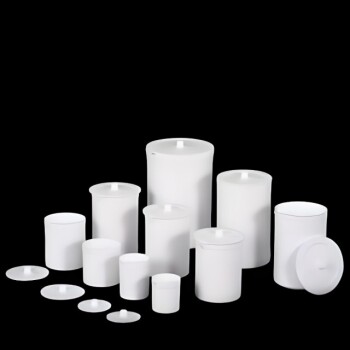
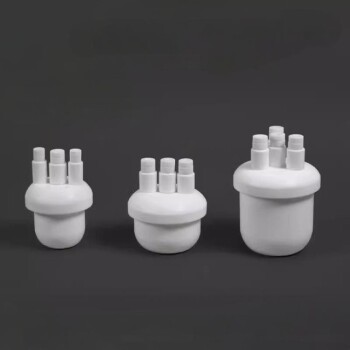
PTFE-lined hydrothermal reactors differ from microwave methods primarily through their thermal properties and reaction durability. While microwave synthesis utilizes rapid, direct heating, PTFE (Teflon) lined reactors rely on external conduction, resulting in lower heat transfer efficiency but providing a robust environment for handling strong acids under high pressure.

The fundamental trade-off lies in efficiency versus environmental stability: PTFE reactors offer exceptional resistance to acid corrosion and high pressure for creating high-crystallinity materials, but this comes at the cost of significantly longer reaction cycles.

The Technical Environment of PTFE Reactors

Withstanding Corrosive Conditions

The synthesis of alpha-Zirconium Phosphate ($\alpha$-ZrP) often necessitates the use of aggressive chemical agents. PTFE linings provide a chemically inert barrier capable of resisting strong acid corrosion. This ensures the reactor maintains structural integrity even when subjected to harsh chemical environments.

Managing High Pressure and Temperature

These reactors function as autoclaves, creating a sealed, high-pressure system. This design allows the reaction environment to withstand high temperatures and high pressures, forcing solvents to remain liquid well above their standard boiling points to facilitate crystallization.

Thermal Dynamics and Efficiency

Heat Transfer Limitations

A critical distinction between these two methods is how energy is delivered to the precursors. Unlike microwave heating, which interacts directly with molecules for volumetric heating, PTFE acts as a thermal insulator. Consequently, these reactors demonstrate lower heat transfer efficiency, slowing the rate at which the reaction mixture reaches equilibrium.

Reaction Cycle Duration

Due to the slower thermal conduction, the traditional hydrothermal process is inherently time-intensive. To successfully synthesize $\alpha$-ZrP in these vessels, the protocol typically requires maintaining a temperature of 200 degrees Celsius for over 24 hours. This represents a significantly longer reaction cycle than microwave-assisted synthesis.

Understanding the Trade-offs

Crystallinity vs. Processing Speed

While the heating process is inefficient, the stable, sustained environment of a PTFE reactor is highly effective. These autoclaves are capable of producing materials with high crystallinity. However, researchers must accept that achieving this structural quality via traditional hydrothermal methods requires a much greater time investment compared to microwave techniques.

Making the Right Choice for Your Synthesis

To determine the best method for your specific application, weigh the importance of reaction speed against equipment robustness.

  • If your primary focus is Material Quality and Durability: Choose the PTFE-lined hydrothermal reactor if you require high-crystallinity outputs and need a vessel guaranteed to withstand strong acid corrosion over long durations.
  • If your primary focus is Process Efficiency: Opt for microwave synthesis if you need to drastically reduce the reaction cycle from 24+ hours to a fraction of that time.

Select the method that aligns with your timeline constraints without compromising the chemical integrity of your final product.

Summary Table:

Feature PTFE-Lined Hydrothermal Reactor Microwave Synthesis Method
Heating Mechanism External conduction (Slow/Insulated) Direct volumetric heating (Rapid)
Chemical Resistance Exceptional (Inert PTFE lining) Variable (Depends on vessel)
Pressure Capability High (Sealed autoclave environment) Controlled internal pressure
Reaction Time Long (24+ hours for alpha-ZrP) Short (Minutes to hours)
Material Result High-crystallinity powders Rapidly formed nanocrystals

Elevate Your Material Synthesis with KINTEK Precision

Whether your research demands the robust, acid-resistant environment of PTFE-lined hydrothermal reactors and autoclaves for high-crystallinity $\alpha$-ZrP, or high-speed processing solutions, KINTEK delivers the quality you need. We specialize in providing advanced laboratory equipment, including high-temperature furnaces, high-pressure reactors, and essential consumables like PTFE products and ceramics, specifically designed for researchers in material science and battery development.

Ready to optimize your lab's performance? Contact KINTEK today to discuss how our specialized equipment can enhance your synthesis efficiency and product integrity.

References

  1. Weitai Yu, Ying Chen. Multifactor-Regulated Fast Synthesis of α-Zirconium Phosphate Nanocrystals Towards Highly Efficient Adsorption of Pesticides. DOI: 10.1007/s10853-020-05202-4

This article is also based on technical information from Kintek Solution Knowledge Base .

Related Products

People Also Ask

Related Products

Customizable Laboratory High Temperature High Pressure Reactors for Diverse Scientific Applications

Customizable Laboratory High Temperature High Pressure Reactors for Diverse Scientific Applications

High-pressure lab reactor for precise hydrothermal synthesis. Durable SU304L/316L, PTFE liner, PID control. Customizable volume & materials. Contact us!

Stainless High Pressure Autoclave Reactor Laboratory Pressure Reactor

Stainless High Pressure Autoclave Reactor Laboratory Pressure Reactor

Discover the versatility of Stainless High Pressure Reactor - a safe and reliable solution for direct and indirect heating. Built with stainless steel, it can withstand high temperatures and pressures. Learn more now.

Mini SS High Pressure Autoclave Reactor for Laboratory Use

Mini SS High Pressure Autoclave Reactor for Laboratory Use

Mini SS High Pressure Reactor - Ideal for medicine, chemical, and scientific research industries. Programmed heating temp and stirring speed, up to 22Mpa pressure.

High Pressure Laboratory Autoclave Reactor for Hydrothermal Synthesis

High Pressure Laboratory Autoclave Reactor for Hydrothermal Synthesis

Discover the applications of Hydrothermal Synthesis Reactor - a small, corrosion-resistant reactor for chemical labs. Achieve rapid digestion of insoluble substances in a safe and reliable way. Learn more now.

Custom PTFE Teflon Parts Manufacturer for Acid and Alkali Resistant Chemical Powder Material Scoops

Custom PTFE Teflon Parts Manufacturer for Acid and Alkali Resistant Chemical Powder Material Scoops

Known for its excellent thermal stability, chemical resistance and electrical insulating properties, PTFE is a versatile thermoplastic material.

Visual High-Pressure Reactor for In-Situ Observation

Visual High-Pressure Reactor for In-Situ Observation

The visual high-pressure reactor uses transparent sapphire or quartz glass, maintaining high strength and optical clarity under extreme conditions for real-time reaction observation.

Laboratory High Pressure Horizontal Autoclave Steam Sterilizer for Lab Use

Laboratory High Pressure Horizontal Autoclave Steam Sterilizer for Lab Use

The horizontal autoclave steam sterilizer adopts the gravity displacement method to remove the cold air in the inner chamber, so that the inner steam and cold air content is less, and the sterilization is more reliable.

Desktop Fast High Pressure Laboratory Autoclave Sterilizer 16L 24L for Lab Use

Desktop Fast High Pressure Laboratory Autoclave Sterilizer 16L 24L for Lab Use

The desktop fast steam sterilizer is a compact and reliable device used for rapid sterilization of medical, pharmaceutical, and research items.

Custom PTFE Teflon Parts Manufacturer for PTFE Buchner Funnel and Triangular Funnel

Custom PTFE Teflon Parts Manufacturer for PTFE Buchner Funnel and Triangular Funnel

The PTFE funnel is a piece of laboratory equipment used primarily for filtration processes, particularly in the separation of solid and liquid phases in a mixture. This setup allows for efficient and rapid filtration, making it indispensable in various chemical and biological applications.

Custom PTFE Teflon Parts Manufacturer for PTFE Measuring Cylinder 10/50/100ml

Custom PTFE Teflon Parts Manufacturer for PTFE Measuring Cylinder 10/50/100ml

PTFE measuring cylinder are a rugged alternative to traditional glass cylinders. They are chemically inert over a wide temperature range (up to 260º C), have excellent corrosion resistance and maintain a low coefficient of friction, ensuring ease of use and cleaning.

Custom PTFE Teflon Parts Manufacturer for PTFE Mesh F4 Sieve

Custom PTFE Teflon Parts Manufacturer for PTFE Mesh F4 Sieve

PTFE mesh sieve is a specialized test sieve designed for particle analysis in various industries, featuring a non-metallic mesh woven from PTFE filament. This synthetic mesh is ideal for applications where metal contamination is a concern . PTFE sieves are crucial for maintaining the integrity of samples in sensitive environments, ensuring accurate and reliable results in particle size distribution analysis.

Desktop Fast Laboratory Autoclave Sterilizer 35L 50L 90L for Lab Use

Desktop Fast Laboratory Autoclave Sterilizer 35L 50L 90L for Lab Use

The desktop fast steam sterilizer is a compact and reliable device used for rapid sterilization of medical, pharmaceutical, and research items. It efficiently sterilizes surgical instruments, glassware, medicines, and resistant materials, making it suitable for various applications.

Custom PTFE Teflon Parts Manufacturer for Magnetic Stirring Bar

Custom PTFE Teflon Parts Manufacturer for Magnetic Stirring Bar

The PTFE magnetic stirring bar, made from high-quality PTFE, offers exceptional resistance to acids, alkalis, and organic solvents, coupled with high-temperature stability and low friction. Ideal for laboratory use, these stirring bars are compatible with standard flask ports, ensuring stability and safety during operations.

Custom PTFE Teflon Parts Manufacturer Grinding Bowl

Custom PTFE Teflon Parts Manufacturer Grinding Bowl

PTFE is renowned for its exceptional chemical resistance, thermal stability, and low friction properties, making it a versatile material in various industries. The PTFE grinding bowl, specifically, finds applications where these properties are crucial.

Manual High Temperature Heated Hydraulic Press Machine with Heated Plates for Lab

Manual High Temperature Heated Hydraulic Press Machine with Heated Plates for Lab

The High Temperature Hot Press is a machine specifically designed for pressing, sintering and processing materials in a high temperature environment. It is capable of operating in the range of hundreds of degrees Celsius to thousands of degrees Celsius for a variety of high temperature process requirements.

Square Bidirectional Pressure Mold for Lab Use

Square Bidirectional Pressure Mold for Lab Use

Discover precision in molding with our Square Bidirectional Pressure Mold. Ideal for creating diverse shapes and sizes, from squares to hexagons, under high pressure and uniform heating. Perfect for advanced material processing.

Optical Water Bath Electrolytic Electrochemical Cell

Optical Water Bath Electrolytic Electrochemical Cell

Upgrade your electrolytic experiments with our Optical Water Bath. With controllable temperature and excellent corrosion resistance, it's customizable for your specific needs. Discover our complete specifications today.

915MHz MPCVD Diamond Machine Microwave Plasma Chemical Vapor Deposition System Reactor

915MHz MPCVD Diamond Machine Microwave Plasma Chemical Vapor Deposition System Reactor

915MHz MPCVD Diamond Machine and its multi-crystal effective growth, the maximum area can reach 8 inches, the maximum effective growth area of single crystal can reach 5 inches. This equipment is mainly used for the production of large-size polycrystalline diamond films, the growth of long single crystal diamonds, the low-temperature growth of high-quality graphene, and other materials that require energy provided by microwave plasma for growth.

Graphite Vacuum Furnace Negative Material Graphitization Furnace

Graphite Vacuum Furnace Negative Material Graphitization Furnace

Graphitization furnace for battery production has uniform temperature and low energy consumption. Graphitization furnace for negative electrode materials: an efficient graphitization solution for battery production and advanced functions to enhance battery performance.

Microwave Plasma Chemical Vapor Deposition MPCVD Machine System Reactor for Lab and Diamond Growth

Microwave Plasma Chemical Vapor Deposition MPCVD Machine System Reactor for Lab and Diamond Growth

Get high-quality diamond films with our Bell-jar Resonator MPCVD machine designed for lab and diamond growth. Discover how Microwave Plasma Chemical Vapor Deposition works for growing diamonds using carbon gas and plasma.


Leave Your Message