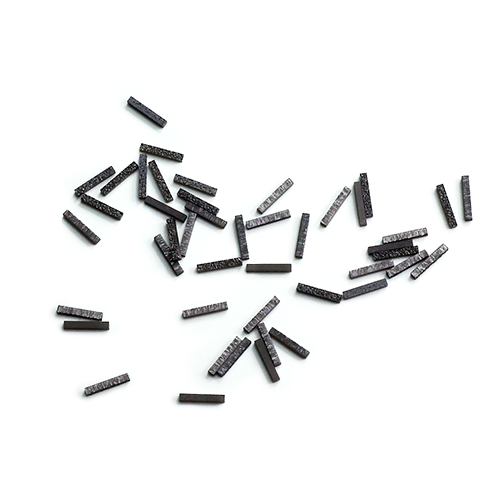
CVD materials
CVD Diamond Dressing Tools for Precision Applications
Item Number : cvdm-01
Price varies based on specs and customizations

Shipping:
Contact us to get shipping details Enjoy On-time Dispatch Guarantee.
Why Choose Us
Easy ordering process, quality products, and dedicated support for your business success.
Introduction
CVD Diamond Dresser Blank is a high-performance dressing material produced by DC Arc Plasma Jet. It has outstanding thermal properties, high wear resistance, and excellent thermal stability. CVD diamond dresser is suitable for all dresser types, including single point, multipoint, blade, rotary, roller, etc. It is also orientation independent, making it an ideal material for high-performance dressing.
Applications
CVD diamond dresser blanks are suitable for all dresser types, including single point, multipoint, blade, rotary, and roller dressers. They are also ideal for tool fabrication and can be mounted securely using traditional non-ferrous metal sintering or brazed onto a dresser body in a non-oxidizing environment.
CVD diamond dressers offer a number of benefits, including high wear resistance to chipping and fracture, uniform wear resistance over the entire length of the dresser, performance independent of dressing orientation, excellent thermal stability, and no binder phase.
The ideal CVD diamond tooling applications are those in which machining the material forms powder or small grit. These are situations where the primary operation at the cutting edge is basically abrasive wear, rather than chip formation. A material such as graphite is a perfect example.
Detail & Parts

Features
CVD Diamond for dressing tools feature outstanding thermal properties and very high thermal oxidation resistance, making it ideal for secure mounting using traditional non-ferrous metal sintering or brazing onto a dresser body with an active braze alloy in a non-oxidizing environment.
- High wear resistance to chipping and fracture, ensuring uniform wear resistance over the entire length of the dresser, regardless of dressing orientation.
- Excellent thermal stability, allowing for high-speed dressing operations without compromising performance.
- Pure diamond with no binder phase, providing superior strength and durability.
- Availability in various lengths and cross-section dimensions, with non-standard dimensions available upon request.
Principle
CVD Diamond for dressing tools is a synthetic diamond material used to create high-performance dressing tools. It is produced by a chemical vapor deposition process that results in a polycrystalline diamond material with exceptional properties, including high wear resistance, thermal conductivity, and oxidation resistance.
Advantages
-
High wear resistance to chipping and fracture: CVD diamond dresser blanks exhibit exceptional resistance to wear, ensuring their longevity and effectiveness in demanding dressing applications.
-
Uniform wear resistance over the entire length of the dresser: The consistent wear resistance throughout the entire length of the dresser promotes uniform dressing performance, reducing the need for frequent adjustments or replacements.
-
Performance independent of dressing orientation: CVD diamond dressers perform consistently regardless of the dressing orientation, eliminating concerns about variations in performance due to different dressing angles or directions.
-
Excellent thermal stability: CVD diamond dressers exhibit excellent thermal stability, allowing them to withstand high temperatures generated during the dressing process without compromising their integrity or performance.
-
Diamond with no binder phase: The absence of a binder phase in CVD diamond dressers eliminates the risk of phase degradation or failure, ensuring consistent performance and durability.
NORMAL SIZE:
| THICKNESS | WIDTH | LENGTH |
|---|---|---|
| 0.3 | 0.3 | 3.0 |
| 0.4 | 0.4 | 2.0 |
| 0.4 | 0.4 | 3.0 |
| 0.4 | 0.4 | 5.0 |
| 0.5 | 0.5 | 2.0 |
| 0.5 | 0.5 | 3.0 |
| 0.5 | 0.5 | 5.0 |
| 0.6 | 0.6 | 2.0 |
| 0..6 | 0.6 | 3.0 |
| 0.6 | 0.6 | 5.0 |
| 0.8 | 0.8 | 0.8 |
| 0.8 | 0.8 | 1.5 |
| 0.8 | 0.8 | 3.0 |
| 0.8 | 0.8 | 4.0 |
| 0.8 | 0.8 | 5.0 |
| 1.0 | 1.0 | 1.0 |
| 1.0 | 1.0 | 3.0 |
| 1.0 | 1.0 | 4.0 |
| 1.0 | 1.0 | 5.0 |
| 1.5 | 1.5 | 1.5 |
| 1.5 | 1.5 | 3.0 |
| 1.5 | 3.0 | 3.0 |
| 1.5 | 3.0 | 3.5 |
| 1.5 | 3.0 | 4.0 |
| 1.5 | 4.0 | 4.0 |
| 1.8 | 1.8 | 1.8 |
| 1.8 | 3.0 | 3.5 |
| 1.8 | 3.5 | 3.5 |
Products grade
Standard quality grade: suitable for common diamond dresser tools.
High quality grade: high wear resistance,to be the substitute of nature and cultured diamond.
Customize according to your need.
Trusted by Industry Leaders

FAQ
What Are The Main Applications Of Diamond Materials?
What Is CVD (Chemical Vapor Deposition) And What Are Its Key Advantages?
What Are The Benefits Of CVD Diamond Dresser Blanks?
What Are The Sizes And Dimensions Of CVD Diamond Dresser Blanks?
What Are The Advantages Of Using Diamond Materials In Industrial Applications?
What Are Some Common Applications Of CVD Materials?
What Are The Applications Of CVD Diamond Dresser Blanks?
What Types Of Diamond Materials Are Available?
What Types Of CVD Materials Are Available?
What Are The Properties Of CVD Diamond Dresser Blanks?
What Is The Principle Behind The Use Of Diamond Materials In Cutting Tools?
How Does CVD Diamond Enhance The Performance Of Cutting Tools?
Why Is Synthetic Diamond Preferred Over Natural Diamond In Industrial Applications?
What Makes CVD Diamond Domes Suitable For High-performance Loudspeakers?
How Does CVD Diamond Improve Thermal Management In Electronic Devices?
REQUEST A QUOTE
Our professional team will reply to you within one business day. Please feel free to contact us!
Related Products
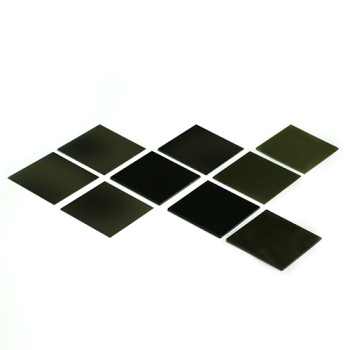
CVD Diamond Cutting Tool Blanks for Precision Machining
CVD Diamond Cutting Tools: Superior Wear Resistance, Low Friction, High Thermal Conductivity for Non-Ferrous Materials, Ceramics, Composites Machining

HFCVD Machine System Equipment for Drawing Die Nano-Diamond Coating
The nano-diamond composite coating drawing die uses cemented carbide (WC-Co) as the substrate, and uses the chemical vapor phase method ( CVD method for short ) to coat the conventional diamond and nano-diamond composite coating on the surface of the inner hole of the mold.
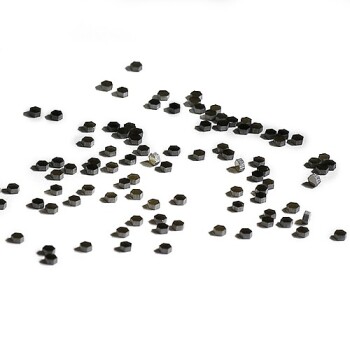
CVD Diamond Wire Drawing Die Blanks for Precision Applications
CVD diamond wire drawing die blanks: superior hardness, abrasion resistance, and applicability in wire drawing various materials. Ideal for abrasive wear machining applications like graphite processing.
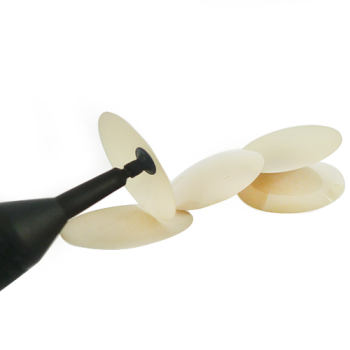
CVD Diamond Domes for Industrial and Scientific Applications
Discover CVD diamond domes, the ultimate solution for high-performance loudspeakers. Made with DC Arc Plasma Jet technology, these domes deliver exceptional sound quality, durability, and power handling.

Microwave Plasma Chemical Vapor Deposition MPCVD Machine System Reactor for Lab and Diamond Growth
Get high-quality diamond films with our Bell-jar Resonator MPCVD machine designed for lab and diamond growth. Discover how Microwave Plasma Chemical Vapor Deposition works for growing diamonds using carbon gas and plasma.
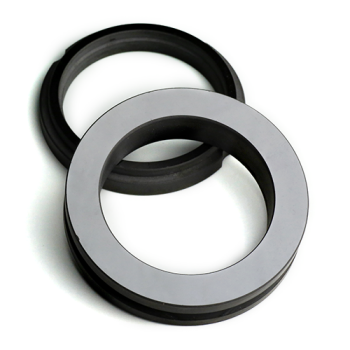
Custom CVD Diamond Coating for Lab Applications
CVD Diamond Coating: Superior Thermal Conductivity, Crystal Quality, and Adhesion for Cutting Tools, Friction, and Acoustic Applications
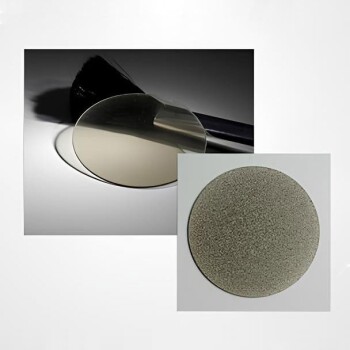
CVD Diamond Optical Windows for Lab Applications
Diamond optical windows: exceptional broad band infrared transparency, excellent thermal conductivity & low scattering in infrared, for high-power IR laser & microwave windows applications.
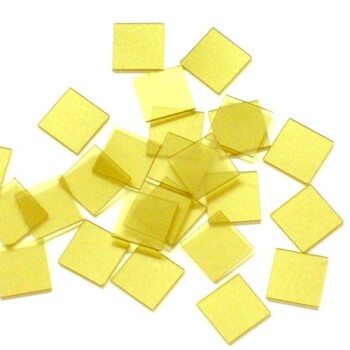
CVD Diamond for Thermal Management Applications
CVD diamond for thermal management: High-quality diamond with thermal conductivity up to 2000 W/mK, ideal for heat spreaders, laser diodes, and GaN on Diamond (GOD) applications.
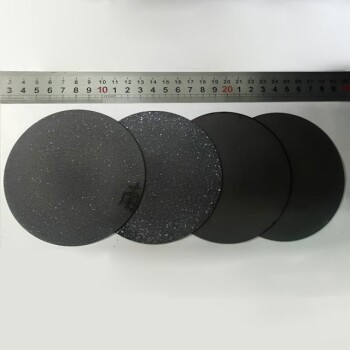
Laboratory CVD Boron Doped Diamond Materials
CVD boron-doped diamond: A versatile material enabling tailored electrical conductivity, optical transparency, and exceptional thermal properties for applications in electronics, optics, sensing, and quantum technologies.
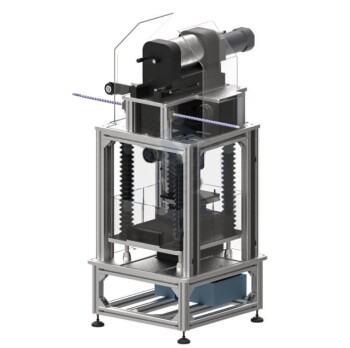
Precision Wire Saw Laboratory Cutting Machine with 800mm x 800mm Workbench for Diamond Single Wire Circular Small Cutting
Diamond wire cutting machines are mainly used for precision cutting of ceramics, crystals, glass, metals, rocks, thermoelectric materials, infrared optical materials, composite materials, biomedical materials and other material analysis samples. Especially suitable for precision cutting of ultra-thin plates with thickness up to 0.2mm.
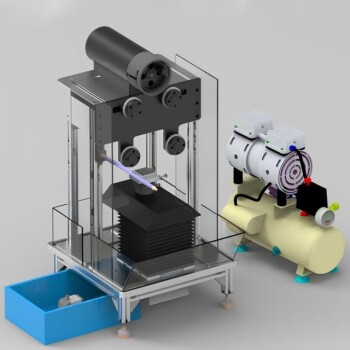
High Precision Diamond Wire Cutting Machine Laboratory Saw Precision Wire EDM Cutting Machine
The high precision diamond wire cutting machine is a versatile and precise cutting tool designed specifically for material researchers. It utilizes a continuous diamond wire cutting mechanism, enabling precise cutting of brittle materials such as ceramics, crystals, glass, metals, rocks, and various other materials.
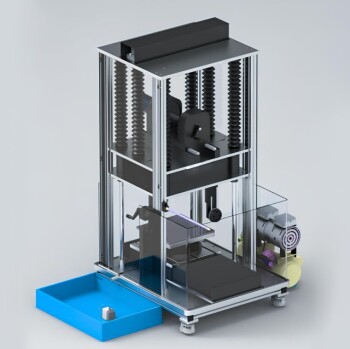
12 Inch 24 Inch High Precision Automatic Diamond Wire Cutting Machine Laboratory Saw Precision Wire EDM Cutting Machine
The high precision automatic diamond wire cutting machine is a versatile cutting tool that uses a diamond wire to cut through a wide range of materials, including conductive and non-conductive materials, ceramics, glass, rocks, gems, jade, meteorites, monocrystalline silicon, silicon carbide, polycrystalline silicon, refractory bricks, epoxy boards, and ferrite bodies. It is especially suitable for cutting various brittle crystals with high hardness, high value, and easy to break.

Cylindrical Press Mold with Scale for Lab
Discover precision with our Cylindrical Press Mold. Ideal for high-pressure applications, it molds various shapes and sizes, ensuring stability and uniformity. Perfect for lab use.
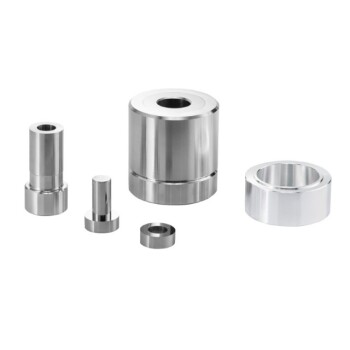
Ring Press Mold for Lab Applications
Ring Press Dies, also known as Circular Pellet Press Die Sets, are integral components in various industrial and laboratory processes.
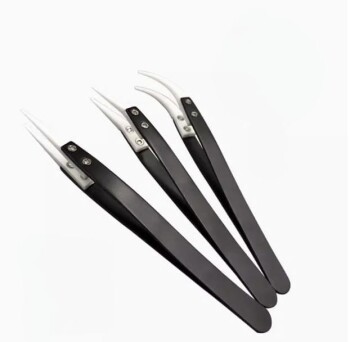
Engineering Advanced Fine Ceramics Head Tweezers with Pointed Elbow Zirconia Ceramic Tip
Zirconia ceramic tweezers are a high-precision tool made of advanced ceramic materials, especially suitable for operating environments that require high precision and corrosion resistance. This type of tweezers not only has excellent physical properties, but is also popular in the medical and laboratory fields because of its biocompatibility.
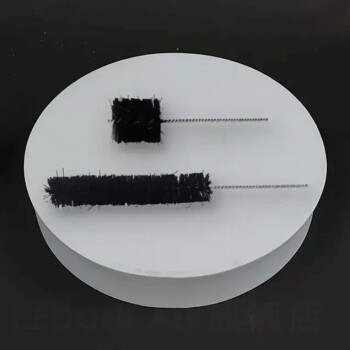
Conductive Carbon Fiber Brush for Static Removal and Cleaning
Discover the benefits of using conductive carbon fiber brush for microbial cultivation and electrochemical testing. Improve your anode's performance.
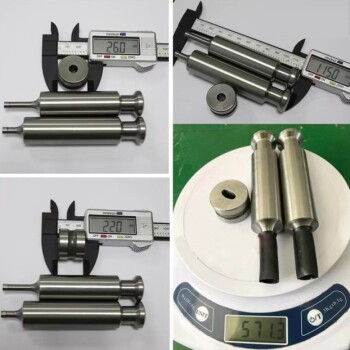
Multi-Punch Rotary Tablet Press Mold Ring for Rotating Oval and Square Molds
The multi-punch rotary tablet press mold stands as a pivotal component in pharmaceutical and manufacturing industries, revolutionizing the process of tablet production. This intricate mold system comprises multiple punches and dies arranged in a circular fashion, facilitating rapid and efficient tablet formation.
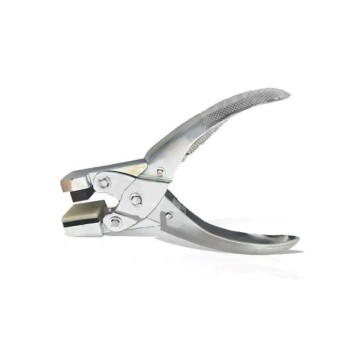
Professional Cutting Tools for Carbon Paper Cloth Diaphragm Copper Aluminum Foil and More
Professional tools for cutting lithium sheets, carbon paper, carbon cloth, separators, copper foil, aluminum foil, etc., with round and square shapes and different sizes of blades.

Laboratory Oscillating Orbital Shaker
Mixer-OT orbital shaker uses brushless motor, which can run for a long time. It is suitable for vibration tasks of culture dishes, flasks and beakers.

Round Bidirectional Press Mold for Lab
The round bidirectional press mold is a specialized tool used in high-pressure molding processes, particularly for creating intricate shapes from metal powders.
Related Articles
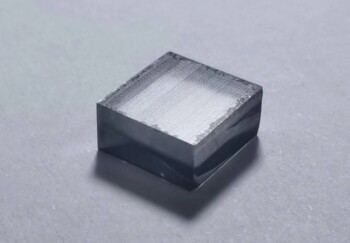
Market Prospects and Applications of CVD Diamonds
Explores the unique properties of CVD diamonds, their preparation methods, and diverse applications in various fields.
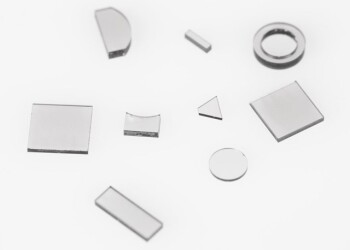
CVD Diamond: Superior Material for Optical Windows
Explores the exceptional properties and applications of CVD diamond in optical windows.
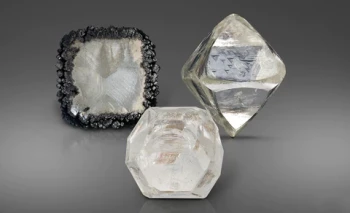
How to Check if Your Diamond is CVD-Produced
When it comes to buying a diamond, it's important to understand the difference between a naturally occurring diamond and one produced using CVD technology.
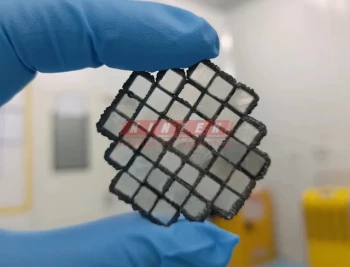
Understanding the CVD Diamond Machine and How It Works
CVD (Chemical Vapor Deposition) diamond creation process involves the deposition of carbon atoms onto a substrate using a gas phase chemical reaction. The process starts with the selection of a high-quality diamond seed, which is then placed in a growth chamber along with a carbon-rich gas mixture.
Coating Methods for Growing Single Crystal Films
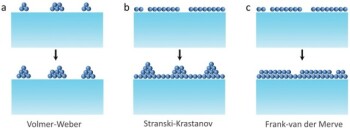
An overview of various coating methods like CVD, PVD, and Epitaxy for growing single crystal films.
How CVD is Used in the Semiconductor Industry
CVD has revolutionized the semiconductor industry, enabling the production of high-performance electronic devices with enhanced functionality and reliability.

Advantages and Disadvantages of Chemical Vapor Deposition (CVD)
Chemical vapor deposition (CVD) is a versatile thin-film deposition technique widely used in various industries. Explore its advantages, disadvantages, and potential new applications.
Technical Overview of Silicon-Carbon Anode Materials Prepared by CVD Method
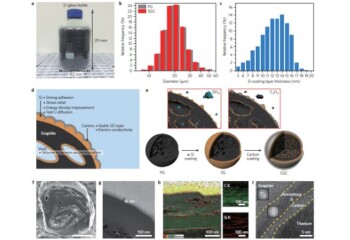
This article discusses the key technical aspects of silicon-carbon anode materials prepared via CVD, focusing on their synthesis, performance improvements, and industrial application potential.
Comprehensive Overview of Chemical Vapor Deposition (CVD) Technologies
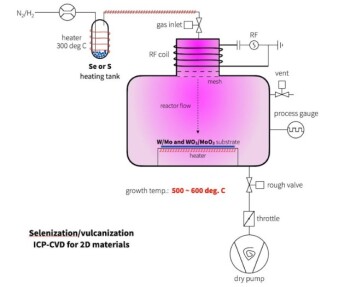
This article details various CVD technologies used in semiconductor and thin film deposition industries.
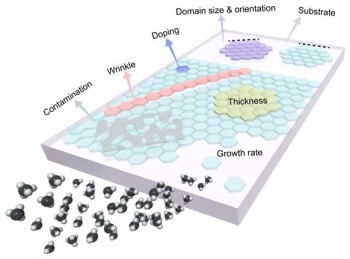
Preparation and Transfer Technology of Graphene by Chemical Vapor Deposition
This article reviews the preparation methods of graphene, with a focus on CVD technology, its transfer techniques, and future prospects.
CVD Machines for Thin Film Deposition
Chemical Vapor Deposition (CVD) is a widely used technique for deposition of thin films on various substrates.
Chemical Vapor Deposition (CVD) of Graphene Challenges and Solutions
Chemical Vapor Deposition (CVD) is a widely adopted method for the production of high-quality graphene.