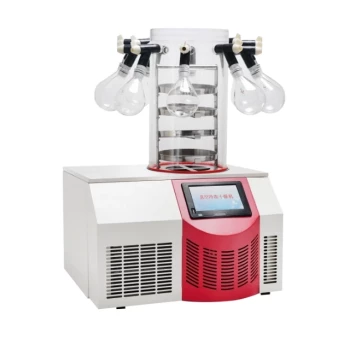
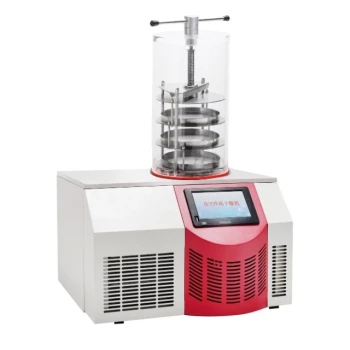
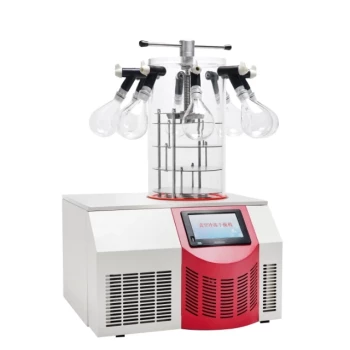
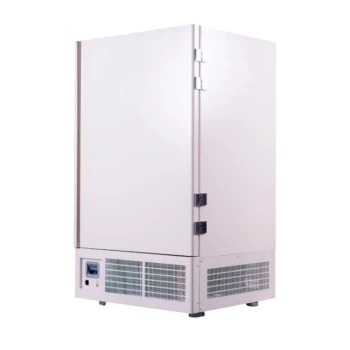
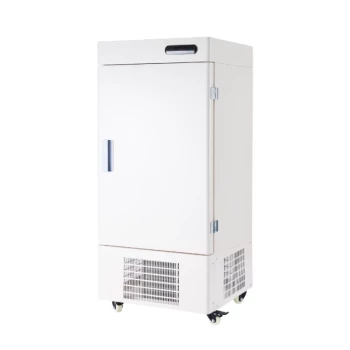
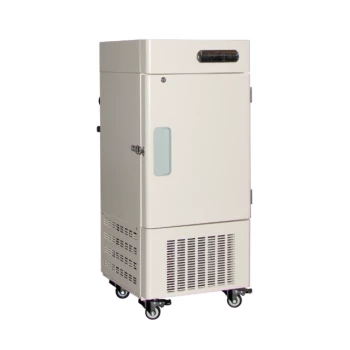
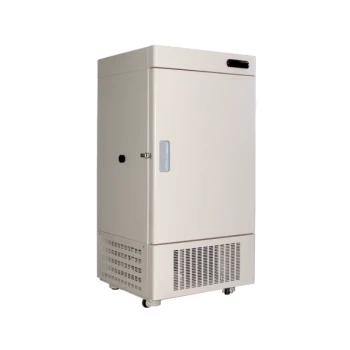
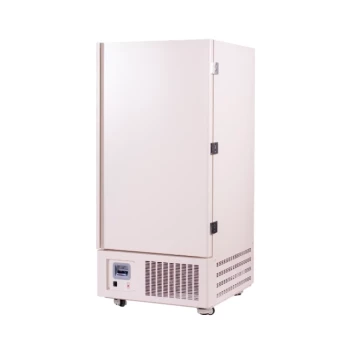
Preserving the structural integrity of advanced sponges requires bypassing the destructive forces of liquid evaporation. Laboratory freeze dryers are employed because they remove solvents via sublimation under vacuum and low-temperature conditions. This specific phase transition avoids the high surface tension associated with liquid-to-gas evaporation, which would otherwise cause the delicate three-dimensional porous networks of materials like carbon nanotubes or MXenes to collapse.
The primary function of a laboratory freeze dryer in post-hydrothermal treatments is to stabilize porous architectures by transitioning solvents directly from solid to gas. This prevents the capillary-induced structural collapse inherent in traditional thermal drying, ensuring the retention of high porosity and the specific surface area necessary for material performance.
The Physics of Structural Preservation
The Role of Sublimation
A laboratory freeze dryer operates by freezing the liquid within the sponge and then reducing the surrounding pressure. This allows the frozen solvent to transition directly from a solid to a gas, a process known as sublimation.
By bypassing the liquid phase entirely, the material never encounters the mechanical stresses associated with boiling or evaporating fluids. This is critical for maintaining the fragile three-dimensional porous frameworks created during hydrothermal synthesis.
Neutralizing Surface Tension
In conventional thermal drying, as liquid evaporates, the retreating meniscus generates massive capillary forces within the small pores. These forces act like a vacuum, pulling the pore walls inward and leading to significant volume shrinkage or total structural collapse.
Because freeze-drying removes solvent as a vapor from a solid state, these surface tension forces are virtually eliminated. This ensures the sponge retains its original volume and oriented microstructure after the drying process is complete.
Impact on Advanced Material Frameworks
Preserving Nanoscale Architecture
Many hydrothermally treated sponges incorporate sensitive components like carbon nanotubes or MXenes. These nanomaterials are highly susceptible to agglomeration if the solvent is removed too aggressively.
Freeze-drying keeps these components locked in place within the frozen matrix until the solvent is gone. This preservation is vital for maintaining the high specific surface area required for applications like energy storage or catalysis.
Maintaining Framework Integrity
In cases involving delignified wood or polymer-based sponges, the internal cellulose or synthetic framework is extremely fragile. Traditional drying would crush these open-pore structures, turning a functional sponge into a dense, non-porous mass.
The use of an ultra-low temperature cold trap (often reaching -60 °C) and a stable vacuum environment ensures that the "skeleton" of the sponge remains upright. This results in a final product with low density and high permeability.
Understanding the Trade-offs
Time and Energy Intensity
While freeze-drying provides superior structural results, it is a significantly slower process than oven drying. Sublimation requires precise control over temperature and vacuum levels over many hours or even days.
This increased processing time leads to higher operational costs and energy consumption. Researchers must weigh the necessity of structural perfection against the throughput requirements of their project.
Equipment Sensitivity and Maintenance
Laboratory freeze dryers are complex instruments that require regular maintenance of vacuum pumps and refrigeration systems. Contaminants from hydrothermal solvents can sometimes damage internal components if not properly trapped.
Furthermore, the sample must be completely frozen before the vacuum is applied. If any liquid remains, "melt-back" can occur, leading to localized structural collapse and ruining the sample's uniformity.
How to Apply This to Your Project
Making the Right Choice for Your Goal
The decision to use a laboratory freeze dryer depends largely on the final application of your composite sponge.
- If your primary focus is 3D structural integrity: Use freeze-drying to ensure that delicate frameworks like carbon nanotubes or MXenes do not collapse during solvent removal.
- If your primary focus is nanoparticle distribution: Utilize lyophilization to prevent the agglomeration of nanoparticles, ensuring they remain evenly dispersed across the sponge surface.
- If your primary focus is high-speed throughput and structural density is not critical: Consider controlled thermal drying, as the high cost and time of freeze-drying may not be justified for non-porous materials.
By leveraging the unique phase-change mechanics of freeze-drying, you can transform a fragile hydrothermal precursor into a robust, high-performance functional material.
Summary Table:
| Feature | Freeze-Drying (Sublimation) | Traditional Thermal Drying |
|---|---|---|
| Phase Transition | Solid to Gas | Liquid to Gas |
| Surface Tension | Virtually eliminated; no capillary forces | High; causes pore shrinkage |
| Structural Integrity | Excellent; preserves 3D architecture | Poor; leads to dense, non-porous mass |
| Nanomaterial State | Prevents agglomeration of particles | High risk of nanoparticle clumping |
| Process Speed | Slow (hours to days) | Rapid |
| Energy Cost | High (vacuum + refrigeration) | Low to Moderate |
Elevate Your Material Research with KINTEK Precision
Preserving the delicate architecture of advanced sponges and nanomaterials requires equipment that delivers uncompromising performance. KINTEK specializes in high-quality laboratory solutions designed to protect your research integrity.
From our state-of-the-art freeze dryers and ultra-low temperature cold traps that prevent structural collapse, to our robust high-temperature reactors and autoclaves for hydrothermal synthesis, we provide the full toolkit for advanced material science. Whether you are working with MXenes, carbon nanotubes, or complex polymer frameworks, our team is ready to help you optimize your drying and synthesis workflows.
Ready to enhance your lab’s efficiency and material quality?
Contact KINTEK Experts Today to receive a tailored quote and discover how our comprehensive range of furnaces, hydraulic presses, and cooling solutions can support your next breakthrough.
References
- Ziming Ye, Anyuan Cao. Crack‐Induced Superelastic, Strength‐Tunable Carbon Nanotube Sponges. DOI: 10.1002/adfm.202303475
This article is also based on technical information from Kintek Solution Knowledge Base .
Related Products
- High Performance Laboratory Freeze Dryer
- High Performance Laboratory Freeze Dryer for Research and Development
- Benchtop Laboratory Freeze Dryer for Lab Use
- Benchtop Laboratory Vacuum Freeze Dryer
- 808L Precision Laboratory Vertical Ultra Low Temperature Freezer
People Also Ask
- What role does a laboratory freeze dryer play in the synthesis of graphene-based electrocatalysts? Preserve 3D Structures
- What are the technical advantages of using a laboratory freeze dryer for porous carbon precursors? Preserve 3D Networks
- What types of liquid samples can be processed using a laboratory freeze dryer? Preserve Your Sensitive Materials
- How do laboratory freeze dryers support scientific research? Preserve Sample Integrity for Reproducible Results
- Why is a laboratory freeze dryer preferred over traditional heating? Preserve Biochar Structure & Maximize Porosity