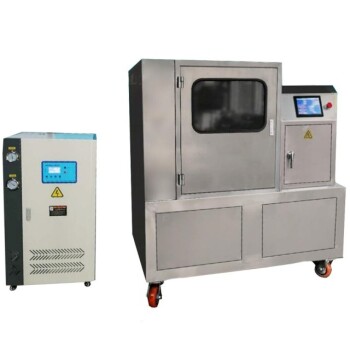
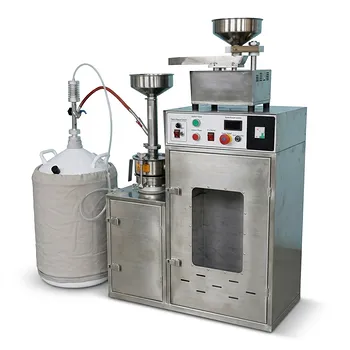
Ultrasonic cleaners and pulverizers utilize acoustic cavitation to achieve precise impregnation of the framework.
These tools generate localized high-pressure micro-jets that physically force the FeCl3 solution deep into the microscopic pores of the Zn/Co-BMOF structure. This forced dispersion ensures that iron species are distributed evenly at the molecular level, which is a critical prerequisite for forming uniform atomic active sites and preventing the formation of inactive metal clusters during subsequent processing.
Ultrasonic equipment overcomes the natural diffusion barriers of metal-organic frameworks by utilizing high-energy cavitation to ensure homogeneous impregnation. This process prevents iron aggregation and is essential for the synthesis of high-performance, atomically dispersed materials.
The Mechanics of Ultrasonic Impregnation
Harnessing the Power of Cavitation
Ultrasonic waves create millions of microscopic vacuum bubbles within the FeCl3 solution. When these bubbles collapse, they release intense localized energy in the form of shock waves and high-velocity micro-jets.
Overcoming Pore Resistance
The mechanical force of these micro-jets drives the iron precursor into the internal cavities of the Zn/Co-BMOF. Without this external pressure, surface tension and narrow pore diameters often prevent the solution from reaching the framework's core, leading to uneven loading.
Breaking Intermolecular Forces
Consistent with high-energy homogenization, ultrasonication helps break Van der Waals forces between particles. This ensures that the iron species do not clump together on the surface of the BMOF but remain isolated and mobile enough to enter the framework.
Structural Impact and Site Formation
Preventing Iron Aggregation
Uniform dispersion at the microscopic level ensures that iron atoms remain separated within the host lattice. This separation is vital during thermal treatments, as it prevents iron species from migrating and aggregating into large, inefficient clusters.
Enabling Atomic Active Sites
By maintaining a forced, even distribution, the process facilitates the creation of atomically dispersed active sites. These single-atom sites offer significantly higher catalytic efficiency and better electronic properties than bulk metal aggregates.
Increasing Interfacial Contact
Achieving nano-level dispersion increases the interfacial contact area between the iron species and the BMOF framework. This enhanced contact improves the overall stability of the composite and ensures more predictable performance in final applications.
Understanding the Trade-offs
Risk of Framework Degradation
Excessive ultrasonic power or prolonged exposure can physically damage the delicate crystalline lattice of the Zn/Co-BMOF. While cavitation energy is necessary for impregnation, it must be carefully controlled to avoid collapsing the very pores you are attempting to fill.
Thermal Management Requirements
Ultrasonic processing inherently generates significant heat, which can alter the solubility of FeCl3 or trigger premature chemical reactions. Utilizing cooling baths or pulsed ultrasonic cycles is often necessary to maintain the structural integrity of the temperature-sensitive MOF.
Making the Right Choice for Your Goal
Selecting the appropriate ultrasonic parameters depends entirely on the intended performance characteristics of your composite material.
- If your primary focus is maximizing active site density: Use high-intensity ultrasonic pulverizers to ensure the FeCl3 reaches every available internal pore, even in highly dense frameworks.
- If your primary focus is preserving framework crystallinity: Utilize a lower-power ultrasonic cleaner combined with a cooling system to provide sufficient dispersion energy without stressing the BMOF lattice.
By precisely calibrating the application of cavitation energy, you can transform a standard framework into a highly engineered material with optimized atomic distribution.
Summary Table:
| Feature | Mechanism | Benefit to Framework |
|---|---|---|
| Acoustic Cavitation | High-pressure micro-jets | Drives FeCl3 deep into microscopic pores |
| Mechanical Force | Overcomes surface tension | Ensures homogeneous, molecular-level dispersion |
| Energy Control | Homogenization | Prevents iron aggregation and metal clustering |
| Precision Tuning | Parameter calibration | Balances impregnation with framework integrity |
Elevate Your Material Synthesis with KINTEK Precision
Achieving perfect atomic dispersion in delicate frameworks like Zn/Co-BMOF requires equipment that balances power with precision. KINTEK specializes in advanced laboratory solutions designed for high-performance material research.
Whether you need high-intensity ultrasonic pulverizers and homogenizers for deep impregnation or cooling solutions and chillers to protect temperature-sensitive structures, we provide the tools to optimize your results. Our comprehensive portfolio also includes high-temperature furnaces, hydraulic presses, and essential consumables like PTFE and ceramics to support every stage of your synthesis workflow.
Ready to enhance your lab's efficiency and material performance? Contact our technical experts today to find the ideal equipment for your specific application requirements!
References
- Peng Li, Shengli Chen. Revealing the role of double-layer microenvironments in pH-dependent oxygen reduction activity over metal-nitrogen-carbon catalysts. DOI: 10.1038/s41467-023-42749-7
This article is also based on technical information from Kintek Solution Knowledge Base .
Related Products
- Low-Temperature Water-Cooled Touchscreen Vibratory Ultrafine Pulverizer
- Vibrating Disc Mill Small Laboratory Grinding Machine
- Liquid Nitrogen Cryogenic Grinder Mill Cryomill with Screw Feeder
- Laboratory Sterilizer Lab Autoclave Pulsating Vacuum Desktop Steam Sterilizer
People Also Ask
- What is the function of an industrial vibratory mill? Optimize Fe-Cr-Al Alloy Powder Production
- How does a Vibratory Mill improve niobium recovery efficiency? Optimize Waste Pre-treatment for Maximum Yield
- Why use stainless steel jars and balls for solid-state battery slurries? Maximize Dispersion and Conductivity
- What role does ultra-low temperature cooling equipment play in hydrogel preparation? Master Light-Driven Actuation
- Why is a low-temperature cooling solution necessary for nanoparticle toxicity? Ensure Scientific Accuracy & Stability