
Milling Equipment
Vibrating Disc Mill Small Laboratory Grinding Machine
Item Number : KT-JZ
Price varies based on specs and customizations
- Voltage (V)
- 220~380
- Dimensions (LxWxH, mm)
- 300x300x400~1000x580x900

Shipping:
Contact us to get shipping details Enjoy On-time Dispatch Guarantee.
Why Choose Us
Easy ordering process, quality products, and dedicated support for your business success.
Applications
The Vibrating Disc Mill is a versatile small laboratory grinding machine designed to meet the diverse needs of various industries. Its high-frequency vibration and grinding media make it an efficient tool for sample preparation across multiple fields. Here are some key applications:
-
Geology and Minerals: This mill is ideal for crushing and homogenizing rocks, minerals, soils, and sediments. It prepares samples for elemental analysis, isotope analysis, and mineral identification, ensuring accurate and reliable results.
-
Metallurgy and Materials: The mill is used for grinding metals, alloys, ceramics, glass, and cement. It aids in material structure analysis and performance testing, making it indispensable in material science research.
-
Biology and Medicine: In the biological and medical fields, the mill is used for grinding plant and animal tissues, cells, and pharmaceuticals. It facilitates gene extraction, protein analysis, and drug research and development.
-
Environmental and Food Science: The mill is effective in crushing and homogenizing soil, water, and food samples. It is used for pollutant detection and nutrient analysis, ensuring environmental and food safety.
-
Gasket Making and Vacuum Casting: The mill is also applied in industrial processes such as gasket making, vacuum casting, and sealing industries. It ensures the uniformity and quality of materials used in these applications.
Detail & Parts
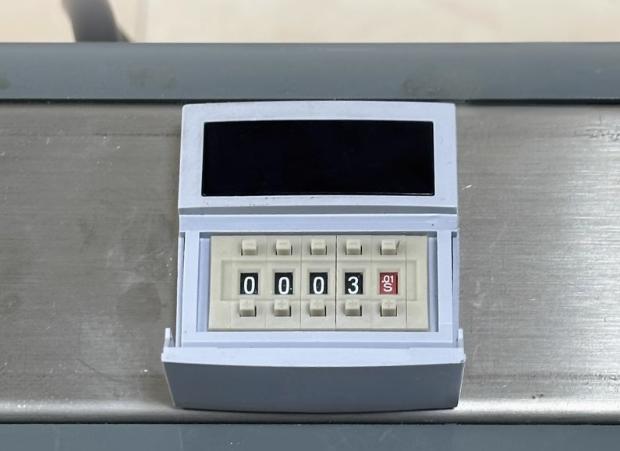
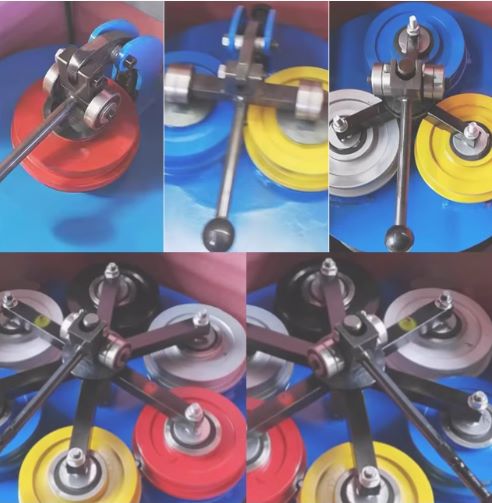
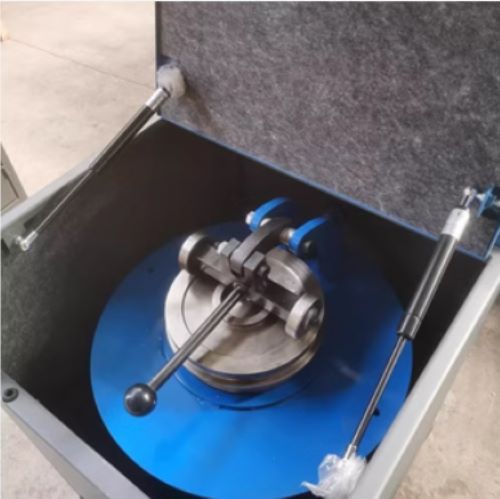
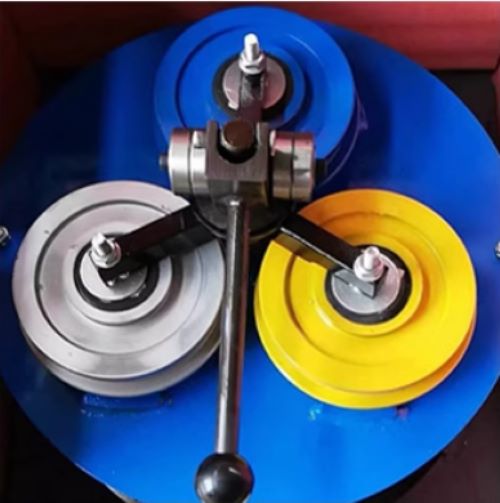
Features
The Vibrating Disc Mill is packed with features that make it a top choice for laboratory grinding:
-
Highly Efficient Grinding: The combination of high-frequency vibration and grinding media ensures rapid and efficient grinding of samples to the desired particle size.
-
Uniformity: The continuous turning and mixing of samples during the grinding process guarantee uniform and representative results.
-
Controlled Particle Size: Users can precisely control the final particle size by adjusting parameters such as grinding time, type, and size of grinding media.
-
Ease of Operation: The mill features a high degree of automation, making it easy to learn and operate, thereby saving labor costs.
-
Easy to Clean: The grinding chamber is designed for easy disassembly and cleaning, preventing cross-contamination of samples.
Principle
The working principle of the Vibrating Disc Mill involves the use of a motor to drive the grinding disk into high-frequency vibration. The grinding media on the disk, such as grinding balls, impact the sample under the effect of vibration, producing forces of impact, friction, and shear. This process crushes and grinds the sample to the desired particle size. During grinding, the sample is continuously turned over and mixed, ensuring uniformity. The final particle size can be controlled by adjusting parameters such as grinding time, type, and size of grinding media.
Advantages
The Vibrating Disc Mill offers several advantages that make it a superior choice for sample preparation:
-
Efficiency and Speed: Compared to traditional grinding methods, the mill significantly reduces grinding time, enhancing overall work efficiency.
-
Uniformity of Particle Size: The mill produces grinding results with good uniformity and high representativeness, which is crucial for the accuracy of subsequent analysis and testing.
-
Wide Range of Applications: The mill can handle samples of various hardnesses, making it suitable for a broad spectrum of industries and applications.
-
Ease of Operation: The high degree of automation and user-friendly design reduce the learning curve, making it accessible to a wider range of users.
-
Convenient Maintenance: The simple structure of the mill makes it easy to maintain and repair, reducing overall usage costs.
Technical specifications
| Serial Number | Model | Feed (mm) | Discharge (mesh) | Loading Amount (g) | Quantity | Voltage (V) | Pot Voltage (kW) | Dimensions (LxWxH, mm) | Weight (kg) |
|---|---|---|---|---|---|---|---|---|---|
| 1 | JZGJ-50-1 | 80-300 | 50 | 1 | 220 | 0.18 | 300x300x400 | 45 | |
| 2 | JZGJ-50-1D | 80-300 | 80-300 | 1 | 220 | 0.18 | 300x300x400 | 45 | |
| 3 | JZGJ-80-1 | 80-300 | 80 | 1 | 220 | 0.25 | 380x380x600 | 65 | |
| 4 | JZGJ-80-1D | 80-300 | 80 | 1 | 220 | 0.25 | 380x380x600 | 65 | |
| 5 | JZGJ-80-2 | 80-300 | 80x2 | 2 | 220 | 0.25 | 380x380x600 | 80 | |
| 6 | JZGJ-80-2D | 80-300 | 80x2 | 2 | 220 | 0.25 | 380x380x600 | 80 | |
| 7 | JZGJ-100-1 | 80-300 | 100 | 1 | 380 | 1.1 | 540x520x780 | 130 | |
| 8 | JZGJ-100-1D | 80-300 | 100 | 1 | 380 | 1.1 | 540x520x780 | 130 | |
| 9 | JZGJ-100-2 | 80-300 | 100x2 | 2 | 380 | 1.1 | 540x520x780 | 160 | |
| 10 | JZGJ-100-2D | 80-300 | 100x2 | 2 | 380 | 1.1 | 540x520x780 | 160 | |
| 11 | JZGJ-100-3 | 80-300 | 100x3 | 3 | 380 | 1.5 | 550x600x850 | 200 | |
| 12 | JZGJ-100-3D | 80-300 | 100x3 | 3 | 380 | 1.5 | 550x600x850 | 200 | |
| 13 | JZGJ-100-4 | 80-300 | 100x4 | 4 | 380 | 2.2 | 600x550x850 | 210 | |
| 14 | JZGJ-100-4D | 80-300 | 100x4 | 4 | 380 | 2.2 | 600x550x850 | 210 | |
| 15 | JZGJ-100-6 | 80-300 | 100x6 | 6 | 380 | 2.2 | 700x650x900 | 250 | |
| 16 | JZGJ-100-6D | 80-300 | 100x6 | 6 | 380 | 2.2 | 700x650x900 | 250 | |
| 17 | JZGJ-100-7 | 80-300 | 100x7 | 7 | 380 | 2.2 | 700x650x900 | 260 | |
| 18 | JZGJ-100-7D | 80-300 | 100x7 | 7 | 380 | 2.2 | 700x650x900 | 260 | |
| 19 | JZGJ-200-1 | 80-300 | 200 | 1 | 380 | 1.5 | 540x520x780 | 180 | |
| 20 | JZGJ-200-1D | 80-300 | 200 | 1 | 380 | 1.5 | 540x520x780 | 180 | |
| 21 | JZGJ-200-2 | 80-300 | 200x2 | 2 | 380 | 1.5 | 550x600x850 | 210 | |
| 22 | JZGJ-200-2D | 80-300 | 200x2 | 2 | 380 | 1.5 | 550x600x850 | 210 | |
| 23 | JZGJ-200-3 | 80-300 | 200x3 | 3 | 380 | 2.2 | 700x650x900 | 220 | |
| 24 | JZGJ-200-3D | 80-300 | 200x3 | 3 | 380 | 2.2 | 700x650x900 | 220 | |
| 25 | JZGJ-400-1 | 80-300 | 400 | 1 | 380 | 1.5 | 600x550x850 | 190 | |
| 26 | JZGJ-400-1D | 80-300 | 400 | 1 | 380 | 1.5 | 600x550x850 | 190 | |
| 27 | JZGJ-1000-1D | 80-300 | 1000 | 1 | 380 | 2.2 | 700x650x900 | 260 | |
| 28 | JZGJ-100-1DB | 80-300 | 100 | 1 | 380 | 1.1 | 700x520x800 | 170 | |
| 29 | JZGJ-100-2DB | 80-300 | 100x2 | 2 | 380 | 1.1 | 700x520x800 | 180 | |
| 30 | JZGJ-100-3DB | 80-300 | 100x3 | 3 | 380 | 2.2 | 1000x580x900 | 210 | |
| 31 | JZGJ-100-4DB | 80-300 | 100x4 | 4 | 380 | 2.2 | 1000x580x900 | 240 | |
| 32 | JZGJ-200-1DB | 80-300 | 200 | 1 | 380 | 1.5 | 700x520x800 | 190 |
Designed for You
KinTek provide deep custom made service and equipment to worldwide customers, our specialized teamwork and rich experienced engineers are capable to undertake the custom tailoring hardware and software equipment requirements, and help our customer to build up the exclusive and personalized equipment and solution!
Would you please drop your ideas to us, our engineers are ready for you now!
Trusted by Industry Leaders
FAQ
What Is A Laboratory Crusher Used For?
How Does A Laboratory Crusher Work?
What Are The Main Features Of A Laboratory Jaw Crusher?
What Is The Working Principle Of A Laboratory Jaw Crusher?
What Are The Advantages Of Using A Laboratory Crusher?
REQUEST A QUOTE
Our professional team will reply to you within one business day. Please feel free to contact us!
Related Products
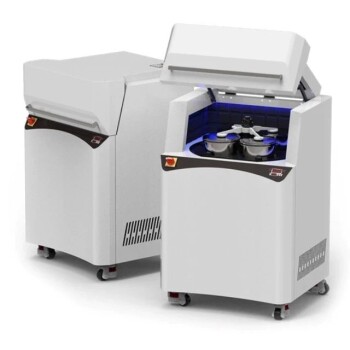
Disc Cup Vibrating Mill Multi-Platform for Lab
The multi-platform vibrating disc mill is suitable for non-destructive crushing and fine grinding of samples with large particle sizes. It is suitable for crushing and grinding applications of medium-hard, high-hard, brittle, fibrous, and elastic materials.
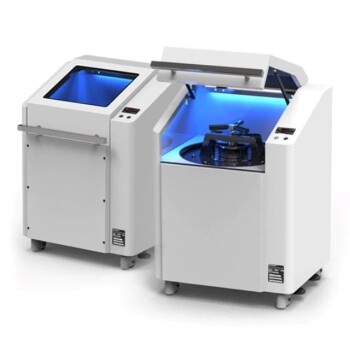
Laboratory Disc Cup Vibratory Mill for Sample Grinding
The vibrating disc mill is suitable for non-destructive crushing and fine grinding of samples with large particle sizes, and can quickly prepare samples with analytical fineness and purity.
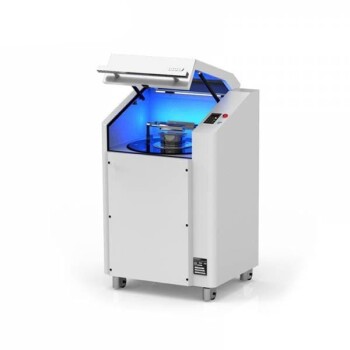
Lab Vibration Mill
Vibration Mill for Efficient Sample Preparation, Suitable for Crushing and Grinding a Variety of Materials with Analytical Precision. Supports Dry / Wet / Cryogenic Grinding and Vacuum/Inert Gas Protection.

Hybrid High Energy Vibratory Ball Mill for Lab Use
KT-BM400 is used for rapid grinding or mixing of dry, wet and frozen small amount of samples in the laboratory. It can be configured with two 50ml ball mill jars

High Energy Vibratory Ball Mill for Lab Use
The high-energy vibrating ball mill is a high-energy oscillating and impacting multifunctional laboratory ball mill. The table-top type is easy to operate, small in size, comfortable and safe.

High Energy Vibratory Laboratory Ball Mill Grinding Mill Single Tank Type
High-energy vibration ball mill is a small desktop laboratory grinding instrument.It can be ball-milled or mixed with different particle sizes and materials by dry and wet methods.

High Energy Vibratory Laboratory Ball Mill Double Tank Type
High-energy vibration ball mill is a small desktop laboratory grinding instrument. It uses 1700r/min high-frequency three-dimensional vibration to make the sample achieve the result of grinding or mixing.
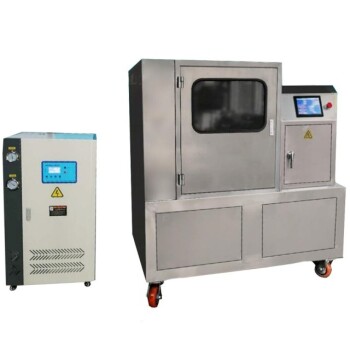
Low-Temperature Water-Cooled Touchscreen Vibratory Ultrafine Pulverizer
Low-temperature water-cooled vibratory pulverizer for ultrafine grinding. Preserves material integrity. Ideal for labs and production. Learn more.

Laboratory Vibratory Sieve Shaker Machine Slap Vibrating Sieve
KT-T200TAP is a slapping and oscillating sieving instrument for laboratory desktop use, with 300 rpm horizontal circular motion and 300 vertical slapping motions to simulate manual sieving to help sample particles pass through better.

Laboratory Planetary Ball Mill Rotating Ball Milling Machine
KT-P400E is a desktop multi-directional planetary ball mill with unique grinding and mixing capabilities. It offers continuous and intermittent operation, timing, and overload protection, making it ideal for various applications.
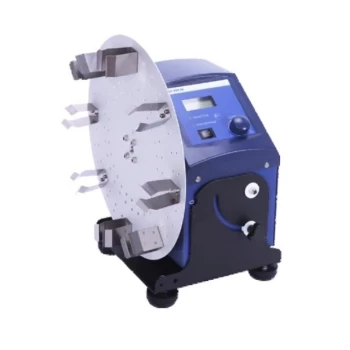
Laboratory Disc Rotary Mixer for Efficient Sample Mixing and Homogenization
Efficient Laboratory Disc Rotary Mixer for Precise Sample Mixing, Versatile for Various Applications, DC Motor and Microcomputer Control, Adjustable Speed and Angle.

Laboratory Horizontal Planetary Ball Mill Milling Machine
Improve sample uniformity with our Horizontal Planetary Ball Mills. KT-P400H reduces sample deposition and KT-P400E has multi-directional capabilities. Safe, convenient and efficient with overload protection.

High-Energy Omnidirectional Planetary Ball Mill Milling Machine for Laboratory
The KT-P4000E is a new product derived from the vertical high-energy planetary ball mill with a 360° swivel function. Experience faster, uniform, and smaller sample output results with 4 ≤1000ml ball mill jars.

Laboratory Planetary Ball Mill Cabinet Planetary Ball Milling Machine
The vertical cabinet structure combined with ergonomic design enables users to obtain the best comfortable experience in standing operation. The maximum processing capacity is 2000ml, and the speed is 1200 revolutions per minute.

High-Energy Omnidirectional Planetary Ball Mill Machine for Laboratory
The KT-P2000E is a new product derived from the vertical high-energy planetary ball mill with a 360°rotation function. The product not only has the characteristics of the vertical high-energy ball mill, but also has a unique 360°rotation function for the planetary body.

Mini Planetary Ball Mill Machine for Laboratory Milling
Discover the KT-P400 desktop planetary ball mill, ideal for grinding and mixing small samples in the lab. Enjoy stable performance, long service life, and practicality. Functions include timing and overload protection.

High Energy Planetary Ball Mill Milling Machine for Laboratory
Experience fast and effective sample processing with the F-P2000 high-energy planetary ball mill. This versatile equipment offers precise control and excellent grinding capabilities. Perfect for laboratories, it features multiple grinding bowls for simultaneous testing and high output. Achieve optimal results with its ergonomic design, compact structure, and advanced features. Ideal for a wide range of materials, it ensures consistent particle size reduction and low maintenance.

High Energy Planetary Ball Mill Milling Machine for Laboratory
The biggest feature is that the high energy planetary ball mill can not only perform fast and effective grinding, but also has good crushing ability

Laboratory Single Horizontal Jar Mill
KT-JM3000 is a mixing and grinding instrument for placing a ball milling tank with a volume of 3000ml or less. It adopts frequency conversion control to realize timing, constant speed, direction change, overload protection and other functions.

High Energy Planetary Ball Mill for Laboratory Horizontal Tank Type Milling Machine
KT-P4000H uses the unique Y-axis planetary motion trajectory, and utilizes the collision, friction and gravity between the sample and the grinding ball to have a certain anti-sinking ability, which can obtain better grinding or mixing effects and further improve the sample output.
Related Articles

Disc / Cup Vibratory Mill: A Comprehensive Guide to Grinding Equipment
Discover the world of Disc / Cup Vibratory Mills! This guide covers everything from types and features to applications and benefits. Explore the versatility of these mills for grinding various materials in industries like pharmaceuticals, food, and chemicals.

Disc / Cup Vibratory Mill: A Comprehensive Guide to Its Functions and Applications
Discover the world of Disc / Cup Vibratory Mills with our in-depth guide. Learn about their working principles, applications, advantages, and key features. Explore the various types of vibratory mills and their suitability for different industries.

Features of Different Laboratory Mills: An Overview
Laboratory mills are specialized machines used to reduce non-homogenous batch samples into smaller, representative samples that are more uniform in composition.

Disc / Cup Vibratory Mill: A Comprehensive Guide for Laboratory Experts
Discover the world of Disc / Cup Vibratory Mills! This comprehensive guide provides an in-depth understanding of their types, working principles, advantages, and applications in various industries, including pharmaceuticals, chemicals, and food processing.
What is a Laboratory Crusher Used For?
Discover the uses and working mechanism of laboratory crushers. Explore various types of crushing equipment and their applications. Learn how laboratory crushers play a crucial role in scientific analysis and environmental studies.
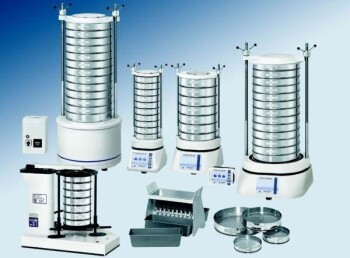
Revolutionizing Lab Efficiency: The Ultimate Guide to Laboratory Sieving Machines
Discover the common sieving methods used in laboratory analysis. Learn about single sieve and sieve set sieving, dry and wet sieving, and other techniques for effective particle separation. Find out how sieving has evolved over time and its importance in quality assurance.

Basic Mixing Equipment in the Laboratory
Overview of essential laboratory mixing devices and their functionalities.
The Three Stages of Lab Crushing: A Comprehensive Guide
Learn about the three stages of crushing: primary, secondary, and tertiary, and how they are used in sample preparation for scientific analysis. Discover the different types of crushers and their applications in reducing bulky materials into smaller particles.
Major Equipment in a Dental Laboratory
Overview of essential dental lab equipment including casting, porcelain, polishing, and more.
Application of Ultra-Micro Pulverization Technology in the Food Industry
Explores the benefits and applications of ultra-micro pulverization technology in enhancing food processing and nutrient absorption.
Laboratory Crushers: A Comprehensive Guide to Their Uses and Functionality
Laboratory crushers play a crucial role in scientific research and analysis. These crushers, commonly known as jaw crushers, are indispensable in obtaining accurate and consistent results for sample preparation.

Unlocking the Power of Sieving Machines: Functions, Applications and Maintenance
Discover the significance of sieving machines in various industries and the essential functions they serve. Learn about the the maintenance requirements for optimal performance. Explore the benefits of using sieve shakers for automating the particle separation process.