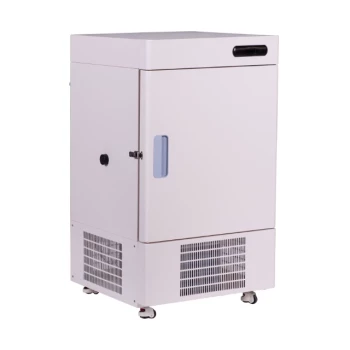
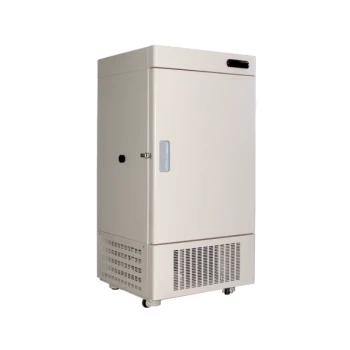
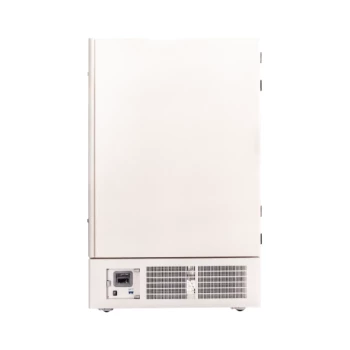
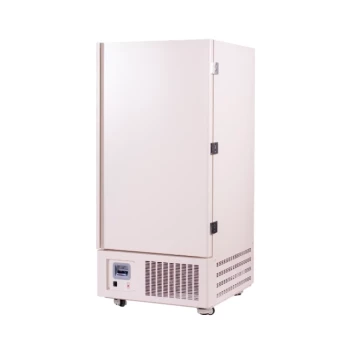
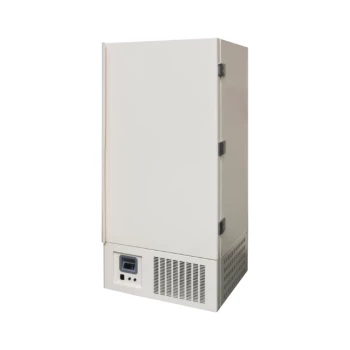
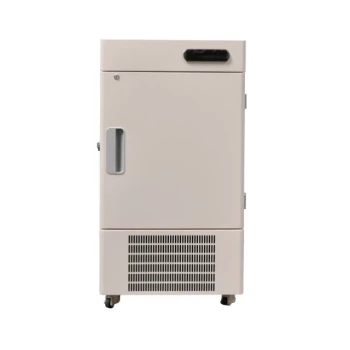
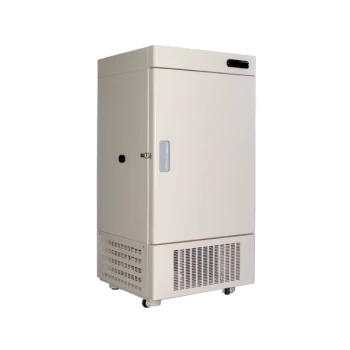
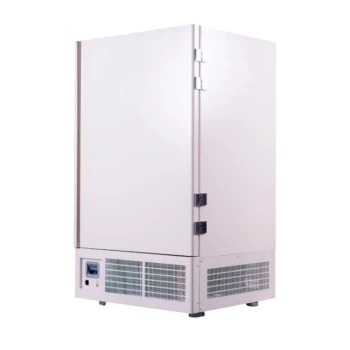
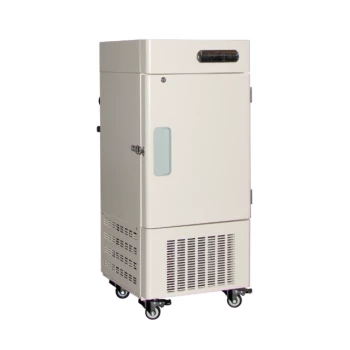
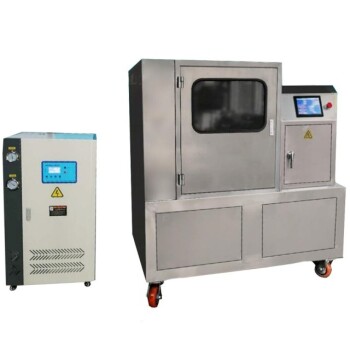
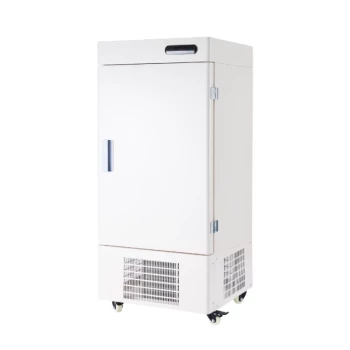
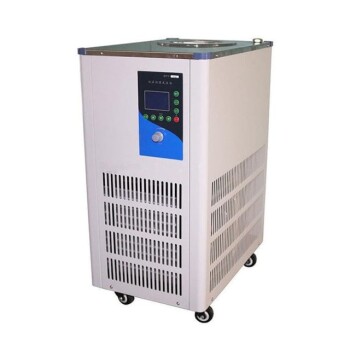
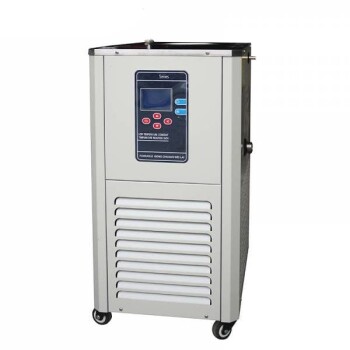
Ultra-low temperature cooling equipment serves as the structural architect of dual-layer composite hydrogels. It functions by executing precise freeze-thaw cycles that rigorously control solvent freezing and ice crystal morphology. This process induces phase separation to establish a stable physical cross-linking network, creating the internal microporous architecture necessary for high-performance light-driven actuation.
The core function of this equipment is to engineer a uniform microporous structure via freezing-induced phase separation. This specific architecture allows for the even distribution of photothermal agents and rapid water migration, directly resulting in hydrogel actuators with faster response speeds and larger bending angles.
Creating the Structural Foundation
Freezing-Induced Phase Separation
The equipment enables a specific technique known as freezing-induced phase separation. By subjecting the polymer solution to ultra-low temperatures, the system forces the solvent to crystallize in a controlled manner. This separates the polymer phase from the solvent phase, laying the groundwork for the material's internal porosity.
Controlling Ice Crystal Morphology
Precision is paramount when guiding the geometry of ice crystals. The cooling equipment regulates the temperature to ensure these crystals form uniform shapes and sizes. Upon thawing, these crystals melt away, leaving behind a stable physical cross-linking network of polymers that defines the hydrogel's solid structure.
Enhancing Functional Performance
Uniform Nanoparticle Loading
The microporous structure created by this thermal process is not just for mechanical stability; it is a delivery system. This uniform network facilitates the even loading of functional gold nanoparticles throughout the matrix. Without this homogeneous structure, the photothermal agents would likely clump or distribute unevenly, compromising performance.
Optimizing Photothermal Response
The ultimate goal of the cooling process is to enhance how the material reacts to light. The engineered micropores significantly accelerate water migration efficiency within the hydrogel. When exposed to light (photothermal response), this rapid water movement allows the actuator to achieve faster response speeds.
Maximizing Mechanical Output
The physical properties of the hydrogel are directly tied to the quality of the freezing process. The specific structure formed enables the actuator to achieve larger bending angles. This range of motion is a direct consequence of the optimized internal network created during the freeze-thaw cycles.
Understanding the Critical Dependencies
The Necessity of Precision
The primary trade-off in this process is the reliance on exact temperature control. Standard freezing methods lack the precision to guide ice crystal morphology effectively. If the cooling is inconsistent, the resulting microporous structure will be irregular, leading to weak physical cross-linking.
Impact on Actuation Consistency
The link between the cooling protocol and the final product's performance is absolute. A failure to maintain ultra-low temperatures during preparation results in poor water migration channels. This directly degrades the hydrogel's ability to respond quickly to light stimuli, rendering the "light-driven" characteristic ineffective.
Making the Right Choice for Your Goal
To maximize the potential of light-driven hydrogels, you must view the cooling process as a critical manufacturing parameter rather than a simple preparation step.
- If your primary focus is response speed: Prioritize cooling protocols that maximize micropore uniformity to ensure the fastest possible water migration efficiency.
- If your primary focus is signal consistency: Ensure the freeze-thaw cycles are strictly controlled to guarantee the uniform distribution of functional gold nanoparticles.
Precise thermal management is the defining factor that transforms raw polymer solutions into responsive, high-performance intelligent actuators.
Summary Table:
| Process Parameter | Role in Hydrogel Synthesis | Performance Impact |
|---|---|---|
| Freeze-Thaw Cycles | Induces phase separation and physical cross-linking | Establishes stable structural foundation |
| Ice Crystal Control | Regulates morphology and size of internal pores | Ensures uniform nanoparticle loading |
| Micropore Engineering | Creates channels for rapid water migration | Increases response speed & bending angles |
| Precise Cooling | Prevents irregular structural formation | Guarantees consistent actuation performance |
Elevate Your Material Science with KINTEK Precision
Unlock the full potential of your hydrogel research with KINTEK’s advanced cooling solutions. From ULT freezers and high-precision cold traps to a comprehensive range of laboratory equipment including high-temperature furnaces, hydraulic presses, and crushing systems, we provide the tools necessary to engineer superior materials.
Whether you are optimizing photothermal responses or developing high-performance intelligent actuators, KINTEK specializes in delivering the stability and precision your lab requires.
Ready to refine your synthesis process? Contact us today to explore our cooling solutions and lab equipment!
References
- Richárd Katona, Tibor Kovács. Electrochemical examination of chemical decontamination technologies in the aspects of radioactive wastes management. DOI: 10.21175/rad.abstr.book.2023.12.4
This article is also based on technical information from Kintek Solution Knowledge Base .
Related Products
- 108L Vertical Ultra Low Temperature ULT Freezer
- 508L Advanced Vertical Ultra Low Temperature Freezer for Critical Laboratory Storage
- 308L Precision Ultra Low Temperature Freezer for Laboratory Applications
- 938L Vertical Ultra Low Temperature Freezer for Advanced Laboratory Storage
- 408L Advanced Vertical Laboratory Ultra Low Temperature Freezer for Critical Research Material Preservation
People Also Ask
- What are the common applications of ultra-low temperature freezers? Preserve Your Most Valuable Samples
- What are the different types of ultra-low temperature freezers available? Choose the Right ULT Freezer for Your Lab
- What are some key features of ultra-low temperature freezers? Essential Guide to Reliable Sample Storage
- Have other labs successfully stored samples at -70°C? Proven Long-Term Preservation for Biological Materials
- What features should be considered when choosing an ultra low temperature freezer? Secure Your Samples with Precision