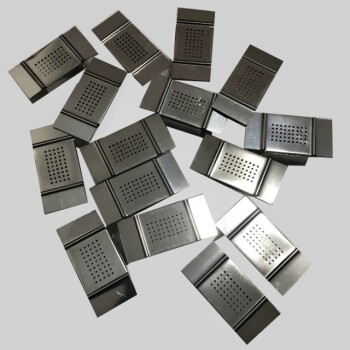
The improved front-opening quartz boat enhances tungsten disulfide (WS2) growth by optimizing the gas flow field to ensure a steady delivery of precursors. By reducing physical obstructions at the front of the boat, this design guides sulfur vapor smoothly across the reaction surface, minimizing turbulence and preventing the random nucleation that often plagues traditional growth methods.
This specialized boat design transitions the growth environment from a turbulent, unpredictable state to a controlled, laminar-like flow. This stability is the fundamental requirement for shifting from small, isolated flakes to large-scale, continuous WS2 thin films.
The Impact of Aerodynamics on Chemical Vapor Deposition
Reducing Airflow Obstruction
Traditional quartz boats often feature high walls that act as barriers to the incoming carrier gas. The front-opening design removes these obstructions, allowing the argon gas to enter the reaction zone with minimal resistance.
Guiding Precursor Delivery
By shaping the entry point, the boat effectively channels sulfur vapor directly under the sapphire substrate's reaction surface. This targeted delivery ensures that the ratio of sulfur to tungsten remains consistent throughout the growth cycle.
Eliminating Turbulence
In traditional setups, "dead zones" or eddies can form when gas hits a vertical boat wall. The improved design creates a uniform gas flow field, which is critical for maintaining a stable chemical environment above the substrate.
Controlling Nucleation for Superior Film Quality
Minimizing Random Nucleation
Turbulence in the gas stream often leads to localized pressure changes that trigger random nucleation. By smoothing the flow, the front-opening boat ensures that WS2 crystals begin growing only at intended sites, leading to better crystal orientation.
Achieving Precursor Uniformity
A continuous film requires that precursors reach every part of the substrate at the same rate. The improved boat design facilitates a uniform precursor distribution, preventing "starved" areas where the film might become discontinuous or thin.
Supporting Large-Scale Synthesis
Scaling 2D materials like WS2 depends on maintaining conditions over a wide area. This design allows for the preparation of large-scale continuous films by extending the "sweet spot" of optimal growth conditions across the entire substrate.
Leveraging Material Inertness and Isolation
Thermal and Chemical Stability
Quartz and alumina are chosen for these boats because they provide high-temperature resistance and chemical inertness. They do not react with tungsten trioxide (WO3) or sulfur, ensuring the purity of the precursors remains uncompromised during the process.
Strategic Precursor Isolation
Using independent boats within the system allows for the physical isolation of different precursors. This isolation is vital for controlling the sublimation times of tungsten and sulfur separately, based on the temperature gradient of the furnace.
Fine-Tuning Growth Kinetics
By isolating materials, researchers can prevent premature reactions before the precursors reach the reaction zone. This level of control is necessary for the precise synthesis of monolayer WS2, where timing is just as important as temperature.
Understanding the Trade-offs
Sensitivity to Substrate Positioning
While the front-opening design improves flow, it also makes the system more sensitive to the exact placement of the sapphire substrate. Even a slight misalignment can disrupt the intended flow path and lead to non-uniform growth.
Increased Vapor Loss
Because the front is open, there is a risk of precursor escape if the carrier gas velocity is too high. Balancing the flow rate is essential to ensure that enough sulfur vapor stays in contact with the substrate rather than being swept out of the system too quickly.
Complexity in Multi-Zone Furnaces
In setups with multiple temperature zones, the open nature of the boat means it is less shielded from radiant heat fluctuations. This requires more rigorous calibration of the furnace's temperature profile to maintain a stable sublimation rate.
How to Apply This to Your Project
When deciding on your hardware configuration for WS2 synthesis, consider the following recommendations based on your research objectives:
- If your primary focus is large-area continuity: Utilize the front-opening quartz boat to ensure the laminar flow required for merging individual flakes into a single film.
- If your primary focus is precursor purity: Ensure your boats are made of high-purity alumina or quartz to prevent any side reactions with salt-assisted growth precursors.
- If your primary focus is precise monolayer control: Use independent alumina boats to isolate sulfur and tungsten, allowing you to fine-tune the sublimation timing via the furnace's temperature gradient.
By mastering the fluid dynamics within the reaction chamber, you can transform the synthesis of WS2 from a process of chance into a repeatable, high-precision manufacturing technique.
Summary Table:
| Feature | Traditional Quartz Boat | Improved Front-Opening Boat |
|---|---|---|
| Gas Flow Dynamics | High obstruction; turbulent flow | Low resistance; laminar-like flow |
| Precursor Delivery | Random distribution; "dead zones" | Targeted sulfur vapor channeling |
| Nucleation Control | High random nucleation | Controlled nucleation at intended sites |
| Film Quality | Small, isolated flakes | Large-scale, continuous thin films |
| Thermal Stability | Shielded from radiant heat | Sensitive to furnace fluctuations |
Elevate Your 2D Material Synthesis with KINTEK
Precision in WS2 growth requires more than just a boat—it demands a perfectly controlled thermal and chemical environment. KINTEK specializes in high-performance laboratory equipment designed for advanced materials research. From multi-zone CVD and PECVD furnaces that provide the exact temperature gradients needed for precursor sublimation, to high-purity quartz and alumina boats and crucibles, we offer the tools to turn experimental uncertainty into repeatable success.
Whether you are scaling up to large-area continuous films or fine-tuning monolayer synthesis, our expert team is here to support your laboratory's specific requirements with reliable heating solutions and premium consumables.
Ready to optimize your thin film deposition? Contact KINTEK today for a tailored consultation and equipment quote!
References
- Weihuang Yang, Jing Li. CVD growth of large-area monolayer WS2 film on sapphire through tuning substrate environment and its application for high-sensitive strain sensor. DOI: 10.1186/s11671-023-03782-z
This article is also based on technical information from Kintek Solution Knowledge Base .
Related Products
People Also Ask
- What are the applications of molybdenum? From High-Temperature Furnaces to Space Lubricants
- What is the maximum operating temperature for molybdenum? Key Factors for High-Temp Performance
- What are the pros and cons of molybdenum? Harness Its High-Temperature Power
- What are 5 common uses for molybdenum? Enhancing Steel, Alloys, and High-Temp Performance
- How much heat can molybdenum handle? Unlocking Extreme Temperature Performance