All Questions
Why Are High-Purity Alumina Boats Chosen For Annealing? Ensure Purity & Thermal Stability In High-Temp Tube Furnaces
Learn why high-purity alumina boats are the preferred choice for annealing, offering chemical inertness and thermal resilience to prevent contamination.
Why Are High-Purity Alumina Boats Preferred For Zno Nanowire Synthesis? Ensure Pure, High-Quality Crystal Growth
Discover why 99.9% high-purity alumina boats are essential for ZnO nanowire synthesis, ensuring chemical inertness and superior thermal stability.
Why Use An Alumina Boat For High-Temperature Carbon Activation? Ensure Maximum Material Purity & Thermal Stability
Learn why alumina boats are essential for carbon activation. Discover how their chemical inertness and heat resistance ensure high-purity results.
What Critical Role Does A High-Purity Quartz Boat Play As A Carrier In Biocl-Assisted Cvd Processes? Purity Guide
Learn how high-purity quartz boats prevent contamination and ensure chemical stability in BiOCl-assisted CVD for high-quality 2D nanosheet synthesis.
What Is The Purpose Of Wrapping High-Temperature Porcelain Boats With Tin Foil? Enhance Pyrolysis & Protect Your Furnace
Learn why foil wrapping is used in biomass pyrolysis to prevent tube contamination, create a micro-atmosphere, and ensure uniform biochar results.
Why Is A Quartz Boat Chosen For Nitrogen-Doped Carbon Catalyst Synthesis? Key To High Purity & Thermal Stability
Discover why quartz boats are the top choice for catalyst synthesis, ensuring high purity, metal-free active sites, and superior thermal stability.
How Does An Improved Front-Opening Quartz Boat Enhance Ws2 Growth? Achieve Superior Uniformity In 2D Thin Films
Optimize WS2 growth with front-opening quartz boats. Improve gas flow and precursor delivery for high-quality, continuous 2D thin films.
Why Are Ceramic Combustion Boats Selected As Sample Containers For High-Temperature Chlorination Roasting? Key Insights
Learn why ceramic boats are essential for chlorination roasting, offering chemical inertness and thermal stability for precise research results.
Why Use High-Purity Alumina Boats For Alcrfeconi Oxidation? High Thermal Stability & Chemical Inertness.
Discover why high-purity alumina boats are vital for AlCrFeCoNi alloy oxidation, ensuring chemical inertness and precise data at 1000°C+.
What Role Do High-Purity Ceramic Boats Play In Pvd For Ws2 Single Crystals? Ensure Purity And Thermal Stability
Discover how high-purity ceramic boats enable high-quality WS2 single crystal growth through thermal stability and impurity-free sublimation.
What Role Does A High-Purity Corundum Boat Play In Magnesiothermic Reduction? Key For Purity & Thermal Resilience
Discover how high-purity corundum boats ensure material purity and withstand extreme heat in magnesiothermic reduction processes.
What Is The Primary Purpose Of A Porcelain Combustion Boat In Graphene Synthesis? Ensure Purity & Thermal Stability.
Discover why porcelain combustion boats are essential for graphene synthesis, offering thermal stability up to 1000°C and ensuring chemical purity.
Why Is A Quartz Boat Preferred For Biochar Pyrolysis? Ensure Sample Purity And High Thermal Stability
Learn why quartz boats are essential for biochar pyrolysis, providing high purity, chemical inertness, and superior thermal resistance up to 1000°C.
Why Use High-Purity Quartz Boats For Biochar Calcination? Ensure Sample Purity And Thermal Stability In Your Research.
Learn why high-purity quartz boats are essential for biochar calcination, offering thermal stability, chemical inertness, and precise research results.
Why Are Alumina Boats Used For Roasting Eaf Dust? Ensure Purity And Stability In High-Temperature Reactions
Discover why alumina (corundum) boats are essential for roasting EAF dust, offering chemical inertness and stability up to 1300°C for lab precision.
Why Is A Flat-Bottom Alumina Ceramic Boat Used For Holding Source Materials During The Reaction Process? Ensure Purity.
Learn why flat-bottom alumina boats are vital for high-temperature synthesis, offering chemical inertness, thermal stability, and uniform heating.
Why Is A Quartz Boat Used For Ccvd Carbon Fiber Prep? Achieve High-Purity Results With Thermal Stability
Learn why quartz boats are essential for CCVD carbon fiber synthesis, offering chemical inertness and superior thermal shock resistance.
What Are The Advantages Of Using High-Purity Alumina Boats? Achieve Precise Glass Liquidus Temperature Measurement
Discover why high-purity alumina boats are vital for glass liquidus testing, offering 1200°C stability, chemical inertness, and precise results.
What Is The Purpose Of Using Unglazed Porcelain Boats During Bulk Pyrolysis? Ensure Pure Iron-Germanium Synthesis
Learn how unglazed porcelain boats ensure chemical purity, resist thermal deformity, and control micro-atmospheres during iron-germanium pyrolysis.
Why Are High-Purity Ceramic Boats Used For Lignin Activation? Ensure Purity & Thermal Stability
Discover why high-purity alumina boats are vital for lignin activation, offering chemical inertness and thermal stability at 800°C+.
What Is The Key Trade-Off When Loading Material For Evaporation? Balancing Capacity Vs. Stability
Understand the critical trade-off between maximizing material volume and preventing process failures like spitting and thermal shock in evaporation.
How Does A Molybdenum Evaporation Source Function In H2S For Mos2 Synthesis? Master Reactive Film Deposition
Learn how molybdenum sources react with H2S to synthesize MoS2 thin films, focusing on evaporation rates, stoichiometry, and nano-island control.
What Is The Function Of High-Purity Alumina Boats And Spacers In S-Co2 Corrosion Experiments? Ensure Data Precision
Learn how high-purity alumina boats and spacers prevent galvanic corrosion and solid-state diffusion in supercritical CO2 testing environments.
What Are The Advantages Of Using Monel Alloy Reactors And Nickel Sample Boats? Secure Purity In Carbon Fluorination
Discover how Monel reactors and nickel boats utilize NiF2 passivation to ensure corrosion resistance and purity during aerogel fluorination.
What Are The Advantages Of Using A Covered Ceramic Boat As A Carrier During The High-Temperature Sulfidation Of Tungsten Oxide?
Learn how covered ceramic boats enhance tungsten oxide sulfidation by ensuring material purity, trapping sulfur vapor, and promoting deep diffusion.
Why Are High-Temperature Porcelain Boats Used For Biochar In A Tube Furnace? Ensure Sample Purity And Thermal Stability
Learn why high-temperature porcelain boats are essential for biochar activation and carbonization, providing thermal shock resistance and purity.
Why Is An Alumina Boat Selected For Catalyst Precursors? Ensure Sample Purity At 1000 °C
Learn why high-purity alumina boats are essential for 1000 °C heat treatments to prevent contamination and ensure thermal stability.
Why Is An Alumina Boat And Ti3Alc2 Powder Bed Necessary For Ti2Alc Sintering? Protect Max Phase Purity
Learn how alumina boats and Ti3AlC2 powder beds prevent aluminum loss and TiC decomposition during high-temperature sintering of Ti2AlC foams.
What Is The Physical Deposition Technique? A Guide To Pvd Coating Methods & Applications
Learn about Physical Vapor Deposition (PVD), a vacuum-based coating process for creating high-purity, high-performance thin films on various substrates.
What Is The Use Of Physical Vapor Deposition? Enhance Durability, Performance, And Purity
Discover how PVD coating applies thin, high-performance films to enhance wear resistance, thermal protection, and optical/electronic properties.
What Is The Evaporation Method Of E-Beam? Achieve High-Purity Thin Film Coatings
Learn how e-beam evaporation uses a focused electron beam to deposit pure, dense thin films for high-performance applications in a vacuum.
What Is The Source Of The Electron Beam? Choosing The Right Emitter For Your Application
Learn how the cathode, from tungsten filaments to field emitters, generates electron beams and impacts instrument performance for your lab.
What Materials Are Used In Vacuum Evaporation? A Guide To Metals, Alloys, And Dielectrics
Explore the metals, alloys, and dielectric materials used in vacuum evaporation for electronics, optics, and protective coatings.
What Is The Function Of Electron Coating? Boost Your Device's Electrical & Optical Performance
Learn how electron coatings manage charge transport and reduce reflection to enhance solar cells, LEDs, and display performance.
What Is The Source Of Vacuum Evaporation? Energy And Vacuum For High-Purity Coatings
Learn how vacuum evaporation uses energy sources like electron beams to create pure thin films. Essential for optical, decorative, and conductive coatings.
What Is The Difference Between Sputtering And Evaporation Deposition? A Guide To Choosing The Right Pvd Method
Compare sputtering vs. evaporation deposition: learn about adhesion, speed, and quality differences to select the best PVD method for your thin film application.
Why Is Sputtering Deposition Much Slower Than Evaporation Deposition? The Trade-Off Between Speed And Quality
Understand the physics behind sputtering's slower rate vs. evaporation's speed, and how to choose the right thin-film deposition method for your project.
What Is The Evaporation Method? A Guide To High-Purity Thin Film Deposition
Learn how the evaporation method uses heat in a vacuum to deposit ultra-thin, high-purity films for advanced materials engineering.
What Is Evaporation In Thin Film? A Guide To High-Purity Coating With Pvd
Learn how thin-film evaporation works in a vacuum to deposit ultra-pure coatings for electronics, optics, and advanced manufacturing.
What Is The Difference Between Thermal Evaporation And Magnetron Sputtering? Choose The Right Pvd Coating Method
Compare thermal evaporation vs. magnetron sputtering for thin-film deposition. Learn which method offers better adhesion, speed, and material versatility.
What Is Thermal Evaporation Of Thin Film Deposition? A Simple Guide To Pvd Coating
Learn how thermal evaporation works in vacuum chambers to deposit thin films of metals and oxides for electronics and optics applications.
What Is The Vacuum Evaporation Mechanism? A Guide To High-Purity Thin Film Deposition
Learn how vacuum evaporation works to deposit pure, uniform thin films. Explore key techniques like thermal and e-beam evaporation for your lab applications.
What Is The Difference Between Electron Beam Evaporation And Ion Sputtering? Choose The Right Thin Film Deposition Method
Compare E-beam evaporation (thermal) vs. ion sputtering (kinetic) for thin film deposition. Learn which method is best for your application's speed, adhesion, and uniformity.
Is Sputtering Better Than Evaporation Purity? A Guide To High-Quality Thin-Film Deposition
Compare sputtering vs. evaporation for thin-film purity, density, and adhesion. Learn which PVD method is best for your specific application needs.
What Is Evaporation And Sputtering? Choose The Right Pvd Method For Your Thin Film Needs
Compare evaporation and sputtering PVD methods. Learn key differences in film quality, cost, and application to select the best process for your lab.
What Is The Difference Between A Condenser And An Evaporator? The Key To Efficient Cooling Systems
Learn the critical differences between condensers and evaporators: how they move heat, their locations, and their roles in refrigeration and AC systems.
What Are The Different Types Of Evaporators In Food Engineering? Choose The Right System For Your Product
Explore falling film, rising film, forced circulation & agitated thin film evaporators. Learn how to select the best design for your food product's viscosity and heat sensitivity.
How Is Film Thickness Controlled In Evaporation? Achieve Nanometer Precision With Quartz Crystal Monitoring
Learn how quartz crystal monitors enable real-time, nanometer-scale film thickness control in evaporation processes through precise mass-frequency measurements.
What Is The Thermal Evaporation Of Gold? A Simple Guide To Gold Thin Film Deposition
Learn how thermal evaporation deposits gold thin films in a vacuum. Explore its process, advantages, and limitations for electronics and research.
What Is Sputtering Or Thermal Evaporation? Choose The Right Thin-Film Deposition Method
Understand the differences between sputtering and thermal evaporation for thin-film deposition. Learn about adhesion, speed, and applications to select the best method.
What Is E Beam Evaporation Synthesis Of Nano Films? A Guide To High-Purity Thin Films
Learn how e-beam evaporation deposits ultra-pure, nanometer-thick films for semiconductors, optics & more. Explore its process, advantages, and applications.
What Is The Electron Beam Evaporation Process? Achieve High-Purity Thin Film Deposition
Learn how electron beam evaporation works, a PVD technique for depositing high-purity, high-melting-point thin films in a vacuum environment.
What Is The Process Of Electron Beam Deposition? Achieve High-Purity, Cost-Effective Thin Films
Learn how electron beam deposition works, its advantages like high deposition rates and material versatility, and how it creates pure thin films for optics and semiconductors.
What Is The Principle Of Electron Beam Evaporation? A Guide To High-Purity Thin Film Deposition
Learn how electron beam evaporation works to create ultra-pure, high-performance thin films for demanding applications in electronics and optics.
What Is Thermal Vapor Deposition? A Simple Guide To Thin-Film Coating
Learn how thermal vapor deposition works, its advantages over other PVD methods, and when to use it for cost-effective thin-film coating.
What Is The Thermal Deposition Method? A Guide To Thin-Film Coating Technology
Learn how thermal deposition creates ultra-thin films for electronics, optics, and packaging. Understand the process, applications, and advantages.
How Does The Vacuum Evaporation System Work? A Guide To Thin Film Deposition
Learn how vacuum evaporation works for thin film coating: heating materials in a vacuum to create uniform layers for optics, electronics, and more.
Why Is Evaporation Faster In Vacuum? Achieve Precise, Low-Temperature Process Control
Discover how a vacuum accelerates evaporation by lowering boiling points and enabling precise control for applications like thin-film deposition and solvent removal.
What Is The Purpose Of Vacuum Evaporation? Purify Water Or Create High-Purity Coatings
Learn how vacuum evaporation lowers boiling points for two key applications: efficient wastewater treatment and precise thin-film deposition (PVD).
What Are The Applications For Evaporation? Harnessing Its Power For Industrial Innovation
Explore the key industrial applications of evaporation, from liquid concentration and purification to advanced thin-film deposition for electronics and optics.
What Is Vacuum Thin-Film Deposition? The Key To Advanced Surface Engineering
Learn how vacuum thin-film deposition creates ultra-pure coatings for semiconductors, optics, medical devices, and durable materials.
Why Do We Need A Vacuum For Thin-Film Deposition? To Ensure Purity, Adhesion, And Process Control
Learn why a vacuum is essential for thin-film deposition to prevent contamination, ensure strong adhesion, and enable precise process control for high-quality films.
What Is The Thermal Evaporation Technique In A Vacuum? A Guide To High-Purity Thin-Film Deposition
Learn how thermal evaporation in a vacuum deposits pure, uniform thin films for applications like mirrors and electronics. Understand the process, benefits, and limitations.
What Is The Principle Of Thermal Evaporation Method? A Simple Guide To Thin Film Deposition
Learn how thermal evaporation works: heating a material in a vacuum to create a thin film coating. Ideal for metals like gold and aluminum.
What Is Low Temperature Evaporation Technology? A Guide To Coating Heat-Sensitive Materials
Learn how low temperature evaporation deposits thin films on plastics and polymers without heat damage. Essential for PVD on sensitive substrates.
What Property Determines Evaporation Rate? Control Heat, Pressure, And Surface Area For Optimal Results.
Learn how heat transfer, vapor pressure, surface area, and other factors govern evaporation rate. Master the science for better process control.
What Properties Are Involved In Evaporation? Master The Key Factors For Efficient Drying
Learn how temperature, latent heat, surface area, and vapor pressure control evaporation. Essential knowledge for lab processes like drying and distillation.
Does Platinum Evaporate? Understanding High-Temperature Stability And Material Loss
Learn when and why platinum evaporates or loses mass at extreme temperatures, crucial for labware, industrial, and jewelry applications.
What Is The Vaporization Of Zinc? A Critical Safety & Quality Challenge In Welding
Learn why zinc vaporizes at 907°C, creating toxic fumes during steel welding. Discover the risks and essential safety procedures to manage this hazard.
What Temperature Does Titanium Vaporize At? Unlocking Its Extreme Heat Resistance For Aerospace
Titanium vaporizes at 3287°C. Learn why this extreme boiling point makes it ideal for aerospace, defense, and high-temperature applications.
Can You Evaporate Silver? Master The Pvd Process For High-Performance Coatings
Learn how to evaporate silver using high-vacuum PVD methods like thermal and e-beam evaporation for ultra-pure thin films on various substrates.
Can Gold Turn Into Vapor? Unlocking The Extreme Science Behind Gold's Stability
Yes, gold vaporizes at 2,856°C! Explore its journey from solid to gas and its role in high-tech manufacturing and cosmic events.
What Is Thermal Evaporation Technique Thin Film Deposition? A Guide To Simple, Cost-Effective Pvd
Learn how thermal evaporation PVD works: a simple, cost-effective method for depositing pure metal thin films in a high-vacuum environment.
How Does Temperature Affect The Rate Of Evaporation? Master The Science For Better Lab Results
Learn how temperature accelerates evaporation by increasing molecular kinetic energy. Optimize your lab processes with precise heat control.
What Is The Pressure For Thermal Evaporation? Achieve High-Purity Thin Films With Optimal Vacuum
Learn the ideal pressure range (10⁻⁵ to 10⁻⁷ mbar) for thermal evaporation to ensure film purity, adhesion, and performance in applications from OLEDs to solar cells.
What Is The Pressure For Electron Beam Evaporation? Master The Key To High-Purity Thin Films
Learn the critical high vacuum pressure range (10⁻⁶ to 10⁻⁷ Torr) required for effective e-beam evaporation to ensure pure, dense coatings.
What Is Film Thickness Uniformity? Achieve Consistent Performance And Higher Yield
Learn why film thickness uniformity is critical for predictable device performance and manufacturing yield in semiconductor and optical applications.
What Temperature Does Evaporation Occur? Unlock The Secrets To Controlling The Rate Of Evaporation
Learn why evaporation happens at any temperature and how temperature, surface area, and airflow control its speed. Master the science of drying and cooling.
What Were The 4 Factors That Affect The Rate Of Evaporation? Master Control For Lab & Industrial Processes
Learn how temperature, surface area, pressure, and air characteristics control evaporation rates for efficient lab work and industrial processing.
What Are The 5 Factors That Affect The Rate Of Evaporation? Master The Process For Your Lab
Learn the 5 key factors controlling evaporation rate: temperature, surface area, airflow, pressure, and liquid properties. Optimize your lab processes.
What Are The Hazards Of Evaporators? Manage Chemical, Thermal, And Pressure Risks
Learn about evaporator hazards like chemical leaks, severe burns, and over-pressurization. Get strategies for proactive safety management in your facility.
What Role Does Temperature Play In Evaporation? Mastering Speed Vs. Quality In Your Process
Learn how temperature controls evaporation rate and film quality. Optimize your process for rapid solvent removal or high-quality thin film deposition.
What Are The Effects Of Temperature And Pressure On Evaporation? Mastering Control For Your Process
Learn how temperature and pressure affect evaporation rates, purity, and efficiency. Optimize your lab processes for better results.
What Precautions Should Be Taken During Evaporation Process? Ensure High-Quality Film Deposition
Learn key precautions for evaporation processes, including vacuum control, material purity, and deposition management for superior thin films.
What Are The Disadvantages Of Physical Vapour Deposition? High Cost, Slow Speed, And Coating Limitations
Explore the key drawbacks of PVD coating, including high equipment costs, time-consuming vacuum cycles, and limitations for complex 3D parts.
What Are The Factors Affecting Sputtering? Control Your Thin Film Deposition Process
Learn how target material, gas pressure, and power settings influence sputtering deposition rate and thin film quality for your lab.
What Is The Deposition Rate Of Thermal Evaporation? Master The Key Variables For Your Thin Films
Learn how temperature, material, and vacuum control the thermal evaporation deposition rate to optimize your thin film quality and process speed.
Why Is Sputtering Deposition Slower Than Evaporation? Unpacking The Physics Of Pvd Rates
Sputtering is slower than evaporation due to its atom-by-atom ejection mechanism versus evaporation's high-volume thermal vaporization. Learn the key differences.
What Is The Limitation Of Sputtering Process? Key Drawbacks In Thin Film Deposition
Explore the main limitations of sputtering, including low deposition speed, high equipment costs, substrate heating, and contamination risks.
Is Thermal Evaporation Better Than Magnetron Sputtering? Choose The Right Thin-Film Deposition Method
Compare thermal evaporation vs. magnetron sputtering for film quality, speed, and cost. Find the best thin-film deposition method for your lab's needs.
What Is The Main Difference Between Sputtering And Evaporation? A Guide To Choosing The Right Pvd Method
Learn the key differences between sputtering and evaporation PVD methods: thermal vs. kinetic processes, film quality, speed, and application suitability.
How Is Film Thickness Controlled In Evaporation System? Achieve Precise, Repeatable Thin-Film Deposition
Learn how a Quartz Crystal Microbalance (QCM) provides real-time control of film thickness in evaporation systems for superior accuracy and repeatability.
What Is The Thermal Process Of Evaporation? A Guide To High-Purity Thin Film Deposition
Learn how thermal evaporation uses heat in a vacuum to deposit ultra-thin, uniform coatings for microchips, optics, and medical devices.
What Is The Industrial Process Of Evaporation? A Guide To Thin-Film Deposition Techniques
Learn how industrial evaporation works, including thermal and e-beam methods, to create ultra-pure, high-performance thin films for electronics and optics.
What Are Three Applications Of Evaporation In Different Industries? From Oleds To Automotive Parts
Explore how thermal evaporation creates thin films for OLED screens, automotive reflectors, and EMI shielding in a high-vacuum process.
What Are The Drawbacks Of Thermal Evaporation? Understanding The Limitations For High-Performance Applications
Learn the key drawbacks of thermal evaporation, including high impurity levels, low-density films, poor uniformity, and limited material compatibility.
How Does Thermal Evaporation Work? A Guide To Thin-Film Deposition For Your Lab
Learn how thermal evaporation creates ultra-thin films in a vacuum. Essential for labs in electronics, optics, and materials science.
What Is Thermal Evaporation Method? A Simple Guide To Thin-Film Deposition
Learn how thermal evaporation works to create thin films for electronics, optics, and coatings. Understand its advantages, limitations, and key applications.
What Is The Temperature Of Thermal Evaporation Deposition? It's Material-Dependent, Not A Fixed Number
Learn why thermal evaporation temperature varies by material. Discover how vapor pressure, not a fixed temp, controls the deposition process for quality thin films.
What Is A Thin Film Evaporator? A Gentle Solution For Heat-Sensitive & Viscous Materials
Discover how a thin film evaporator uses rapid, gentle heating to separate sensitive or viscous mixtures with minimal thermal degradation.
Related Products
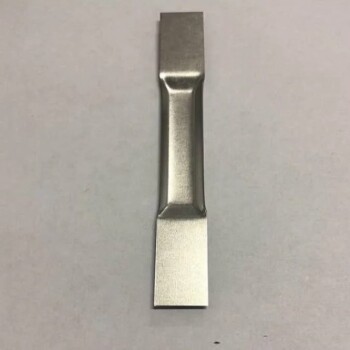
Molybdenum Tungsten Tantalum Evaporation Boat for High Temperature Applications

Evaporation Boat for Organic Matter

Electron Beam Evaporation Coating Oxygen-Free Copper Crucible and Evaporation Boat
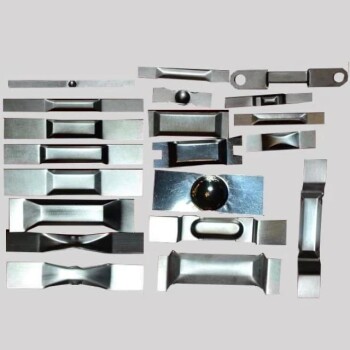
Molybdenum Tungsten Tantalum Special Shape Evaporation Boat
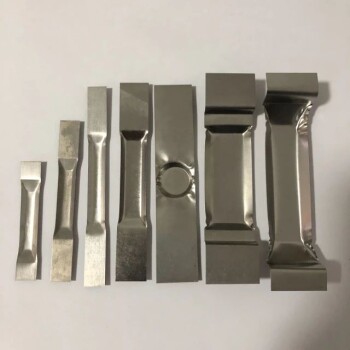
Tungsten Evaporation Boat for Thin Film Deposition