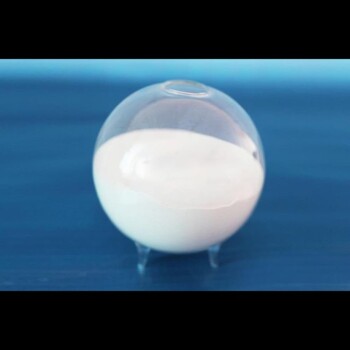
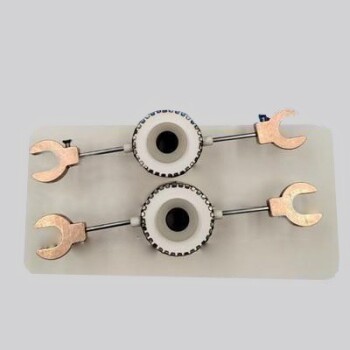
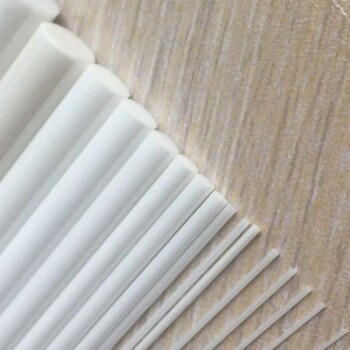
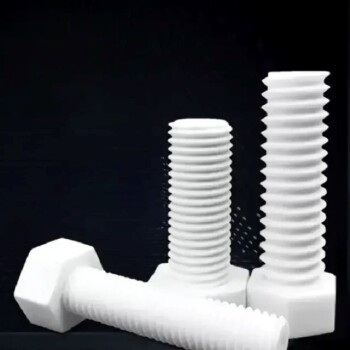
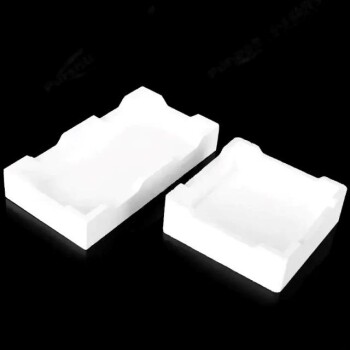
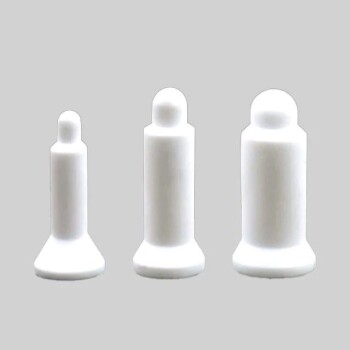
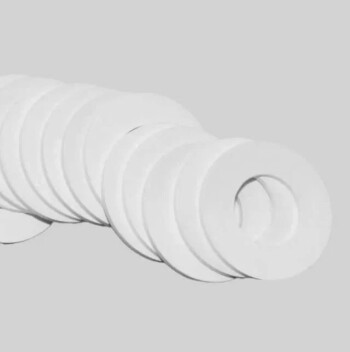
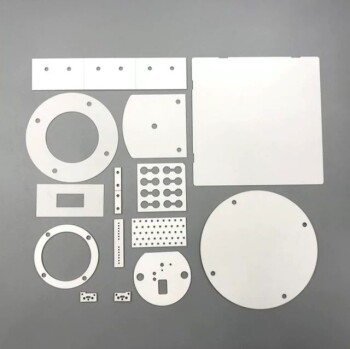
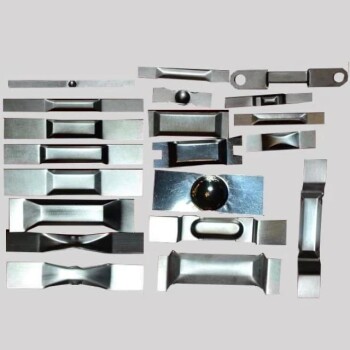
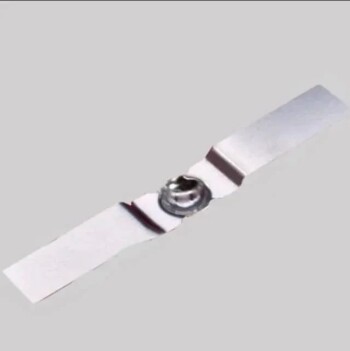
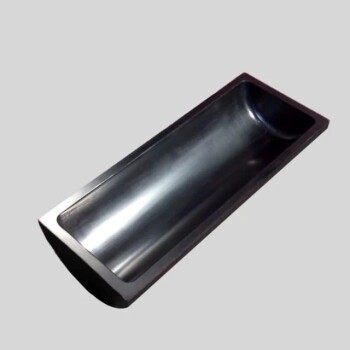
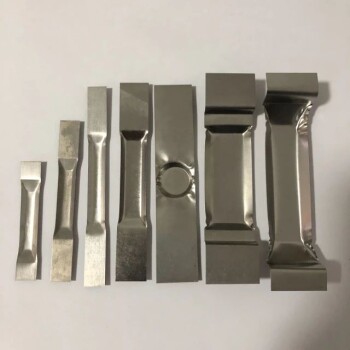
High-purity alumina boats and spacers act as critical isolation tools in supercritical carbon dioxide (S-CO2) corrosion experiments.
They serve two immediate functions: holding the test specimens stable and physically separating them from one another. By utilizing the material's chemical inertness and electrical insulating properties, these components prevent the samples from reacting with the sample holder or interacting with neighboring specimens.
By eliminating variables such as galvanic corrosion and solid-state diffusion, high-purity alumina ensures that the corrosion data collected is purely a result of the S-CO2 environment, rather than experimental artifacts.
The Challenge of S-CO2 Environments
Surviving Extreme Conditions
Supercritical CO2 experiments are designed to simulate next-generation power reactors. These tests often operate at temperatures exceeding 600 °C and pressures up to 20 MPa.
The Need for Inert Materials
In such aggressive environments, standard materials may degrade or react. High-purity alumina (Al2O3) is chosen because it remains chemically inert and mechanically stable, ensuring the testing apparatus itself does not become a variable in the experiment.
The Role of Alumina Components
Preventing Mutual Diffusion
At high temperatures, atoms can migrate between metals in direct contact.
Alumina boats and spacers provide a physical barrier between specimens. This physical separation prevents solid-state diffusion, ensuring the composition of one sample does not contaminate another.
Blocking Galvanic Corrosion
When dissimilar metals touch in a corrosive environment, they can create an electrical circuit, leading to galvanic corrosion.
Alumina serves as a powerful electrical insulator. By placing spacers between samples, researchers break this electrical path, ensuring that any observed corrosion is caused solely by the S-CO2 fluid, not by electrochemical interactions between samples.
Common Pitfalls and Data Integrity
The Risk of Environmental Contamination
Without inert liners or boats, specimens can react with the reactor walls or the holder itself.
Similar to how alumina linings in flue gas furnaces prevent acid gases from reacting with metal walls to generate impurity gases, alumina boats prevent cross-contamination. This ensures the S-CO2 medium remains pure throughout the 500+ hour test cycles.
Distinguishing Variables
The primary goal of these experiments is to evaluate a material's specific resistance to S-CO2.
If samples touch or react with their container, the data becomes unreliable. Using high-purity alumina is the only way to isolate the variable of interest, guaranteeing that the results reflect true material performance rather than experimental error.
Ensuring Experimental Reliability
To maximize the accuracy of your corrosion testing, consider these priorities:
- If your primary focus is data precision: Ensure every specimen is individually isolated using alumina spacers to completely eliminate galvanic coupling.
- If your primary focus is long-term stability: Use high-purity alumina boats to hold specimens, preventing chemical bonding or reactions with the autoclave surfaces during extended exposure.
Ultimately, the strict application of inert ceramics is what validates the integrity of high-temperature corrosion research.
Summary Table:
| Feature | Role in S-CO2 Experiments | Primary Benefit |
|---|---|---|
| Chemical Inertness | Resists reaction with S-CO2 at 600°C+ | Eliminates sample contamination |
| Electrical Insulation | Breaks the circuit between dissimilar metals | Prevents galvanic corrosion |
| Physical Barrier | Prevents direct metal-to-metal contact | Stops solid-state atom diffusion |
| Thermal Stability | Maintains structural integrity under high pressure | Ensures long-term test reliability |
Elevate Your Research Integrity with KINTEK Precision Ceramics
Don't let experimental artifacts compromise your supercritical CO2 corrosion data. KINTEK specializes in high-purity alumina boats, spacers, and ceramic crucibles designed to withstand the most aggressive laboratory environments.
Whether you are conducting long-term exposure tests in high-temperature high-pressure reactors or perfecting material performance in CVD/PECVD systems, our inert ceramic solutions ensure your results are pure and reproducible.
Ready to isolate your variables and ensure data precision? Contact KINTEK experts today to find the perfect ceramic components or custom laboratory equipment for your next-generation power research.
References
- Sunghwan Kim, Injin Sah. Microstructure and Tensile Properties of Diffusion Bonded Austenitic Fe-Base Alloys—Before and After Exposure to High Temperature Supercritical-CO2. DOI: 10.3390/met10040480
This article is also based on technical information from Kintek Solution Knowledge Base .
Related Products
- High Purity Alumina Granulated Powder for Engineering Advanced Fine Ceramics
- Alumina Al2O3 Ceramic Crucible Semicircle Boat with Lid for Engineering Advanced Fine Ceramics
- Aluminized Ceramic Evaporation Boat for Thin Film Deposition
- Ceramic Evaporation Boat Set Alumina Crucible for Laboratory Use
- Engineering Advanced Fine Ceramics Alumina Crucibles (Al2O3) for Thermal Analysis TGA DTA
People Also Ask
- What is the function of high-purity alumina powder in pack cementation? Ensure Uniform Aerospace Blade Coatings
- How should alumina powder be selected for polishing a disc electrode, and what is the procedure for removing scratches? Achieve a Perfect Mirror Finish
- What are the properties and handling precautions for alumina powder as a polishing material? Achieve a Flawless Finish with Precision
- Why is it necessary to apply alumina powder to graphite molds for TiC10/Cu-Al2O3? Ensure Smooth Release.
- What measures should be taken to prevent cross-contamination when using different sizes of alumina powder?