Knowledge What are the advantages of high-purity alumina crucibles for molten ZnNaK//Cl salts? Ensure Experimental Purity
Author avatar

Tech Team · Kintek Solution

Updated 1 day ago

What are the advantages of high-purity alumina crucibles for molten ZnNaK//Cl salts? Ensure Experimental Purity


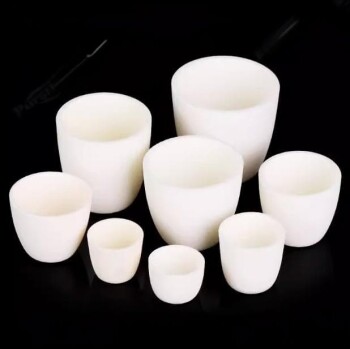
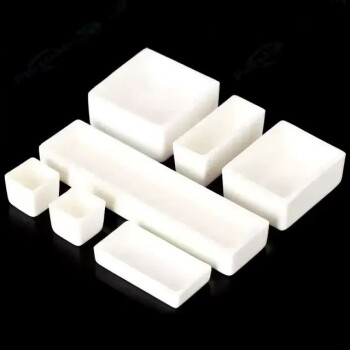
High-purity alumina crucibles provide the essential chemical inertness and structural integrity required for molten salt experiments. specifically, they withstand the corrosive nature of molten ZnNaK//Cl salts at temperatures up to 800°C without reacting, ensuring the purity of your catalytic environment.

Core Takeaway The success of catalytic conversion experiments hinges on eliminating contamination variables. High-purity alumina offers a dense, non-reactive barrier that prevents salt penetration and material leaching, ensuring that your experimental data reflects only the reaction kinetics and not container interference.

Ensuring Chemical Integrity in Corrosive Environments

Resistance to Chloride Attack

The primary advantage of high-purity alumina is its exceptional chemical stability against aggressive salts. It remains inert even when exposed to corrosive chloride melts at temperatures as high as 800°C.

Preventing Reaction with the Melt

Unlike many metals or lower-grade ceramics, high-purity alumina does not chemically react with the ZnNaK//Cl mixture. This neutrality is vital for maintaining the specific stoichiometry required for your catalytic process.

Physical Durability and Containment

Dense Material Structure

High-purity alumina is manufactured to be exceptionally dense. This physical characteristic effectively blocks the molten salt from penetrating the crucible walls, which is a common failure point in porous materials.

Long-Duration Reliability

This resistance to penetration makes these crucibles suitable for extended experiments. You can run long-duration corrosion or conversion tests without risking containment failure or leaks.

Preserving Experimental Accuracy

Elimination of Leaching

In catalytic studies, even trace impurities can poison catalysts or skew results. High-purity alumina prevents the container material from leaching into the salt system, preventing external impurities from entering the reaction.

Isolating Corrosion Variables

By removing the crucible as a variable, any changes in your experiment—such as weight gain or loss in test subjects—can be attributed solely to the reaction kinetics. This ensures the data collected accurately reflects the performance of the materials inside the melt.

Understanding the Trade-offs

Thermal Handling Requirements

While the provided references highlight thermal shock resistance in specific contexts, high-purity alumina is a ceramic and generally lacks the ductility of metal. It requires controlled heating and cooling rates to prevent stress fractures, particularly when transitioning from ambient temperatures to the high operating ranges (above 300°C to 800°C).

Making the Right Choice for Your Goal

To maximize the value of your experimental setup, align your equipment choice with your specific data needs:

  • If your primary focus is Data Fidelity: Choose high-purity alumina to strictly prevent container leaching from skewing catalytic activity or corrosion kinetics.
  • If your primary focus is High-Temperature Stability: Rely on this material for chloride-based experiments reaching up to 800°C, where other containment materials might degrade or fail.

High-purity alumina is the definitive choice for researchers who prioritize experimental purity and long-term containment integrity in aggressive molten salt environments.

Summary Table:

Feature High-Purity Alumina Advantage
Chemical Stability Inert against aggressive ZnNaK//Cl chloride melts up to 800°C
Material Density Non-porous structure prevents molten salt penetration and leaks
Data Integrity Eliminates leaching and contamination for accurate catalytic kinetics
Durability Supports long-duration corrosion and conversion testing without failure

Elevate Your Research Precision with KINTEK

Don't let container interference compromise your catalytic data. KINTEK specializes in premium laboratory equipment, providing high-purity alumina crucibles and ceramic components designed to withstand the most corrosive molten salt environments. Whether your work involves high-temperature furnaces, high-pressure reactors, or advanced crushing and milling systems, our solutions ensure your results remain pure and reproducible.

Our value to you:

  • Comprehensive Portfolio: From vacuum and atmosphere furnaces to specialized electrolytic cells and electrodes.
  • Expert Containment: Dense, high-purity ceramics that prevent leaching in aggressive chemical reactions.
  • End-to-End Support: Essential consumables like PTFE products and crucibles tailored for your specific research goals.

Contact us today to optimize your lab's efficiency and experimental accuracy!

Related Products

People Also Ask

Related Products

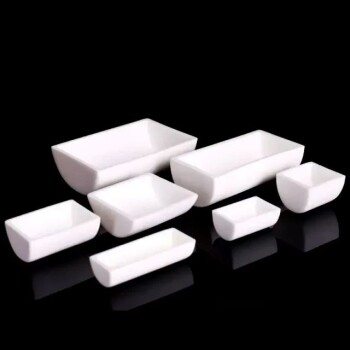
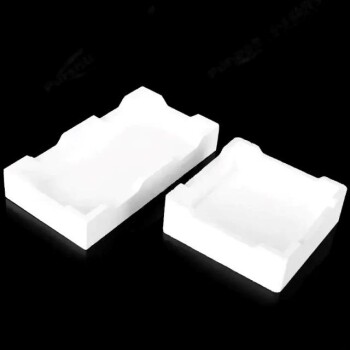
Alumina Al2O3 Ceramic Crucible Semicircle Boat with Lid for Engineering Advanced Fine Ceramics

Alumina Al2O3 Ceramic Crucible Semicircle Boat with Lid for Engineering Advanced Fine Ceramics

Crucibles are containers widely used for melting and processing various materials, and semicircular boat-shaped crucibles are suitable for special smelting and processing requirements. Their types and uses vary by material and shape.

Arc-Shaped Alumina Ceramic Crucible High Temperature Resistant for Engineering Advanced Fine Ceramics

Arc-Shaped Alumina Ceramic Crucible High Temperature Resistant for Engineering Advanced Fine Ceramics

In the journey of scientific exploration and industrial production, every detail is crucial. Our arc-shaped alumina ceramic crucibles, with their excellent high temperature resistance and stable chemical properties, have become a powerful assistant in laboratories and industrial fields. They are made of high-purity alumina materials and manufactured through precision processes to ensure excellent performance in extreme environments.

Engineering Advanced Fine Alumina Al2O3 Ceramic Crucible for Laboratory Muffle Furnace

Engineering Advanced Fine Alumina Al2O3 Ceramic Crucible for Laboratory Muffle Furnace

Alumina ceramic crucibles are used in some materials and metal melting tools, and flat-bottomed crucibles are suitable for melting and processing larger batches of materials with better stability and uniformity.

Engineering Advanced Fine Ceramics Alumina Crucibles (Al2O3) for Thermal Analysis TGA DTA

Engineering Advanced Fine Ceramics Alumina Crucibles (Al2O3) for Thermal Analysis TGA DTA

TGA/DTA thermal analysis vessels are made of aluminum oxide (corundum or aluminum oxide). It can withstand high temperature and is suitable for analyzing materials that require high temperature testing.

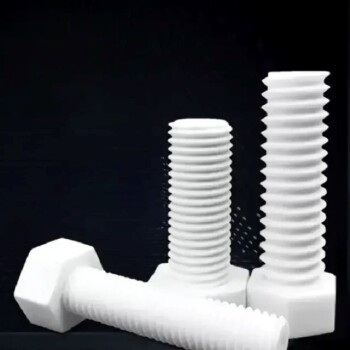
High Quality Alumina Ceramic Screw for Engineering Advanced Fine Ceramics with High Temperature Resistance and Insulation

High Quality Alumina Ceramic Screw for Engineering Advanced Fine Ceramics with High Temperature Resistance and Insulation

Alumina ceramic screws are fastening components made of 99.5% alumina, ideal for extreme applications requiring excellent thermal resistance, electrical insulation and chemical resistance.

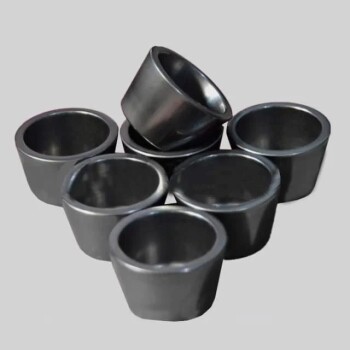
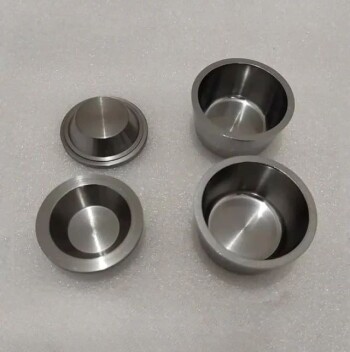
Electron Beam Evaporation Coating Tungsten Crucible and Molybdenum Crucible for High Temperature Applications

Electron Beam Evaporation Coating Tungsten Crucible and Molybdenum Crucible for High Temperature Applications

Tungsten and molybdenum crucibles are commonly used in electron beam evaporation processes due to their excellent thermal and mechanical properties.

Custom Machined and Molded PTFE Teflon Parts Manufacturer with PTFE Crucible and Lid

Custom Machined and Molded PTFE Teflon Parts Manufacturer with PTFE Crucible and Lid

PTFE crucibles, made from pure Teflon, offer chemical inertness and resistance from -196°C to 280°C, ensuring compatibility with a wide range of temperatures and chemicals. These crucibles feature machine-finished surfaces for easy cleaning and prevention of contamination, making them ideal for precise laboratory applications.

Carbon Graphite Boat -Laboratory Tube Furnace with Cover

Carbon Graphite Boat -Laboratory Tube Furnace with Cover

Covered Carbon Graphite Boat Laboratory Tube Furnaces are specialized vessels or vessels made of graphite material designed to withstand extreme high temperatures and chemically aggressive environments.

Evaporation Crucible for Organic Matter

Evaporation Crucible for Organic Matter

An evaporation crucible for organic matter, referred to as an evaporation crucible, is a container for evaporating organic solvents in a laboratory environment.

Electron Beam Evaporation Coating Gold Plating Tungsten Molybdenum Crucible for Evaporation

Electron Beam Evaporation Coating Gold Plating Tungsten Molybdenum Crucible for Evaporation

These crucibles act as containers for the gold material evaporated by the electron evaporation beam while precisely directing the electron beam for precise deposition.

Boron Nitride (BN) Crucible for Phosphorous Powder Sintered

Boron Nitride (BN) Crucible for Phosphorous Powder Sintered

Phosphorus powder sintered boron nitride (BN) crucible has a smooth surface, dense, pollution-free and long service life.

Electron Beam Evaporation Coating Oxygen-Free Copper Crucible and Evaporation Boat

Electron Beam Evaporation Coating Oxygen-Free Copper Crucible and Evaporation Boat

Electron Beam Evaporation Coating Oxygen-Free Copper Crucible enables precise co-deposition of various materials. Its controlled temperature and water-cooled design ensure pure and efficient thin film deposition.

Electron Beam Evaporation Coating Conductive Boron Nitride Crucible BN Crucible

Electron Beam Evaporation Coating Conductive Boron Nitride Crucible BN Crucible

High-purity and smooth conductive boron nitride crucible for electron beam evaporation coating, with high temperature and thermal cycling performance.

Molybdenum Disilicide (MoSi2) Thermal Elements Electric Furnace Heating Element

Molybdenum Disilicide (MoSi2) Thermal Elements Electric Furnace Heating Element

Discover the power of Molybdenum Disilicide (MoSi2) Heating Element for high-temperature resistance. Unique oxidation resistance with stable resistance value. Learn more about its benefits now!

Graphite Vacuum Continuous Graphitization Furnace

Graphite Vacuum Continuous Graphitization Furnace

High-temperature graphitization furnace is a professional equipment for graphitization treatment of carbon materials. It is a key equipment for the production of high-quality graphite products. It has high temperature, high efficiency and uniform heating. It is suitable for various high-temperature treatments and graphitization treatments. It is widely used in metallurgy, electronics, aerospace, etc. industry.

Desktop Fast Laboratory Autoclave Sterilizer 35L 50L 90L for Lab Use

Desktop Fast Laboratory Autoclave Sterilizer 35L 50L 90L for Lab Use

The desktop fast steam sterilizer is a compact and reliable device used for rapid sterilization of medical, pharmaceutical, and research items. It efficiently sterilizes surgical instruments, glassware, medicines, and resistant materials, making it suitable for various applications.

Laboratory Jaw Crusher

Laboratory Jaw Crusher

Discover the small jaw crusher for efficient, flexible, and affordable crushing in labs and small mines. Ideal for coal, ores, and rocks. Learn more now!

Platinum Auxiliary Electrode for Laboratory Use

Platinum Auxiliary Electrode for Laboratory Use

Optimize your electrochemical experiments with our Platinum Auxiliary Electrode. Our high-quality, customizable models are safe and durable. Upgrade today!

Benchtop Laboratory Freeze Dryer for Lab Use

Benchtop Laboratory Freeze Dryer for Lab Use

Premium benchtop laboratory freeze dryer for lyophilization, preserving samples with ≤ -60°C cooling. Ideal for pharmaceuticals & research.

Laboratory Oscillating Orbital Shaker

Laboratory Oscillating Orbital Shaker

Mixer-OT orbital shaker uses brushless motor, which can run for a long time. It is suitable for vibration tasks of culture dishes, flasks and beakers.


Leave Your Message