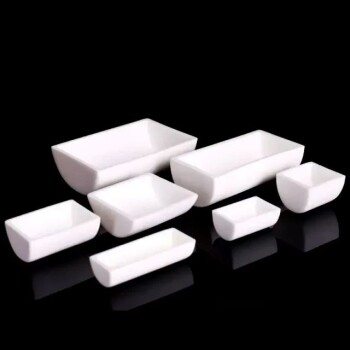
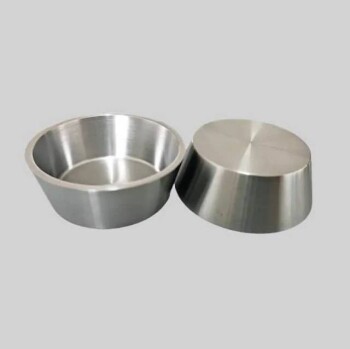
In the high-temperature solid-state synthesis of Na$_3$OBr, the Alumina Crucible acts as a chemically inert reaction vessel essential for maintaining sample integrity. It is specifically employed to hold pressed precursor particles while subjecting them to an electric furnace environment of 450°C for 24 hours, ensuring the materials are heated without reacting with the container itself.
The success of this synthesis relies on isolating reactive precursors from their containment vessel during prolonged heating. The Alumina Crucible provides the necessary chemical inertia and thermal stability to prevent contamination, ensuring the final Na$_3$OBr product remains pure.
The Mechanics of Protection
To understand why an Alumina Crucible is required, you must look at the specific physical demands placed on the reaction environment.
High-Temperature Stability
The synthesis process involves a rigorous heating schedule within an electric furnace. The crucible must withstand a sustained temperature of 450°C for a continuous 24-hour period.
Alumina is chosen because it maintains its structural integrity under these specific thermal conditions. It does not soften, deform, or degrade, providing a stable platform for the reaction to occur.
Chemical Inertia
At elevated temperatures, many containment materials become reactive and can leach impurities into the sample.
Alumina possesses excellent chemical inertia, meaning it resists interacting with the chemical precursors. This property is vital for preventing unwanted side reactions between the vessel and the sample.
Ensuring Experimental Integrity
Beyond simply holding the material, the crucible plays an active role in quality control.
Physical Containment of Precursors
The synthesis utilizes pressed precursor particles rather than loose powder or liquid.
The crucible serves as the physical boundary that keeps these compacted particles together. This ensures uniform exposure to the heat source within the furnace.
Guaranteeing Product Purity
The ultimate goal of using an Alumina Crucible is to secure the purity of the synthesized Na$_3$OBr.
By effectively blocking chemical reactions between the sample and the container, the crucible eliminates the risk of container-derived contamination.
Common Pitfalls to Avoid
In solid-state synthesis, the choice of vessel is often where errors in purity originate.
The Risk of Reactive Vessels
Using a crucible with lower chemical stability than alumina can lead to cross-contamination. Even minor reactions between the vessel wall and the precursors can introduce impurities that alter the properties of the final compound.
Thermal Mismatch
If a vessel cannot sustain the 450°C requirement for the full 24 hours, it may suffer from thermal shock or physical failure. The use of alumina specifically mitigates this risk due to its proven high-temperature resilience.
Making the Right Choice for Your Goal
When designing your synthesis protocol for Na$_3$OBr, your equipment choice dictates your outcome.
- If your primary focus is Product Purity: Utilize Alumina Crucibles to strictly prevent chemical reactions between the precursors and the container walls.
- If your primary focus is Process Stability: Rely on Alumina to endure the 24-hour heating cycle at 450°C without physical degradation.
Selecting the correct containment vessel is not just a logistical detail; it is a fundamental control for chemical purity.
Summary Table:
| Feature | Requirement for Na3OBr Synthesis | Benefit of Alumina Crucible |
|---|---|---|
| Temperature Resistance | 450°C for 24 Hours | High thermal stability; prevents deformation |
| Chemical Interaction | Inert environment needed | Excellent chemical inertia; prevents contamination |
| Sample Form | Pressed precursor particles | Secure physical containment for uniform heating |
| Product Goal | High-purity crystalline Na3OBr | Eliminates container-derived impurities |
Elevate Your Synthesis Precision with KINTEK
Achieving uncompromising purity in high-temperature solid-state synthesis requires high-performance laboratory equipment. KINTEK specializes in providing the essential tools researchers need for success, including high-purity Alumina Crucibles, high-temperature muffle and tube furnaces, and advanced crushing and milling systems.
Whether you are synthesizing complex halides like Na3OBr or developing next-generation battery materials, our comprehensive portfolio—from hydraulic pellet presses for precursor preparation to ULT freezers for sample preservation—is designed to meet the most rigorous scientific standards.
Ready to optimize your lab's workflow and ensure the integrity of your results? Contact KINTEK today for expert guidance and premium solutions!
Related Products
- Arc-Shaped Alumina Ceramic Crucible High Temperature Resistant for Engineering Advanced Fine Ceramics
- Alumina Al2O3 Ceramic Crucible Semicircle Boat with Lid for Engineering Advanced Fine Ceramics
- Engineering Advanced Fine Ceramics Alumina Al2O3 Crucible With Lid Cylindrical Laboratory Crucible
- Engineering Advanced Fine Ceramics Alumina Crucibles (Al2O3) for Thermal Analysis TGA DTA
- Engineering Advanced Fine Alumina Al2O3 Ceramic Crucible for Laboratory Muffle Furnace
People Also Ask
- Why Use Alumina Crucibles & Powder Burial for NaSICON? Ensure Phase Purity and Prevent Elemental Volatilization
- What is the primary purpose of using alumina crucibles for LLTO ceramics? Optimize Your High-Temperature Sintering
- Why are alumina crucibles and mother powder essential for LATP sintering? Optimize Your Solid Electrolyte Performance
- Why are high-purity alumina crucibles used for liquid lead corrosion experiments? Ensure Data Accuracy at 550°C
- Primary considerations for choosing alumina crucibles and quartz tubes in indium intercalation: Ensure Material Purity