Knowledge How does the use of corrosion-resistant ceramic crucibles ensure the chemical purity of materials? | KINTEK
Author avatar

Tech Team · Kintek Solution

Updated 1 day ago

How does the use of corrosion-resistant ceramic crucibles ensure the chemical purity of materials? | KINTEK


High-purity, corrosion-resistant ceramic crucibles act as an inert barrier against chemical contamination. In molten salt synthesis, these vessels withstand aggressive alkaline melts to stop chemical interactions between the flux and the container walls. This prevents foreign elements like silicon or aluminum from leaching into the mix, preserving the integrity of single-crystal growth.

Core Insight: The success of molten salt synthesis relies on maintaining a chemically isolated environment. By using high-density ceramic crucibles, you eliminate the risk of container degradation, ensuring that final cathode materials retain their intended chemical composition and structural morphology.

The Mechanics of Contamination Prevention

Resisting Aggressive Alkaline Melts

Molten salt synthesis often relies on highly corrosive fluxes, such as sodium hydroxide or sodium carbonate.

At elevated temperatures, these alkaline melts become extremely aggressive chemicals. They have the potential to attack and dissolve standard laboratory container materials.

Eliminating Side Reactions

If the vessel material reacts with the flux, it creates unwanted side reactions.

High-purity ceramic crucibles are engineered to be chemically inert. This ensures that the chemical activity is confined strictly to the synthesis materials, rather than involving the container itself.

Impact on Material Quality

Preventing Elemental Leaching

When crucible walls degrade, they release impurity elements into the molten solution.

Common contaminants from inferior containers include silicon (Si) or aluminum (Al). Using high-density ceramics locks these elements away, preventing them from interfering with the synthesis.

Ensuring Regular Morphology

Chemical purity is directly linked to the physical structure of the final product.

By preventing the introduction of impurities, these crucibles support undisturbed single-crystal growth. This results in cathode materials that exhibit regular, predictable morphology rather than deformed or inconsistent structures.

Understanding the Trade-offs

Thermal Shock Sensitivity

While chemically robust, high-density ceramics can be susceptible to thermal shock.

Unlike metal crucibles, they may crack if subjected to extremely rapid heating or cooling cycles. Users must manage temperature ramps carefully to preserve the vessel's integrity.

Cost and Handling

Achieving high purity and density requires specialized manufacturing, which often results in higher costs compared to standard labware.

Additionally, these crucibles are brittle. They require careful physical handling to avoid mechanical breakage during loading and cleaning.

Optimizing Your Synthesis Setup

Selecting the right vessel is about balancing chemical inertness with physical durability to match your specific process needs.

  • If your primary focus is high-precision single-crystal growth: Prioritize high-density, high-purity ceramics to strictly eliminate silicon and aluminum contamination.
  • If your primary focus is rapid thermal cycling: Evaluate whether the ceramic material can withstand your heating rates without fracturing, or adjust your ramp times accordingly.

The crucible is not merely a container; it is a critical variable that defines the chemical purity and structural success of your final material.

Summary Table:

Feature Benefit for Molten Salt Synthesis
Inert Barrier Prevents chemical reactions between the flux and container walls.
High Corrosion Resistance Withstands aggressive alkaline melts like NaOH or Na2CO3 at high temperatures.
Leaching Prevention Stops impurity elements (Si, Al) from entering the material mix.
Morphology Control Supports undisturbed single-crystal growth for consistent cathode structures.
High-Density Build Reduces porosity to eliminate trap-sites for contaminants.

Elevate Your Material Purity with KINTEK

Precision in molten salt synthesis starts with the right environment. KINTEK provides high-performance laboratory solutions tailored for advanced research. From our high-density ceramic crucibles and PTFE products to our specialized high-temperature furnaces and pellet presses, we ensure your synthesis process remains free from contamination.

Whether you are developing next-generation cathode materials or growing high-precision single crystals, our expertise in high-temperature and high-pressure equipment helps you achieve predictable, high-quality results.

Ready to optimize your lab's performance? Contact KINTEK today to discuss our range of crucibles and synthesis tools!

Related Products

People Also Ask

Related Products

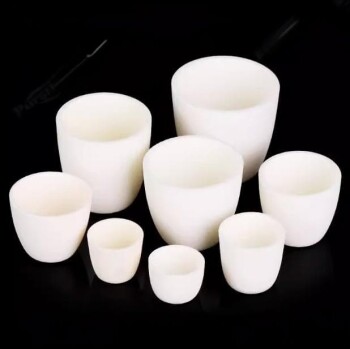
Alumina Al2O3 Ceramic Crucible Semicircle Boat with Lid for Engineering Advanced Fine Ceramics

Alumina Al2O3 Ceramic Crucible Semicircle Boat with Lid for Engineering Advanced Fine Ceramics

Crucibles are containers widely used for melting and processing various materials, and semicircular boat-shaped crucibles are suitable for special smelting and processing requirements. Their types and uses vary by material and shape.

Arc-Shaped Alumina Ceramic Crucible High Temperature Resistant for Engineering Advanced Fine Ceramics

Arc-Shaped Alumina Ceramic Crucible High Temperature Resistant for Engineering Advanced Fine Ceramics

In the journey of scientific exploration and industrial production, every detail is crucial. Our arc-shaped alumina ceramic crucibles, with their excellent high temperature resistance and stable chemical properties, have become a powerful assistant in laboratories and industrial fields. They are made of high-purity alumina materials and manufactured through precision processes to ensure excellent performance in extreme environments.

Engineering Advanced Fine Alumina Al2O3 Ceramic Crucible for Laboratory Muffle Furnace

Engineering Advanced Fine Alumina Al2O3 Ceramic Crucible for Laboratory Muffle Furnace

Alumina ceramic crucibles are used in some materials and metal melting tools, and flat-bottomed crucibles are suitable for melting and processing larger batches of materials with better stability and uniformity.

Engineering Advanced Fine Ceramics Alumina Crucibles (Al2O3) for Thermal Analysis TGA DTA

Engineering Advanced Fine Ceramics Alumina Crucibles (Al2O3) for Thermal Analysis TGA DTA

TGA/DTA thermal analysis vessels are made of aluminum oxide (corundum or aluminum oxide). It can withstand high temperature and is suitable for analyzing materials that require high temperature testing.

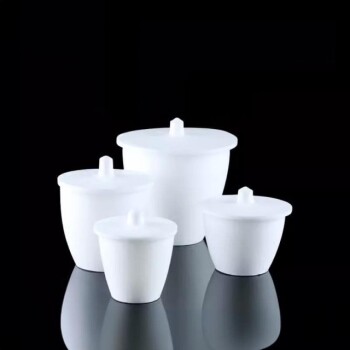
Custom Machined and Molded PTFE Teflon Parts Manufacturer with PTFE Crucible and Lid

Custom Machined and Molded PTFE Teflon Parts Manufacturer with PTFE Crucible and Lid

PTFE crucibles, made from pure Teflon, offer chemical inertness and resistance from -196°C to 280°C, ensuring compatibility with a wide range of temperatures and chemicals. These crucibles feature machine-finished surfaces for easy cleaning and prevention of contamination, making them ideal for precise laboratory applications.

Boron Nitride (BN) Crucible for Phosphorous Powder Sintered

Boron Nitride (BN) Crucible for Phosphorous Powder Sintered

Phosphorus powder sintered boron nitride (BN) crucible has a smooth surface, dense, pollution-free and long service life.

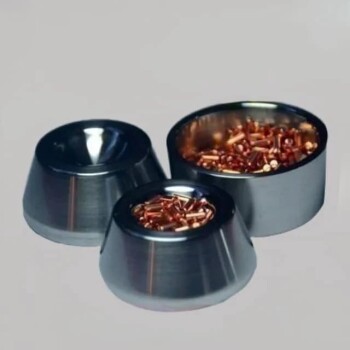
Electron Beam Evaporation Coating Tungsten Crucible and Molybdenum Crucible for High Temperature Applications

Electron Beam Evaporation Coating Tungsten Crucible and Molybdenum Crucible for High Temperature Applications

Tungsten and molybdenum crucibles are commonly used in electron beam evaporation processes due to their excellent thermal and mechanical properties.

Carbon Graphite Boat -Laboratory Tube Furnace with Cover

Carbon Graphite Boat -Laboratory Tube Furnace with Cover

Covered Carbon Graphite Boat Laboratory Tube Furnaces are specialized vessels or vessels made of graphite material designed to withstand extreme high temperatures and chemically aggressive environments.

Evaporation Crucible for Organic Matter

Evaporation Crucible for Organic Matter

An evaporation crucible for organic matter, referred to as an evaporation crucible, is a container for evaporating organic solvents in a laboratory environment.

Electron Beam Evaporation Coating Gold Plating Tungsten Molybdenum Crucible for Evaporation

Electron Beam Evaporation Coating Gold Plating Tungsten Molybdenum Crucible for Evaporation

These crucibles act as containers for the gold material evaporated by the electron evaporation beam while precisely directing the electron beam for precise deposition.

Square Bidirectional Pressure Mold for Lab Use

Square Bidirectional Pressure Mold for Lab Use

Discover precision in molding with our Square Bidirectional Pressure Mold. Ideal for creating diverse shapes and sizes, from squares to hexagons, under high pressure and uniform heating. Perfect for advanced material processing.

Electron Beam Evaporation Coating Conductive Boron Nitride Crucible BN Crucible

Electron Beam Evaporation Coating Conductive Boron Nitride Crucible BN Crucible

High-purity and smooth conductive boron nitride crucible for electron beam evaporation coating, with high temperature and thermal cycling performance.

Electron Beam Evaporation Coating Oxygen-Free Copper Crucible and Evaporation Boat

Electron Beam Evaporation Coating Oxygen-Free Copper Crucible and Evaporation Boat

Electron Beam Evaporation Coating Oxygen-Free Copper Crucible enables precise co-deposition of various materials. Its controlled temperature and water-cooled design ensure pure and efficient thin film deposition.

Electrolytic Electrochemical Cell for Coating Evaluation

Electrolytic Electrochemical Cell for Coating Evaluation

Looking for corrosion-resistant coating evaluation electrolytic cells for electrochemical experiments? Our cells boast complete specifications, good sealing, high-quality materials, safety, and durability. Plus, they're easily customizable to meet your needs.

Desktop Fast Laboratory Autoclave Sterilizer 35L 50L 90L for Lab Use

Desktop Fast Laboratory Autoclave Sterilizer 35L 50L 90L for Lab Use

The desktop fast steam sterilizer is a compact and reliable device used for rapid sterilization of medical, pharmaceutical, and research items. It efficiently sterilizes surgical instruments, glassware, medicines, and resistant materials, making it suitable for various applications.

Custom PTFE Teflon Parts Manufacturer for PTFE Buchner Funnel and Triangular Funnel

Custom PTFE Teflon Parts Manufacturer for PTFE Buchner Funnel and Triangular Funnel

The PTFE funnel is a piece of laboratory equipment used primarily for filtration processes, particularly in the separation of solid and liquid phases in a mixture. This setup allows for efficient and rapid filtration, making it indispensable in various chemical and biological applications.

Custom PTFE Teflon Parts Manufacturer Grinding Bowl

Custom PTFE Teflon Parts Manufacturer Grinding Bowl

PTFE is renowned for its exceptional chemical resistance, thermal stability, and low friction properties, making it a versatile material in various industries. The PTFE grinding bowl, specifically, finds applications where these properties are crucial.

Molybdenum Disilicide (MoSi2) Thermal Elements Electric Furnace Heating Element

Molybdenum Disilicide (MoSi2) Thermal Elements Electric Furnace Heating Element

Discover the power of Molybdenum Disilicide (MoSi2) Heating Element for high-temperature resistance. Unique oxidation resistance with stable resistance value. Learn more about its benefits now!

Custom PTFE Teflon Parts Manufacturer for PTFE Mesh F4 Sieve

Custom PTFE Teflon Parts Manufacturer for PTFE Mesh F4 Sieve

PTFE mesh sieve is a specialized test sieve designed for particle analysis in various industries, featuring a non-metallic mesh woven from PTFE filament. This synthetic mesh is ideal for applications where metal contamination is a concern . PTFE sieves are crucial for maintaining the integrity of samples in sensitive environments, ensuring accurate and reliable results in particle size distribution analysis.

Twin Screw Extruder Plastic Granulation Machine

Twin Screw Extruder Plastic Granulation Machine

Twin screw extruder plastic granulation machine is designed for the mixing and processing experiments of engineering plastics, modified plastics, waste plastics and masterbatches.


Leave Your Message