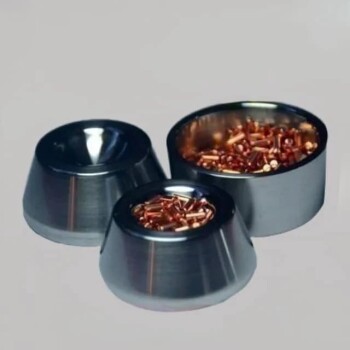
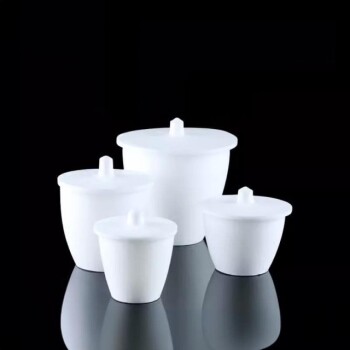
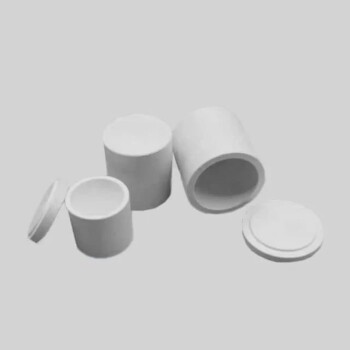
High-purity alumina crucibles are the critical containment standard for LATP synthesis because of their exceptional ability to withstand extreme heat without chemically interacting with the reactive components. By remaining inert at elevated temperatures, they prevent the vessel material from contaminating the delicate phosphate mixture.
The Core Insight Success in synthesizing LATP (Lithium Aluminum Titanium Phosphate) relies on maintaining a precise atomic ratio between lithium and other elements. High-purity alumina is essential because it prevents "chemical leaching"—where the crucible itself reacts with the ingredients—thereby preserving the stoichiometry required for high ionic conductivity.
Preserving Chemical Integrity
To achieve high performance in solid electrolytes, purity is paramount. The choice of crucible is not merely about holding the powder; it is about preventing chemical corruption.
Blocking Component Leaching
LATP synthesis involves reactive phosphate components and lithium sources. In lesser vessels, these components can attack the container walls at high temperatures. High-purity alumina is chemically inert, effectively acting as a neutral barrier that prevents side reactions between the container and the phosphate components.
Preventing Impurity Migration
When a crucible degrades or reacts, it sheds atoms into the mixture it holds. This introduces foreign contaminants into the LATP powder. Alumina crucibles ensure the final powder remains free from such external impurities, which is vital for preventing phase transitions that lower conductivity.
Maintaining Stoichiometry
LATP requires a strict stoichiometric ratio (the exact balance of chemical elements). If the crucible reacts with alkali metals like lithium, it depletes the lithium content in the powder. Alumina’s stability ensures no lithium is lost to the vessel wall, preserving the crystal lattice structure.
Thermal Stability and Atmosphere Control
Beyond chemical resistance, the physical properties of alumina under heat are crucial for the sintering process.
Withstanding Processing Temperatures
LATP calcination and sintering often occur at temperatures around 1100°C. Alumina crucibles possess excellent thermal stability, meaning they do not soften or deform at these ranges. This rigidity ensures the sample is mechanically supported throughout the heating cycle.
Facilitating Atmosphere Control
Crucibles often hold not just the LATP sample, but also a "mother powder" (a sacrificial powder bed). This setup creates a local, lithium-rich atmosphere inside the crucible to combat lithium volatilization. The structural integrity of the alumina crucible is required to maintain this contained micro-environment effectively.
Understanding the Trade-offs
While high-purity alumina is the preferred choice for LATP, it is not a universal solution for all ceramic processing.
The Temperature Ceiling
Alumina is excellent for temperatures up to roughly 1150°C–1200°C used for LATP. However, for materials requiring significantly higher sintering temperatures (approaching 1450°C), alumina may begin to fail or react. In those extreme cases, alternative materials like zirconia may be required to prevent contamination.
The Necessity of "High Purity"
Not all alumina is created equal. Standard or low-grade alumina often contains binders or silica impurities. You must specifically utilize high-purity alumina; otherwise, the impurities within the crucible ceramic itself will migrate into your LATP during heating.
Making the Right Choice for Your Project
Selecting the correct vessel is a strategic decision that directly impacts the ionic conductivity of your final electrolyte.
- If your primary focus is maximizing ionic conductivity: Ensure you use chemically inert high-purity alumina to prevent the formation of secondary impurity phases that block ion movement.
- If your primary focus is preventing lithium loss: Use the alumina crucible to contain a "mother powder" bed, leveraging the vessel's depth to create a saturated lithium atmosphere around your green body.
By treating the crucible as an active component of your quality control rather than just a container, you ensure the chemical fidelity of your LATP material.
Summary Table:
| Feature | Benefit for LATP Synthesis |
|---|---|
| Chemical Inertness | Prevents reactions between the crucible and phosphate components |
| High Purity | Eliminates impurity migration and formation of secondary phases |
| Lithium Retention | Prevents lithium loss to maintain the required stoichiometric ratio |
| Thermal Stability | Resists deformation at sintering temperatures up to 1200°C |
| Atmosphere Control | Enables use of 'mother powder' beds to reduce volatilization |
Elevate Your Material Research with KINTEK
Precision in LATP synthesis starts with the right containment. KINTEK specializes in providing high-performance laboratory equipment and consumables designed for the most demanding research environments.
Whether you need high-purity alumina crucibles and ceramics, advanced muffle or tube furnaces for precise sintering, or hydraulic presses for sample preparation, our comprehensive portfolio is built to ensure your results are consistent and contamination-free. From battery research tools to high-temperature reactors, KINTEK is your partner in laboratory excellence.
Ready to optimize your high-temperature processes? Contact us today to find the perfect solution for your lab!
Related Products
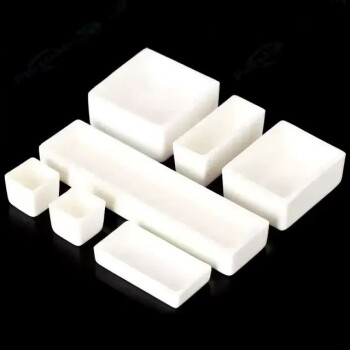
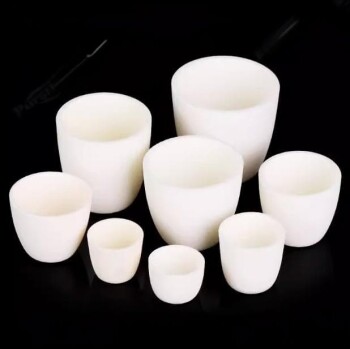
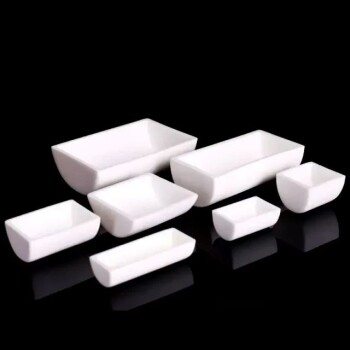
- Engineering Advanced Fine Alumina Al2O3 Ceramic Crucible for Laboratory Muffle Furnace
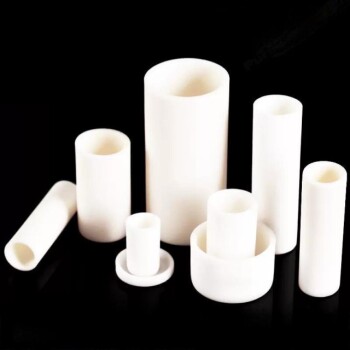
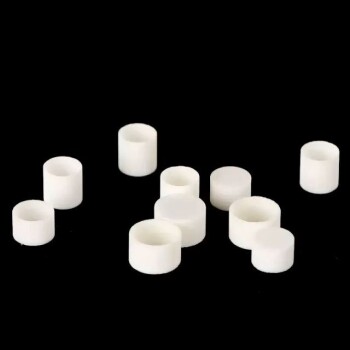
- Engineering Advanced Fine Ceramics Alumina Al2O3 Crucible With Lid Cylindrical Laboratory Crucible
- Arc-Shaped Alumina Ceramic Crucible High Temperature Resistant for Engineering Advanced Fine Ceramics
- High Purity Alumina Granulated Powder for Engineering Advanced Fine Ceramics
- Alumina Al2O3 Ceramic Crucible Semicircle Boat with Lid for Engineering Advanced Fine Ceramics
People Also Ask
- What crucible is used in muffle furnace? Select the Right Material for Your Application
- Why are alumina crucibles and mother powder essential for LATP sintering? Optimize Your Solid Electrolyte Performance
- Why are high-purity alumina crucibles used for liquid lead corrosion experiments? Ensure Data Accuracy at 550°C
- Why Use Alumina Crucibles & Powder Burial for NaSICON? Ensure Phase Purity and Prevent Elemental Volatilization
- What is the primary purpose of using alumina crucibles for LLTO ceramics? Optimize Your High-Temperature Sintering