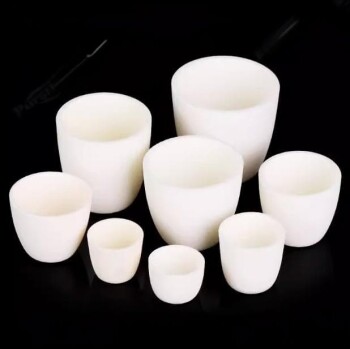
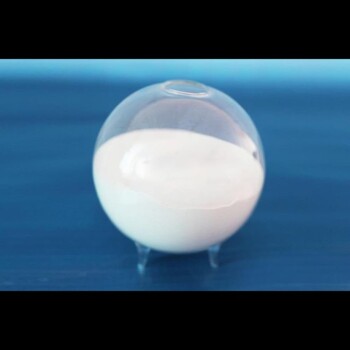
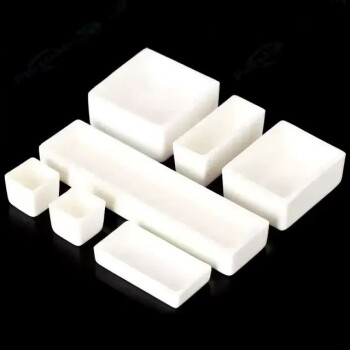
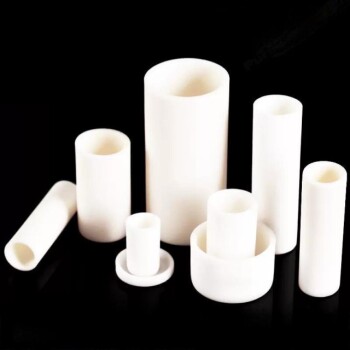
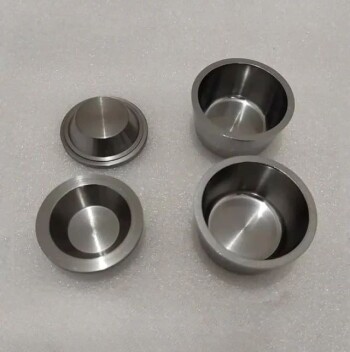
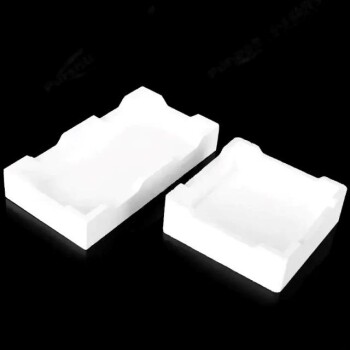
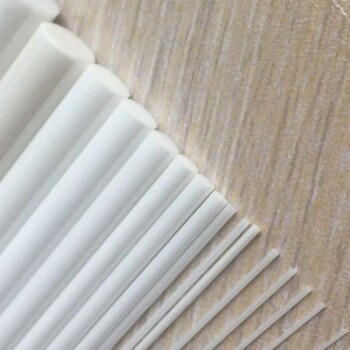
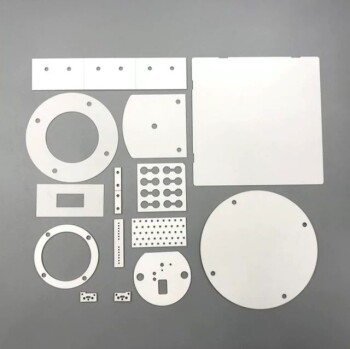
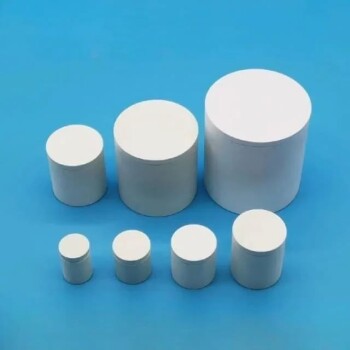
High-purity alumina crucibles are the definitive choice for high-temperature oxidation experiments because they provide a chemically neutral environment that withstands extreme thermal conditions without interfering with your sample. By eliminating reactions between the container and the specimen at temperatures exceeding 1100ºC, they ensure that any observed physical or chemical changes are strictly due to the experimental variables, not equipment interference.
The Core Advantage High-purity alumina acts as an absolute baseline for measurement; its lack of chemical reactivity ensures that gravimetric data reflects only the oxidation behavior of your sample. This guarantees that weight gain or loss calculations remain uncontaminated by container impurities or side reactions.
1. Ensuring Chemical Isolation and Inertness
The primary function of high-purity alumina is to serve as an inert barrier between your sample and the experimental hardware.
Preventing Sample-Container Cross-Talk
At elevated temperatures (1100ºC to >1200ºC), many container materials become reactive. High-purity alumina remains chemically stable, refusing to react with metal specimens, FeCrAl alloys, or graphite samples. This prevents the crucible from chemically altering the specimen or the generated oxide scale.
Eliminating Impurity Introduction
In high-precision experiments, container degradation can introduce foreign elements into the sample. Alumina's high stability prevents "container-related contamination," ensuring the chemical purity of sensitive materials like Fe-C@C nanoparticles. This is critical for preserving the magnetic properties and adsorption performance of the final material.
2. Validating Gravimetric Data Accuracy
The validity of an oxidation experiment often hinges on precise mass measurement. Alumina crucibles are the linchpin for accurate gravimetric analysis.
Isolating Mass Change Variables
When measuring oxidation kinetics, you are tracking minute changes in weight. Because alumina does not react with the sample or the oxygen source, you can be certain that any measured weight change is derived solely from the oxidation of the metal or the spallation of the oxide scale.
Ensuring Kinetic Reliability
By preventing chemical interference, alumina ensures the integrity of kinetic data (mass loss or gain over time). Whether measuring the mass loss of oxidizing graphite or the weight gain of metal alloys, the inert nature of the crucible guarantees that the data represents the true reaction rate of the material, not an artifact of the container.
3. Physical Stability in Aggressive Environments
Beyond chemical inertness, high-purity alumina offers superior structural resilience compared to alternatives like quartz.
Resistance to Thermal Deformation
In experiments reaching temperatures up to 1773 K (referenced in the context of alumina tubes), alumina maintains its structural integrity. Unlike quartz, which may crystallize or deform at these extremes, alumina resists physical degradation, ensuring the sample remains properly positioned and the reaction atmosphere remains pure.
Resilience Against Corrosive Agents
Alumina demonstrates exceptional resistance to environmental attack, including steam erosion and high-pressure water vapor in hydrothermal contexts. It does not react with reaction gases or catalyst precursors, making it ideal for experiments involving aggressive reduction or carbon source deposition.
Understanding the Operational Trade-offs
While high-purity alumina is the gold standard for inertness, it is vital to understand the context of its application to avoid experimental errors.
Suitability vs. Universal Compatibility
While alumina is "inert" for the vast majority of oxidation experiments (metals, graphite, FeCrAl), it is not a magic shield. You must ensure your specific reactants do not have a known affinity for aluminum oxide at your target temperature. However, for standard oxidation, reduction, and steam environments, it provides a stable boundary that prevents cross-contamination between different samples.
Material Integrity vs. Contamination
The "high-purity" designation is not a marketing term; it is a functional requirement. Using lower-grade ceramics can lead to volatile substance release or "spots and holes" in coatings. Always verify that the crucible specification matches the sensitivity of your surface morphology analysis.
Making the Right Choice for Your Goal
Select your crucible material based on the specific metric you need to protect in your experiment.
- If your primary focus is Gravimetric Accuracy: Rely on high-purity alumina to ensure weight changes are exclusively caused by sample oxidation and spallation.
- If your primary focus is Sample Purity: Use high-purity alumina to prevent container degradation from leaching impurities into nanoparticles or magnetic materials.
- If your primary focus is High-Temperature Stability: Choose alumina for experiments exceeding 1100ºC where quartz or lower-grade ceramics might deform or crystallize.
Summary: High-purity alumina crucibles convert the sample container from a potential variable into a reliable constant, securing the scientific validity of your high-temperature data.
Summary Table:
| Feature | Advantage | Impact on Experiment |
|---|---|---|
| Chemical Inertness | Prevents sample-container reactions | Ensures sample purity and zero contamination |
| Gravimetric Stability | Constant mass at high temperatures | Guarantees accurate mass change measurements |
| Thermal Resilience | Resists deformation up to 1773 K | Maintains structural integrity in extreme heat |
| Corrosion Resistance | Withstands steam and aggressive gases | Ideal for hydrothermal and reduction environments |
Elevate Your Research Precision with KINTEK
Don’t let container interference compromise your high-temperature data. KINTEK specializes in premium laboratory equipment and consumables designed for the most demanding environments. From our high-purity alumina crucibles and ceramics to advanced high-temperature furnaces (muffle, tube, vacuum) and crushing systems, we provide the tools necessary for flawless material science research.
Whether you are conducting oxidation studies, battery research, or material synthesis, our comprehensive portfolio—including PTFE products, hydraulic presses, and cooling solutions—ensures your lab operates at peak efficiency.
Ready to secure the scientific validity of your data? Contact our experts today to find the perfect solution for your lab!
References
- Maryana Zagula-Yavorska, J. Romanowska. The effect of precious metals in the NiAl coating on the oxidation resistance of the Inconel 713 superalloy. DOI: 10.2298/jmmb220427011z
This article is also based on technical information from Kintek Solution Knowledge Base .
Related Products
- Arc-Shaped Alumina Ceramic Crucible High Temperature Resistant for Engineering Advanced Fine Ceramics
- High Purity Alumina Granulated Powder for Engineering Advanced Fine Ceramics
- High Purity Pure Graphite Crucible for Evaporation
- Engineering Advanced Fine Alumina Al2O3 Ceramic Crucible for Laboratory Muffle Furnace
- High Purity Pure Graphite Crucible for Electron Beam Evaporation
People Also Ask
- Why Use Alumina Crucibles & Powder Burial for NaSICON? Ensure Phase Purity and Prevent Elemental Volatilization
- What is the primary purpose of using alumina crucibles for LLTO ceramics? Optimize Your High-Temperature Sintering
- Why are alumina crucibles and mother powder essential for LATP sintering? Optimize Your Solid Electrolyte Performance
- Why are high-purity alumina crucibles used for liquid lead corrosion experiments? Ensure Data Accuracy at 550°C
- Primary considerations for choosing alumina crucibles and quartz tubes in indium intercalation: Ensure Material Purity