Knowledge How does a molybdenum evaporation source function in H2S for MoS2 synthesis? Master Reactive Film Deposition
Author avatar

Tech Team · Kintek Solution

Updated 17 hours ago

How does a molybdenum evaporation source function in H2S for MoS2 synthesis? Master Reactive Film Deposition


A molybdenum evaporation source functions by converting solid metallic molybdenum into a vapor stream via physical vapor deposition, which then travels through a reactive hydrogen sulfide (H2S) atmosphere. Upon reaching the substrate, the molybdenum atoms react chemically with the sulfur provided by the H2S gas to synthesize molybdenum disulfide (MoS2) thin films.

By strictly controlling the evaporation rate of molybdenum against the partial pressure of hydrogen sulfide, this technique moves beyond simple deposition. It enables the precise engineering of nano-island size, coverage density, and sulfur stoichiometry in the final thin film.

The Principles of Reactive Deposition

Generating the Vapor Stream

The process begins with a solid target of metallic molybdenum. Using a thermal energy source—such as an electron beam, laser, or resistive heating—the target is heated until it evaporates.

This transforms the molybdenum from a solid state into gaseous atoms. These atoms are projected outward, traveling toward the substrate.

The Role of the H2S Atmosphere

Unlike standard evaporation in a vacuum, this process introduces hydrogen sulfide gas (H2S) into the chamber.

The H2S acts as a reactive agent rather than a passive medium. As the molybdenum atoms travel or land on the substrate, they encounter the sulfur-rich environment essential for forming the compound MoS2.

Controlling Film Architecture

Modulating Nano-Island Size

The primary reference indicates that the size of the resulting MoS2 nano-islands is not random.

You can directly influence the island dimensions by adjusting the substrate temperature. Higher temperatures generally promote atomic mobility, affecting how islands nucleate and grow.

Defining Surface Coverage

The density of the film, or how much of the substrate is covered, is dictated by the evaporation rate.

By increasing or decreasing the flux of molybdenum atoms leaving the source, you control how much material arrives at the substrate per second.

Tuning Sulfur Stoichiometry

The chemical quality of the film depends heavily on the H2S partial pressure.

Maintaining a specific pressure ensures there is sufficient sulfur available to react with the incoming molybdenum. This allows you to control the initial sulfur coverage levels and ensure the film reaches the correct chemical ratio (stoichiometry).

Understanding the Trade-offs

Complexity of Multi-Variable Control

The primary challenge with this method is the interdependence of variables. You are not simply depositing a finished material; you are synthesizing it in situ.

You must balance the arrival rate of molybdenum atoms against the availability of sulfur (H2S pressure). If the evaporation rate is too high relative to the H2S pressure, the film may end up sulfur-deficient (metallic).

Thermal vs. Kinetic Factors

Adjusting the substrate temperature to control island size can have side effects.

While high temperatures improve crystallinity, they may also alter the adsorption rate of the reactant gases. Finding the "sweet spot" requires careful calibration of both thermodynamic and kinetic parameters.

Making the Right Choice for Your Goal

To effectively utilize a molybdenum evaporation source in an H2S atmosphere, you must prioritize your process parameters based on the desired outcome:

  • If your primary focus is Film Stoichiometry (Chemical Purity): Prioritize the H2S partial pressure, ensuring it is sufficiently high to fully react with the molybdenum flux to prevent metallic defects.
  • If your primary focus is Morphology (Island Size and Density): Focus on tuning the substrate temperature and evaporation rate, as these kinetic factors dictate nucleation density and lateral growth.

Mastering the balance between the physical flux of metal and the chemical pressure of sulfur is the key to synthesizing high-quality MoS2 thin films.

Summary Table:

Parameter Primary Influence on Film Key Control Mechanism
Evaporation Rate Surface Coverage & Density Power to thermal/e-beam source
H2S Partial Pressure Sulfur Stoichiometry (Chemical Purity) Gas flow and vacuum regulation
Substrate Temp Nano-island Size & Atomic Mobility Substrate heater calibration
Reaction Type Reactive Physical Vapor Deposition In-situ chemical synthesis

Elevate Your Thin Film Synthesis with KINTEK

Precision in MoS2 synthesis requires reliable thermal sources and controlled reactive environments. KINTEK specializes in advanced laboratory equipment designed for the most demanding research applications. Whether you are optimizing CVD and PECVD systems for 2D materials or requiring high-performance evaporation sources and crucibles, our solutions provide the stability and control your experiments demand.

From high-temperature furnaces and vacuum systems to specialized PTFE and ceramic consumables, KINTEK supports the entire lifecycle of battery research, material science, and thin-film engineering.

Ready to achieve perfect stoichiometry and film morphology? Contact our technical experts today to discover how our comprehensive range of equipment can enhance your lab's research output.

Related Products

People Also Ask

Related Products

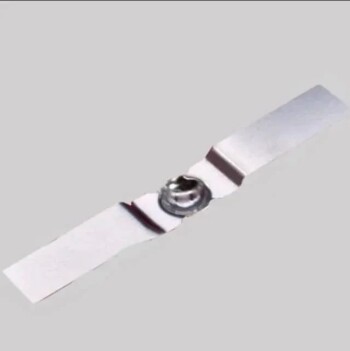
Hemispherical Bottom Tungsten Molybdenum Evaporation Boat

Hemispherical Bottom Tungsten Molybdenum Evaporation Boat

Used for gold plating, silver plating, platinum, palladium, suitable for a small amount of thin film materials. Reduce the waste of film materials and reduce heat dissipation.

Evaporation Boat for Organic Matter

Evaporation Boat for Organic Matter

The evaporation boat for organic matter is an important tool for precise and uniform heating during the deposition of organic materials.

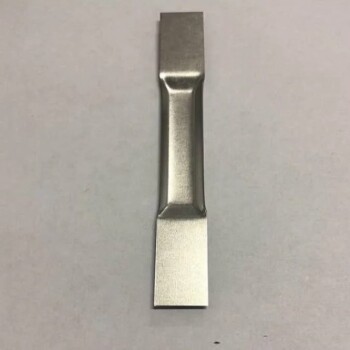
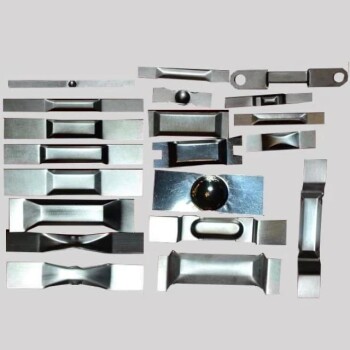
Molybdenum Tungsten Tantalum Evaporation Boat for High Temperature Applications

Molybdenum Tungsten Tantalum Evaporation Boat for High Temperature Applications

Evaporation boat sources are used in thermal evaporation systems and are suitable for depositing various metals, alloys and materials. Evaporation boat sources are available in different thicknesses of tungsten, tantalum and molybdenum to ensure compatibility with a variety of power sources. As a container, it is used for vacuum evaporation of materials. They can be used for thin film deposition of various materials, or designed to be compatible with techniques such as electron beam fabrication.

Aluminized Ceramic Evaporation Boat for Thin Film Deposition

Aluminized Ceramic Evaporation Boat for Thin Film Deposition

Vessel for depositing thin films; has an aluminum-coated ceramic body for improved thermal efficiency and chemical resistance. making it suitable for various applications.

High Purity Pure Graphite Crucible for Electron Beam Evaporation

High Purity Pure Graphite Crucible for Electron Beam Evaporation

A technology mainly used in the field of power electronics. It is a graphite film made of carbon source material by material deposition using electron beam technology.

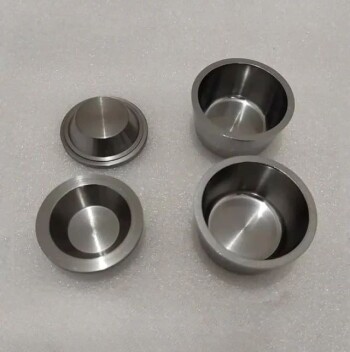
E Beam Crucibles Electron Gun Beam Crucible for Evaporation

E Beam Crucibles Electron Gun Beam Crucible for Evaporation

In the context of electron gun beam evaporation, a crucible is a container or source holder used to contain and evaporate the material to be deposited onto a substrate.

Ceramic Evaporation Boat Set Alumina Crucible for Laboratory Use

Ceramic Evaporation Boat Set Alumina Crucible for Laboratory Use

It can be used for vapor deposition of various metals and alloys. Most metals can be evaporated completely without loss. Evaporation baskets are reusable.1

Small Vacuum Heat Treat and Tungsten Wire Sintering Furnace

Small Vacuum Heat Treat and Tungsten Wire Sintering Furnace

The small vacuum tungsten wire sintering furnace is a compact experimental vacuum furnace specially designed for universities and scientific research institutes. The furnace features a CNC welded shell and vacuum piping to ensure leak-free operation. Quick-connect electrical connections facilitate relocation and debugging, and the standard electrical control cabinet is safe and convenient to operate.

Desktop Fast Laboratory Autoclave Sterilizer 35L 50L 90L for Lab Use

Desktop Fast Laboratory Autoclave Sterilizer 35L 50L 90L for Lab Use

The desktop fast steam sterilizer is a compact and reliable device used for rapid sterilization of medical, pharmaceutical, and research items. It efficiently sterilizes surgical instruments, glassware, medicines, and resistant materials, making it suitable for various applications.

High Pressure Laboratory Autoclave Reactor for Hydrothermal Synthesis

High Pressure Laboratory Autoclave Reactor for Hydrothermal Synthesis

Discover the applications of Hydrothermal Synthesis Reactor - a small, corrosion-resistant reactor for chemical labs. Achieve rapid digestion of insoluble substances in a safe and reliable way. Learn more now.

Vacuum Induction Melting Spinning System Arc Melting Furnace

Vacuum Induction Melting Spinning System Arc Melting Furnace

Develop metastable materials with ease using our Vacuum Melt Spinning System. Ideal for research and experimental work with amorphous and microcrystalline materials. Order now for effective results.

Vacuum Heat Treat Furnace and Levitation Induction Melting Furnace

Vacuum Heat Treat Furnace and Levitation Induction Melting Furnace

Experience precise melting with our Vacuum Levitation Melting Furnace. Ideal for high melting point metals or alloys, with advanced technology for effective smelting. Order now for high-quality results.

Laboratory Disc Rotary Mixer for Efficient Sample Mixing and Homogenization

Laboratory Disc Rotary Mixer for Efficient Sample Mixing and Homogenization

Efficient Laboratory Disc Rotary Mixer for Precise Sample Mixing, Versatile for Various Applications, DC Motor and Microcomputer Control, Adjustable Speed and Angle.

Ultra-High Temperature Graphite Vacuum Graphitization Furnace

Ultra-High Temperature Graphite Vacuum Graphitization Furnace

The ultra-high temperature graphitization furnace utilizes medium frequency induction heating in a vacuum or inert gas environment. The induction coil generates an alternating magnetic field, inducing eddy currents in the graphite crucible, which heats up and radiates heat to the workpiece, bringing it to the desired temperature. This furnace is primarily used for graphitization and sintering of carbon materials, carbon fiber materials, and other composite materials.

Platinum Sheet Electrode for Laboratory and Industrial Applications

Platinum Sheet Electrode for Laboratory and Industrial Applications

Elevate your experiments with our Platinum Sheet Electrode. Crafted with quality materials, our safe and durable models can be tailored to fit your needs.

Proton Exchange Membrane for Batteries Lab Applications

Proton Exchange Membrane for Batteries Lab Applications

Thin proton exchange membrane with low resistivity; high proton conductivity; low hydrogen permeation current density; long life; suitable for electrolyte separators in hydrogen fuel cells and electrochemical sensors.

Graphite Vacuum Furnace Bottom Discharge Graphitization Furnace for Carbon Materials

Graphite Vacuum Furnace Bottom Discharge Graphitization Furnace for Carbon Materials

Bottom-out graphitization furnace for carbon materials, ultra-high temperature furnace up to 3100°C, suitable for graphitization and sintering of carbon rods and carbon blocks. Vertical design, bottom discharging, convenient feeding and discharging, high temperature uniformity, low energy consumption, good stability, hydraulic lifting system, convenient loading and unloading.

Dental Porcelain Zirconia Sintering Ceramic Vacuum Press Furnace

Dental Porcelain Zirconia Sintering Ceramic Vacuum Press Furnace

Get precise dental results with Dental Vacuum Press Furnace. Automatic temperature calibration, low noise tray, and touch screen operation. Order now!

Graphite Vacuum Furnace Negative Material Graphitization Furnace

Graphite Vacuum Furnace Negative Material Graphitization Furnace

Graphitization furnace for battery production has uniform temperature and low energy consumption. Graphitization furnace for negative electrode materials: an efficient graphitization solution for battery production and advanced functions to enhance battery performance.

Special Shape Press Mold for Lab

Special Shape Press Mold for Lab

Discover high-pressure special shape press molds for diverse applications, from ceramics to automotive parts. Ideal for precise, efficient molding of various shapes and sizes.


Leave Your Message