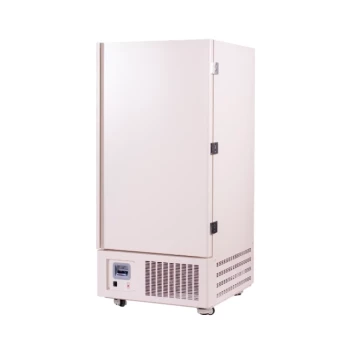
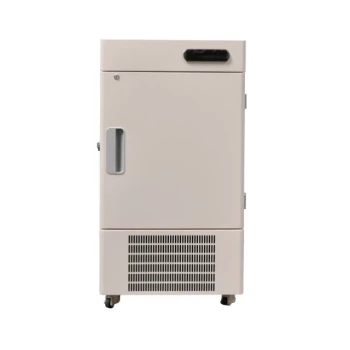
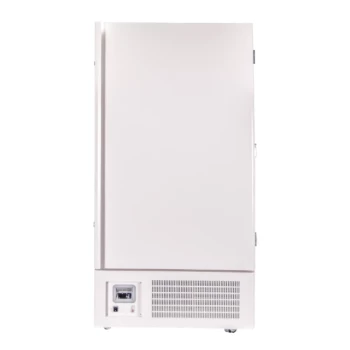
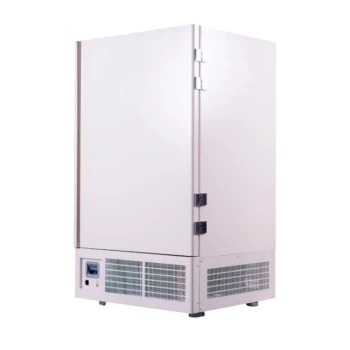
Low-temperature freezing equipment fundamentally alters wood structure by leveraging the physics of phase transition. By subjecting timber to extreme negative temperatures, typically around -20°C, the equipment forces water within the cellular structure to freeze and expand. This process triggers immediate physical changes at the microscopic level that precondition the wood for superior performance.
The core mechanism involves the expansion of freezing water, which creates tension and induces beneficial microscopic collapses within cell cavities. This structural modification leads to faster drying times, reduced shrinkage, and significantly improved dimensional stability.
The Mechanism of Structural Modification
Freezing Internal Moisture
Wood contains both free water and adsorbed water within its cells. Low-temperature equipment must be capable of reaching extreme negative temperatures (e.g., -20°C) to target both types of moisture effectively.
Phase Transition Expansion
As the water inside the wood transitions from liquid to solid ice, it undergoes volumetric expansion. This is the catalyst for the entire treatment process.
Induced Tension and Collapse
The expansion of ice generates instantaneous tension against the wood cell walls. This internal pressure induces microscopic internal collapses within the cell cavities. While "collapse" usually sounds negative, in this specific context, it is a controlled micro-structural change that relieves internal stresses.
Impact on Wood Performance
Increased Drying Rates
The microscopic physical changes created during freezing alter the wood's permeability. This allows moisture to exit the wood more efficiently during the subsequent drying stages, effectively increasing the overall drying rate.
Reduction of Drying Defects
Because the internal structure has been modified and stress has been relieved via the freezing process, the wood is less prone to common drying defects. This results in a higher yield of usable material.
Enhanced Dimensional Stability
The treatment significantly lowers the shrinkage rate of the wood. The result is timber that maintains its shape and dimensions more reliably across different environmental conditions and humidity levels.
Understanding the Trade-offs and Equipment Needs
Temperature Uniformity is Critical
To achieve consistent structural changes, the freezing equipment must maintain freezing uniformity. If the temperature fluctuates or is uneven throughout the chamber, the modification of wood properties will be inconsistent, leading to unpredictable drying behavior.
System Recovery and Efficiency
The supplementary factors of open-door recovery time and energy efficiency are vital for operational viability. If the system cannot recover its setpoint quickly after loading, the freezing rate may be too slow to induce the necessary tension within the cells.
Making the Right Choice for Your Goal
When integrating freezing treatment into your wood processing workflow, consider your specific end-goals:
- If your primary focus is Production Speed: Prioritize equipment with rapid freezing capability to accelerate the induction of cell collapse, which in turn maximizes the subsequent drying rate.
- If your primary focus is Quality Control: Ensure the equipment offers precise temperature uniformity and monitoring to guarantee that the reduction in shrinkage and defects is consistent across every batch.
Low-temperature freezing transforms the drying process from a passive wait into an active structural enhancement.
Summary Table:
| Improvement Category | Mechanism | Key Outcome |
|---|---|---|
| Drying Efficiency | Increased permeability via cell collapse | Faster moisture exit and shorter drying times |
| Structural Quality | Relief of internal stresses during freezing | Significant reduction in cracks and drying defects |
| Dimensional Stability | Modified cellular response to humidity | Lower shrinkage rates and better shape retention |
| Cellular Structure | Phase transition (ice expansion) | Microscopic internal tension and controlled modification |
Elevate Your Wood Processing with KINTEK Precision
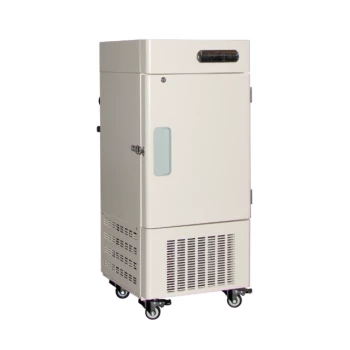
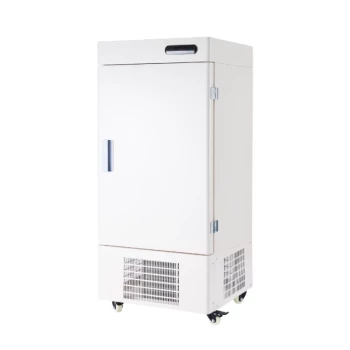
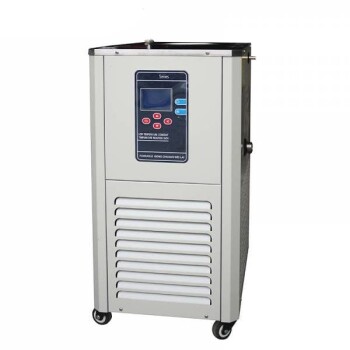
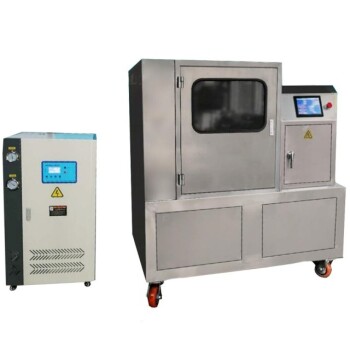
Optimize your material performance with KINTEK’s high-precision cooling solutions. Whether you are looking for ULT freezers to achieve uniform freezing for structural wood modification or freeze dryers and cooling systems for advanced material research, we provide the technology to ensure consistent, high-quality results.
Our value to you:
- Unmatched Uniformity: Ensure consistent cellular modification across every batch.
- Reliable Performance: Rapid recovery times and energy-efficient operation for industrial environments.
- Diverse Portfolio: From specialized high-temperature furnaces to advanced laboratory cooling, we support your entire R&D and production workflow.
Ready to improve your drying efficiency and material stability? Contact KINTEK today to find the perfect equipment solution!
References
- Fabiana Paiva de Freitas, Renato Vinícius Oliveira Castro. EFFECT OF HYDROTHERMAL AND FREEZING TREATMENT ON THE PHYSICAL AND MECHANICAL PROPERTIES OF EUCALYPTUS WOOD. DOI: 10.1590/1983-21252017v30n414rc
This article is also based on technical information from Kintek Solution Knowledge Base .
Related Products
- 208L Advanced Precision Laboratory Ultra Low Temperature Freezer for Cold Storage
- 308L Precision Ultra Low Temperature Freezer for Laboratory Applications
- 108L Vertical Ultra Low Temperature ULT Freezer
- 938L Vertical Ultra Low Temperature Freezer for Advanced Laboratory Storage
- 408L Advanced Vertical Laboratory Ultra Low Temperature Freezer for Critical Research Material Preservation
People Also Ask
- What are the common applications of ultra-low temperature freezers? Preserve Your Most Valuable Samples
- What are the different types of ultra-low temperature freezers available? Choose the Right ULT Freezer for Your Lab
- What are some key features of ultra-low temperature freezers? Essential Guide to Reliable Sample Storage
- Have other labs successfully stored samples at -70°C? Proven Long-Term Preservation for Biological Materials
- How are ultra low temperature freezers used in pharmaceutical storage? Protect Your High-Value Biologics & Vaccines