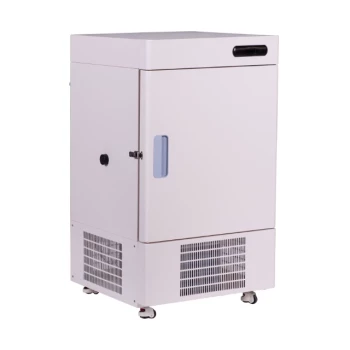
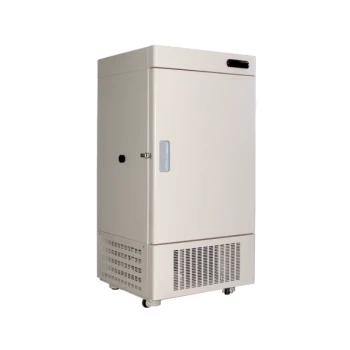
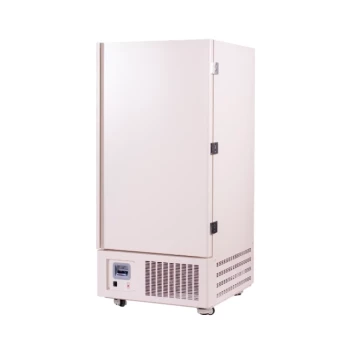
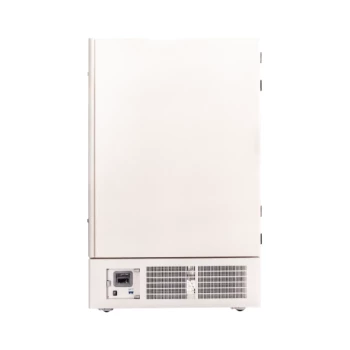
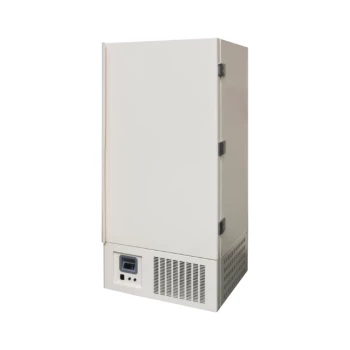
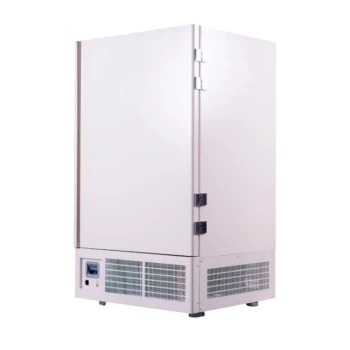
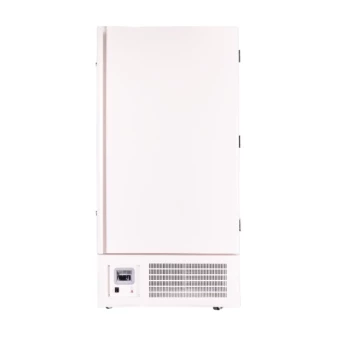
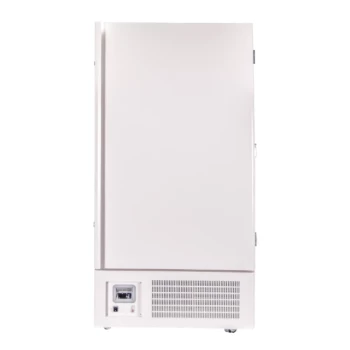
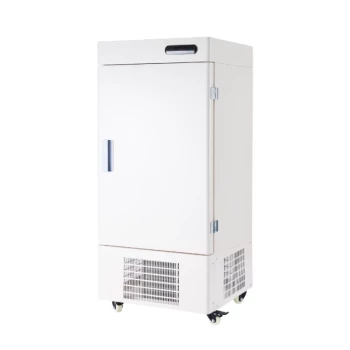
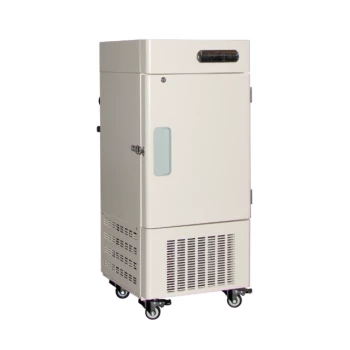
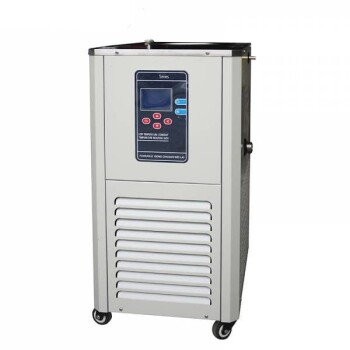
Ultra-low temperature laboratory equipment serves as a critical validation tool by precisely simulating extreme environmental storage conditions, specifically targeting temperatures of -27°C or lower. This equipment enables researchers to subject battery components to controlled thermal stress, exposing physical vulnerabilities in the electrode materials that would otherwise remain hidden until deployment.
Reliability testing in extreme cold is driven by the need to ensure material survival, not just electrical output. Specialized cooling solutions reveal how compressive strain and lattice deformation compromise electrode structures, enabling the identification of materials that resist cracking under severe thermal stress.
Simulating Extreme Environments
Achieving Target Temperatures
To accurately assess battery reliability, laboratories utilize specialized cooling solutions and freezers capable of reaching -27°C or below.
These ultra-low temperatures are necessary to replicate the harshest storage and operating conditions a battery might face in the real world.
Controlled Thermal Stress
Standard testing often overlooks the physical impact of deep freeze scenarios.
By using high-precision equipment, researchers can create a stable environment where the effects of cold on battery chemistry and mechanics can be isolated and observed.
The Physical Impact of Cold on Electrodes
Compressive Strain
When exposed to ultra-low temperatures, battery electrode materials undergo significant physical changes.
The primary mechanism at work is compressive strain, where the material contracts and experiences internal pressure due to the thermal drop.
Lattice Deformation
This compressive strain leads to a phenomenon known as lattice deformation within the electrode's atomic structure.
The rigid structure of the material is forced to warp, disrupting the stability necessary for consistent ion flow.
Particle Cracking
If the lattice deformation is severe enough, it results in particle cracking.
This physical damage permanently degrades the battery's architecture, leading to capacity loss and potential safety hazards.
The Role of Screening in Development
Identifying Structural Integrity
The primary value of this equipment lies in its ability to screen for structural robustness.
Researchers use these cold simulations to identify which electrode material systems maintain their integrity despite the strain.
Filtering Out Weak Candidates
By observing which materials suffer from particle cracking at -27°C, engineers can disqualify fragile formulations early in the design process.
This ensures that only materials capable of withstanding lattice deformation are advanced to mass production.
Understanding the Trade-offs
Physical Damage vs. Performance
While this equipment excels at identifying physical damage like cracking, it is important to distinguish between structural failure and temporary performance dips.
A material might survive the cold physically (no cracking) but still suffer from slow ion transport (low performance) at low temperatures.
Simulation Limits
Testing at -27°C simulates storage and extreme exposure, but it may not fully replicate the dynamic heating and cooling cycles of an active battery in use.
Reliance on static storage testing alone may miss mechanical failures that occur only during rapid charge/discharge cycles in cold weather.
Making the Right Choice for Your Goal
To effectively utilize ultra-low temperature equipment in your battery reliability program, consider your specific testing objectives:
- If your primary focus is Material Science: Prioritize identifying lattice deformation patterns to engineer electrodes that resist compressive strain at the atomic level.
- If your primary focus is Product Validation: Ensure your testing protocols strictly maintain the -27°C threshold to screen for potential particle cracking before final approval.
By rigorously screening for cold-induced physical damage, you ensure the longevity and safety of your battery systems in the harshest climates.
Summary Table:
| Feature | Impact on Battery Reliability |
|---|---|
| Target Temperature | -27°C or lower for extreme storage simulation |
| Primary Stressor | Compressive strain on electrode materials |
| Structural Risk | Lattice deformation leading to particle cracking |
| Key Outcome | Screening for structural integrity and material survival |
| Equipment Used | Ultra-low temperature (ULT) freezers and cooling solutions |
Secure Your Battery Innovation with KINTEK Precision
Don't let extreme cold compromise your material integrity. KINTEK provides the high-performance laboratory solutions necessary to validate your technology under the harshest conditions. From ultra-low temperature (ULT) freezers and cold traps for reliability testing to battery research tools, electrolytic cells, and high-pressure reactors, our comprehensive portfolio supports every stage of your R&D.
Partner with KINTEK to achieve:
- Precise Thermal Control: Ensure consistent -27°C+ environments for accurate stress testing.
- Structural Robustness: Identify lattice deformation and particle cracking before production.
- Full-Scale Research Support: Access a wide range of furnaces, hydraulic presses, and specialized consumables.
Ready to enhance your lab's testing capabilities? Contact our technical experts today to find the perfect equipment for your battery research and development goals.
References
- Hayder Ali, Michael Pecht. Assessment of the calendar aging of lithium-ion batteries for a long-term—Space missions. DOI: 10.3389/fenrg.2023.1108269
This article is also based on technical information from Kintek Solution Knowledge Base .
Related Products
- 108L Vertical Ultra Low Temperature ULT Freezer
- 308L Precision Ultra Low Temperature Freezer for Laboratory Applications
- 208L Advanced Precision Laboratory Ultra Low Temperature Freezer for Cold Storage
- 58L Precision Laboratory Ultra Low Temperature Upright Freezer for Critical Sample Storage
- 408L Advanced Vertical Laboratory Ultra Low Temperature Freezer for Critical Research Material Preservation
People Also Ask
- What are the common applications of ultra-low temperature freezers? Preserve Your Most Valuable Samples
- What are the different types of ultra-low temperature freezers available? Choose the Right ULT Freezer for Your Lab
- What are some key features of ultra-low temperature freezers? Essential Guide to Reliable Sample Storage
- Have other labs successfully stored samples at -70°C? Proven Long-Term Preservation for Biological Materials
- What features should be considered when choosing an ultra low temperature freezer? Secure Your Samples with Precision