Freeze drying (lyophilization) is the superior method for preparing sulfurated graphene (GO-S) and CNT-ZIF precursors because it preserves the material's structural integrity through low-temperature sublimation. Unlike conventional thermal drying, it prevents the collapse of three-dimensional porosity and the severe agglomeration of nanosheets typically caused by liquid surface tension. This results in a material with a high specific surface area and a uniform distribution of active components, which is critical for high-performance chemical applications.
The core advantage of freeze drying lies in its ability to bypass the liquid phase, eliminating the capillary forces that lead to structural collapse. By maintaining the original 3D morphology and high surface activity, this process ensures that precursors for sulfurated graphene and CNT-ZIF retain the porosity necessary for optimal sulfur loading and ion transport.
Preserving the 3D Architecture of Nanocomposites
Eliminating Surface Tension and Capillary Forces
Conventional thermal drying removes solvents through liquid evaporation, which creates intense surface tension at the liquid-gas interface. This tension generates capillary forces that pull microscopic structures together, leading to the permanent collapse of delicate micropores and mesopores.
Freeze drying operates via sublimation, converting ice or frozen solvents directly into vapor under vacuum conditions. Because the material never enters a liquid state during drying, these destructive capillary forces are avoided, allowing the original three-dimensional macroscopic morphology to remain intact.
Preventing Nanosheet Stacking and Aggregation
In materials like graphene oxide (GO) and carbon nanotubes (CNT), heat drying often causes nanosheets to stack or "agglomerate" into dense, inactive clumps. Freeze drying maintains a loose, porous structure, preventing the severe stacking of graphene layers.
This structural preservation is essential for ensuring the resulting powder retains excellent re-dispersibility. When these precursors are later mixed with other materials, such as epoxy resins or electrolytes, they integrate more effectively due to their high-activity surface area.
Enhancing Chemical and Functional Properties
Maximizing Specific Surface Area for Sulfur Loading
For sulfurated graphene (GO-S), the primary goal is to achieve a uniform distribution and high loading of active sulfur within the host material. Freeze drying preserves the high specific surface area of the graphene scaffold, providing more "anchor points" for sulfur atoms.
A high surface area ensures that the sulfur is not just present, but accessible for electrochemical reactions. This directly translates to superior adsorption performance and better ion storage capabilities in the final product.
Maintaining Fine Porous Networks
In CNT-ZIF and biomass-derived carbon precursors, the fine network of micropores is crucial for efficient ion transport. Conventional oven drying often destroys these channels, whereas freeze drying protects the internal "plumbing" of the nanomaterial.
The resulting granules possess excellent flowability and a uniform density distribution. This is particularly beneficial during subsequent processing stages, such as pressing or granulation, as it reduces the likelihood of microscopic defects in the final ceramic or composite.
Operational and Economic Advantages
Efficiency in Speed and Energy Consumption
While often perceived as a slow process, laboratory freeze dryers can offer a significantly faster drying speed for specific nanomaterials, sometimes shortening process times by 3 to 10 times compared to traditional ovens. This efficiency is coupled with lower operational costs, as some systems consume 2 to 3 times less energy than conventional vacuum drying methods.
Solvent Recovery and Environmental Protection
Freeze dryers operating in an oxygen-free vacuum chamber are uniquely suited for materials containing organic solvents. These systems can recycle organic solvents, which reduces overall production costs and minimizes environmental impact.
This feature is particularly valuable when working with specialized precursors that require expensive or hazardous solvents. The vacuum environment also prevents oxidation, ensuring the chemical purity of the sensitive graphene or ZIF components.
Understanding the Trade-offs
While freeze drying offers clear structural advantages, it is not without its limitations. The initial capital investment for a high-quality vacuum freeze dryer is generally higher than that of a standard drying oven or vacuum furnace.
The process also requires an additional pre-freezing step, where the sample must be completely solidified before the vacuum is applied. Furthermore, while speed is improved for some laboratory-scale batches, scaling lyophilization to massive industrial volumes can introduce complexities in heat transfer and batch consistency that require careful engineering.
Applying This to Your Research or Production
If your primary focus is maximizing electrochemical performance:
Utilize freeze drying to prevent nanosheet stacking, as the resulting high specific surface area is critical for uniform sulfur loading and high ion mobility.
If your primary focus is structural integrity and morphology:
Choose freeze drying specifically to bypass the liquid phase, as this is the only reliable way to prevent the collapse of 3D microporous networks caused by surface tension.
If your primary focus is cost-effective solvent management:
Leverage the vacuum recovery capabilities of the freeze dryer to recapture organic solvents and reduce the cost of raw materials.
By prioritizing the preservation of the material's 3D architecture, you ensure that your sulfurated graphene and CNT-ZIF precursors reach their full theoretical potential.
Summary Table:
| Feature | Freeze Drying (Lyophilization) | Conventional Thermal Drying |
|---|---|---|
| Mechanism | Sublimation (Solid to Gas) | Evaporation (Liquid to Gas) |
| Structural Integrity | Preserves 3D porous architecture | Causes collapse due to capillary forces |
| Surface Area | Maximized; prevents nanosheet stacking | Reduced; leads to dense agglomeration |
| Material Activity | High; uniform active sites | Low; uneven distribution |
| Efficiency | Faster for specific nanomaterials | Often slower with higher energy use |
| Solvent Recovery | Capable in vacuum environments | Limited; risk of oxidation |
Elevate Your Nanomaterial Synthesis with KINTEK
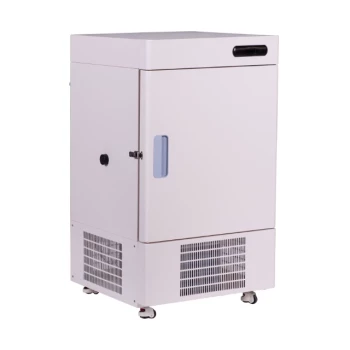
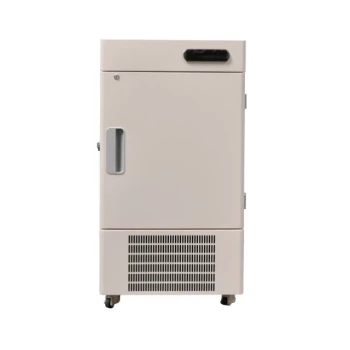
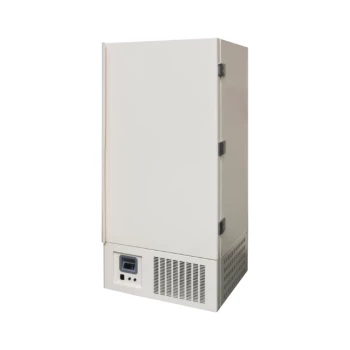
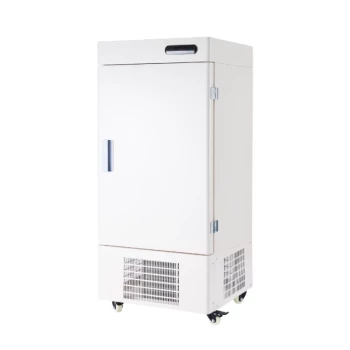
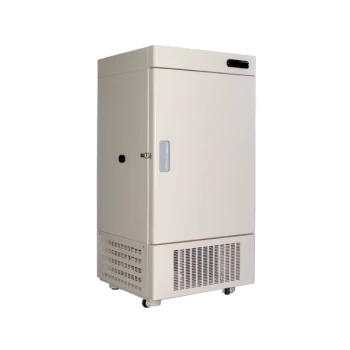
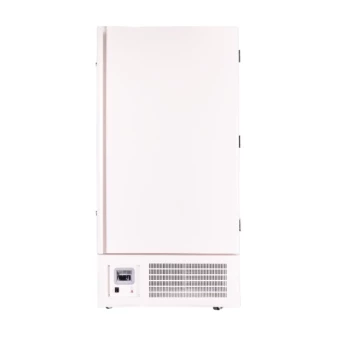
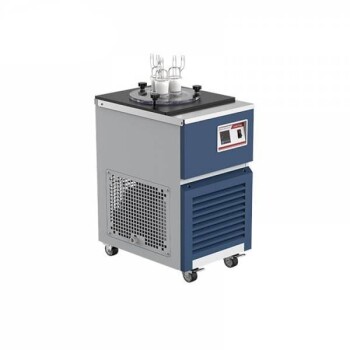
Unlock the full potential of your sulfurated graphene and CNT-ZIF precursors by maintaining their critical three-dimensional architecture. KINTEK specializes in precision laboratory equipment, offering high-performance freeze dryers and cooling solutions (including ULT freezers and cold traps) designed to eliminate structural collapse and maximize specific surface area.
Beyond drying, our comprehensive portfolio supports every stage of your research—from high-temperature furnaces (muffle, vacuum, CVD) and high-pressure reactors for synthesis, to hydraulic presses for pellet preparation and milling systems for particle refinement. Whether you are a researcher or an industrial manufacturer, KINTEK provides the reliability and technical excellence needed for superior material performance.
Ready to optimize your lab's efficiency and material quality? Contact KINTEK today for a tailored solution!
References
- Yew Von Lim, Hui Ying Yang. In Situ Synthesis Method of Approaching High Surface Capacity Sulfur and the Role of Cobalt Sulfide as Lithium–Sulfur Battery Materials. DOI: 10.1002/smsc.202300070
This article is also based on technical information from Kintek Solution Knowledge Base .
Related Products
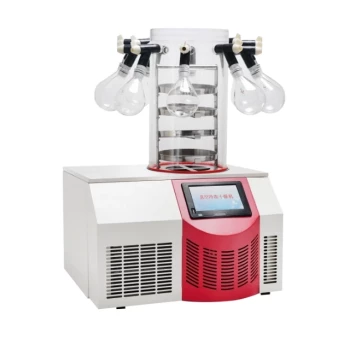
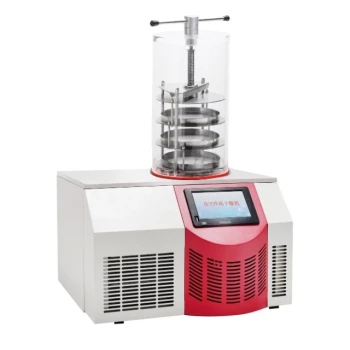
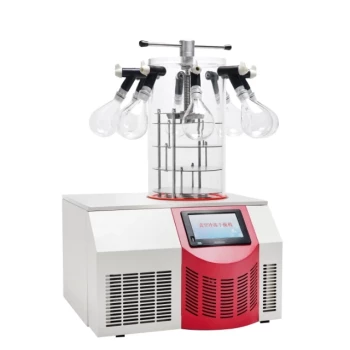
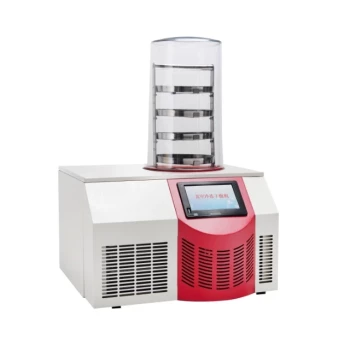
- High Performance Laboratory Freeze Dryer
- High Performance Laboratory Freeze Dryer for Research and Development
- Benchtop Laboratory Freeze Dryer for Lab Use
- Benchtop Laboratory Vacuum Freeze Dryer
- 108L Vertical Ultra Low Temperature ULT Freezer
People Also Ask
- What role does a laboratory freeze dryer play in the synthesis of graphene-based electrocatalysts? Preserve 3D Structures
- What are the technical advantages of using a laboratory freeze dryer for porous carbon precursors? Preserve 3D Networks
- What types of liquid samples can be processed using a laboratory freeze dryer? Preserve Your Sensitive Materials
- How do laboratory freeze dryers support scientific research? Preserve Sample Integrity for Reproducible Results
- Why is a laboratory freeze dryer preferred over traditional heating? Preserve Biochar Structure & Maximize Porosity