Freeze drying is superior for processing hybrid electrode slurries because it eliminates the "capillary collapse" that occurs during thermal drying. By removing solvents through sublimation rather than evaporation, the process preserves the delicate open-pore structure and high specific surface area of the material. This structural integrity directly translates to faster electrolyte ion diffusion and significantly improved electrochemical performance.
Core Takeaway: Unlike thermal drying, which uses heat to evaporate liquid and causes particles to aggregate via surface tension, freeze drying utilizes low-temperature sublimation to lock the slurry’s architecture in place. This prevents the collapse of internal channels and ensures a uniform, high-performance electrode morphology.
Preserving Structural and Morphological Integrity
The Prevention of Capillary Collapse
In conventional thermal drying, the liquid phase of the solvent exerts high surface tension as it evaporates. This force pulls solid particles together, leading to "capillary collapse" or the severe aggregation of porous carbon and hybrid structures.
Freeze drying bypasses the liquid phase entirely through sublimation. Because the solvent transitions directly from a solid (frozen) state to a gas, the liquid-air interface is eliminated, preventing the surface tension that would otherwise crush the material's internal architecture.
Maintaining High Specific Surface Area
Preserving a high specific surface area is critical for electrode materials like Graphene Oxide (GO) or composite powders. Lyophilization ensures that polymer-grafted sheets or metal-oxide particles remain in a loose, non-agglomerated state.
This loose state prevents "tight layer stacking," which often plagues materials dried in ovens. By maintaining a high surface area, the material provides a maximum number of active contact sites for sensing or energy storage applications.
Enhancing Electrochemical and Chemical Performance
Optimizing Ion Diffusion Efficiency
The primary benefit for battery and capacitor performance is the preservation of an open pore structure. These unobstructed channels allow electrolyte ions to migrate freely through the electrode.
If these pores collapse during thermal drying, ion diffusion is restricted, leading to higher internal resistance. Freeze drying ensures the network remains porous, significantly boosting the diffusion efficiency of the final device.
Prevention of Thermal Degradation and Oxidation
Many hybrid slurries contain heat-sensitive binders, bioactive reagents, or metal powders susceptible to oxidation. Freeze drying operates under low-temperature vacuum conditions, often between 0°C and 50°C for sensitive laboratory applications.
The oxygen-free vacuum environment prevents the oxidation of metal powders and the thermal degradation of molecular structures. This ensures that the components remain chemically stable and reactive once the electrode is fully processed.
Avoiding Component Segregation
During thermal drying, different components in a slurry can migrate at different rates as the solvent evaporates, leading to "component segregation." Freeze drying locks the components in a frozen matrix before removal.
This "locking" mechanism maintains a uniform distribution of mixed powders. This homogeneity is essential for creating high-quality precursors that will undergo subsequent sintering or pressing.
Understanding the Trade-offs
Equipment Complexity and Cost
While technically superior, freeze drying systems are generally more complex than standard thermal ovens. They require high-performance vacuum pumps and refrigeration systems to maintain the material in a frozen state during the process.
Processing Requirements
The slurry must be completely frozen before the vacuum is applied, adding a pre-processing step. While some laboratory freeze dryers claim faster speeds for specific samples, industrial-scale lyophilization can sometimes be a lengthy process compared to continuous thermal conveyor drying.
Applying This to Your Project
Making the Right Choice for Your Goal
- If your primary focus is maximizing ion conductivity: Use freeze drying to ensure the pore network remains open and the specific surface area is preserved.
- If your primary focus is preventing material oxidation: Utilize the oxygen-free, low-temperature vacuum environment of a freeze dryer to maintain chemical purity.
- If your primary focus is high-volume, low-cost production of non-porous materials: Conventional thermal drying may be sufficient if the material's internal architecture is not critical to its function.
- If your primary focus is organic solvent recovery: Choose a freeze dryer equipped with a condenser capable of recycling solvents to reduce production costs and environmental impact.
By prioritizing the physical architecture of the slurry through freeze drying, you ensure the highest possible efficiency and stability for advanced hybrid electrode systems.
Summary Table:
| Feature | Freeze Drying (Lyophilization) | Thermal Drying (Oven) | Impact on Electrode Performance |
|---|---|---|---|
| Mechanism | Sublimation (Solid to Gas) | Evaporation (Liquid to Gas) | Prevents capillary collapse and structural damage |
| Pore Structure | Preserved & Open | Collapsed & Clogged | Maximizes ion diffusion efficiency |
| Surface Area | High Specific Surface Area | Low (Due to Aggregation) | Increases active sites for better sensing/storage |
| Temperature | Low-Temp Vacuum | High Heat | Prevents thermal degradation and oxidation |
| Uniformity | Locked Frozen Matrix | Potential Segregation | Ensures homogeneous component distribution |
Elevate Your Material Research with KINTEK
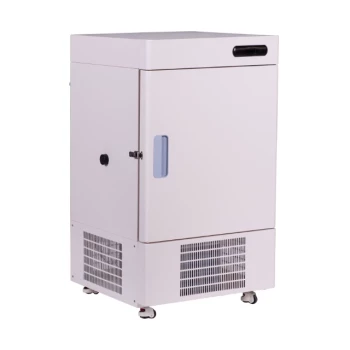
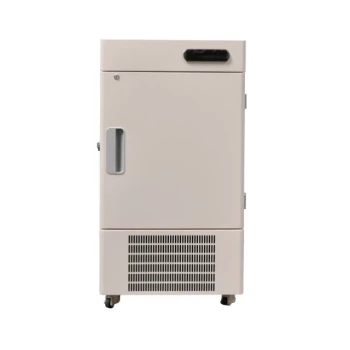
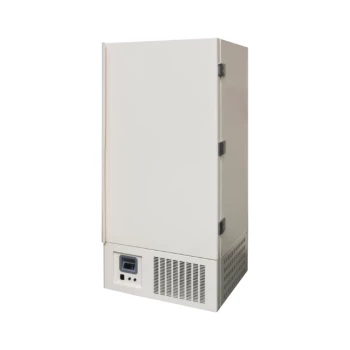
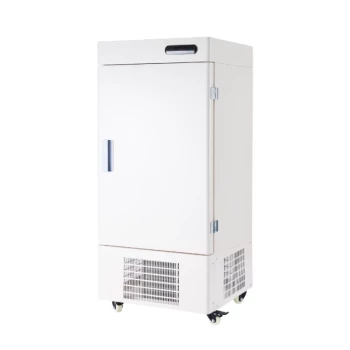
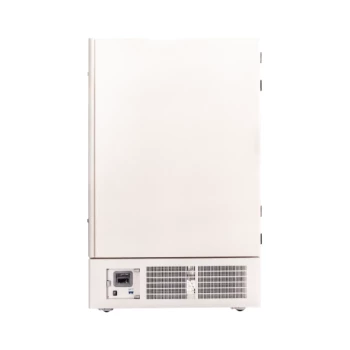
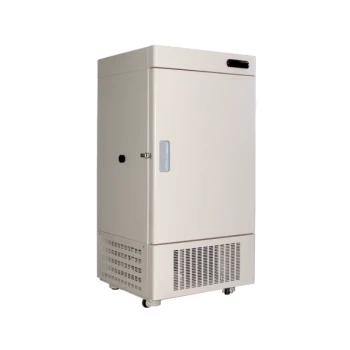
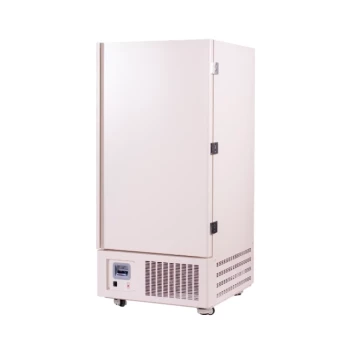
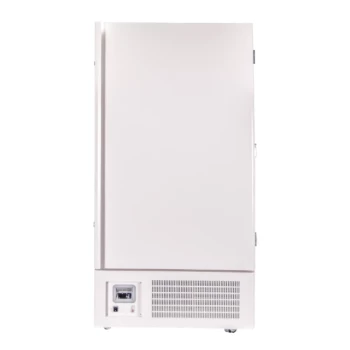
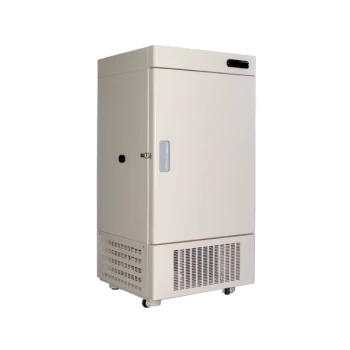
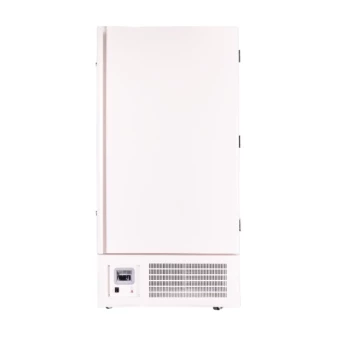
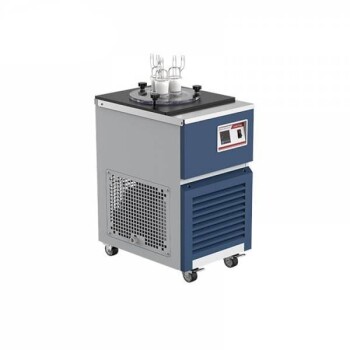
Precision is critical when processing advanced hybrid electrodes. KINTEK specializes in premium laboratory equipment designed to maintain the structural integrity of your most sensitive materials. Our range includes high-performance freeze dryers and ULT freezers for superior lyophilization, alongside vacuum furnaces, hydraulic pellet presses, and crushing systems to streamline your entire research workflow.
Whether you are developing next-generation batteries or high-sensitivity sensors, KINTEK provides the reliability and technical support you need to achieve breakthrough results. Contact our experts today to find the perfect drying and processing solution for your laboratory’s unique requirements.
References
- Boris V. Malozyomov, А И Карлина. Improvement of Hybrid Electrode Material Synthesis for Energy Accumulators Based on Carbon Nanotubes and Porous Structures. DOI: 10.3390/mi14071288
This article is also based on technical information from Kintek Solution Knowledge Base .
Related Products
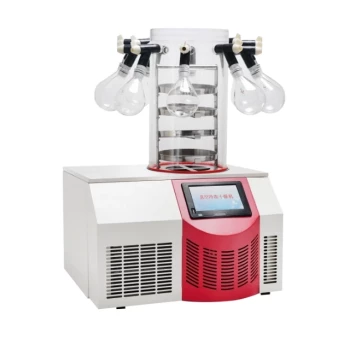
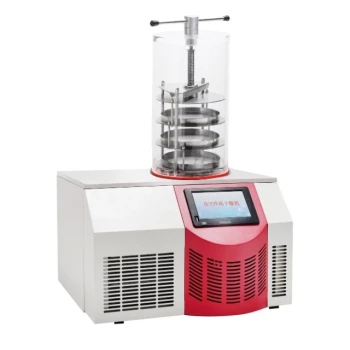
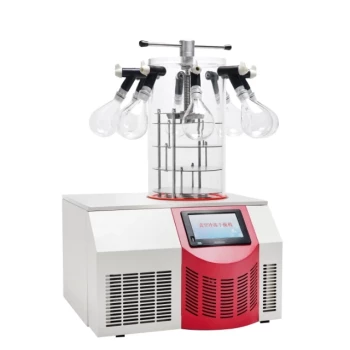
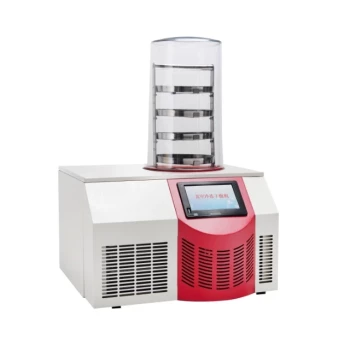
- High Performance Laboratory Freeze Dryer
- High Performance Laboratory Freeze Dryer for Research and Development
- Benchtop Laboratory Freeze Dryer for Lab Use
- Benchtop Laboratory Vacuum Freeze Dryer
- 108L Vertical Ultra Low Temperature ULT Freezer
People Also Ask
- What role does a laboratory freeze dryer play in the synthesis of graphene-based electrocatalysts? Preserve 3D Structures
- What are the technical advantages of using a laboratory freeze dryer for porous carbon precursors? Preserve 3D Networks
- What types of liquid samples can be processed using a laboratory freeze dryer? Preserve Your Sensitive Materials
- How do laboratory freeze dryers support scientific research? Preserve Sample Integrity for Reproducible Results
- Why is a laboratory freeze dryer preferred over traditional heating? Preserve Biochar Structure & Maximize Porosity