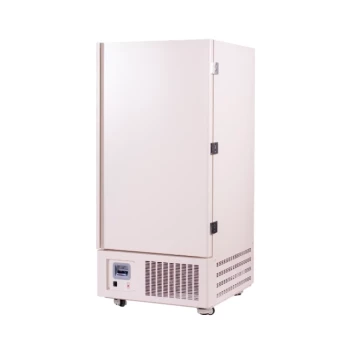
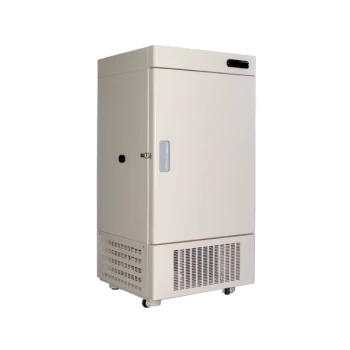
The primary advantage of vacuum freeze drying for manganese oxide nanowire electrodes is the preservation of delicate structural integrity. By utilizing sublimation rather than evaporation, freeze drying avoids the destructive surface tension that causes nanowires to collapse, shrink, or aggregate. This ensures a high specific surface area and maintains the porous network necessary for optimal electrolyte contact and electrochemical performance.
Vacuum freeze drying is critical for nanostructured electrodes because it bypasses the capillary forces associated with liquid evaporation. By sublimating solvents at low temperatures, it preserves the original morphology and chemical activity of the manganese oxide, leading to superior capacitive performance compared to conventional oven drying.
Preventing Physical Damage and Aggregation
The Role of Sublimation
Vacuum freeze dryers remove solvents through sublimation in a low-temperature vacuum environment. This process transitions the solvent directly from a solid (frozen) state to a gas, completely bypassing the liquid phase.
Avoiding Surface Tension
Conventional ovens rely on liquid evaporation, which generates significant surface tension and capillary forces. These forces pull delicate nanowires together, leading to "tight layer stacking" or "hard agglomeration" that permanently damages the electrode's architecture.
Preserving Nanostructure
By eliminating liquid-phase evaporation, freeze drying prevents structural collapse and morphological shrinkage. This is essential for maintaining the "hierarchical pore architectures" of manganese oxide composites, ensuring the nanowires do not clump together during the drying process.
Maximizing Electrochemical Performance
Enhancing Specific Surface Area
Manganese oxide electrodes require a high specific surface area (SSA) to maximize the contact area between the electrode and the electrolyte. Freeze drying maintains this area by keeping the structure loose and preventing the restacking of individual wires or sheets.
Optimizing Active Sites
Maintaining a porous network structure ensures a high number of active contact sites. This is vital for electrochemical detection and energy storage, as it allows ions to flow freely through the electrode without being blocked by collapsed pores.
Ensuring Chemical Stability
The drying process occurs in an oxygen-free vacuum chamber, which inhibits high-temperature oxidation. This preserves the original chemical activity and oxidation state of the manganese oxide, which can be compromised in the heat of a conventional oven.
Process Efficiency and Sustainability
Increased Drying Speed
Modern laboratory freeze dryers offer significantly faster processing, often shortening drying times by 3 to 10 times compared to traditional vacuum ovens. This speed is particularly evident when working in the 0°C to 50°C temperature range.
Energy and Cost Savings
Despite their technical complexity, freeze dryers can be 2 to 3 times more energy-efficient than conventional heat-based drying methods. Furthermore, these systems can often recycle organic solvents, which reduces production costs and minimizes environmental impact.
Material Versatility
The low-temperature nature of the process makes it suitable for a wide range of sensitive materials, including MXenes, hybrid composites, and precursors. It effectively maintains the original particle size and prevents the formation of "hard" aggregates that are difficult to disperse later.
Understanding the Trade-offs
Equipment Complexity
The primary drawback of vacuum freeze drying is the initial capital investment. A freeze dryer is a more complex piece of equipment than a conventional oven, requiring a robust vacuum system and precise temperature control for the condenser and shelves.
Preparation Requirements
Materials must be completely frozen before the sublimation process can begin. This adds a preparatory step to the workflow and requires knowledge of the solvent's eutectic point to ensure the material does not melt during the vacuum stage.
Scaling Limitations
While highly effective for laboratory and high-value technical applications, scaling freeze drying for mass-market commodity production can be challenging. The batch-based nature of the vacuum process may require significant logistical planning compared to continuous-flow industrial ovens.
How to Apply This to Your Project
- If your primary focus is maximizing capacitive performance: Utilize vacuum freeze drying to ensure the highest possible specific surface area and prevent pore collapse.
- If your primary focus is preventing material oxidation: Choose freeze drying for its oxygen-free vacuum environment, which protects the chemical integrity of the manganese oxide.
- If your primary focus is reducing processing time: Implement a laboratory freeze dryer to achieve drying speeds up to 10 times faster than conventional thermal methods.
- If your primary focus is minimizing agglomeration in precursors: Use freeze drying to maintain a loose structure and high sintering activity for the resulting nanopowders.
By choosing vacuum freeze drying over conventional thermal methods, you ensure that the sophisticated architecture of your manganese oxide nanowires is translated into high-performance electrochemical results.
Summary Table:
| Feature | Vacuum Freeze Drying | Conventional Oven Drying |
|---|---|---|
| Drying Mechanism | Sublimation (Solid to Gas) | Evaporation (Liquid to Gas) |
| Structural Integrity | Preserves porous nanostructure | Causes collapse and aggregation |
| Surface Tension | Eliminated (No capillary forces) | High (Leads to hard agglomeration) |
| Surface Area (SSA) | Maximized for electrolyte contact | Significantly reduced |
| Chemical Stability | High (Oxygen-free vacuum) | Risk of high-temp oxidation |
| Process Speed | 3 to 10 times faster | Relatively slow |
| Energy Efficiency | High (Solvent recycling possible) | Lower efficiency |
Elevate Your Nanomaterial Research with KINTEK
Maximize the potential of your manganese oxide electrodes and sensitive nanostructures with KINTEK’s advanced laboratory solutions. Whether you are looking for high-performance vacuum freeze dryers, cold traps, and ULT freezers to preserve delicate morphologies, or require high-temperature furnaces (muffle, tube, vacuum) and high-pressure reactors for material synthesis, we provide the precision tools your research demands.
From PTFE products and ceramics to specialized battery research tools and electrolytic cells, KINTEK is committed to enhancing your lab's efficiency and ensuring reproducible, high-quality results.
Ready to optimize your drying process? Contact our experts today to find the perfect equipment tailored to your specific application and research goals!
References
- Himanshu Gupta, Prashanth W. Menezes. Recent technological advances in designing electrodes and electrolytes for efficient zinc ion hybrid supercapacitors. DOI: 10.1039/d3ya00259d
This article is also based on technical information from Kintek Solution Knowledge Base .
Related Products
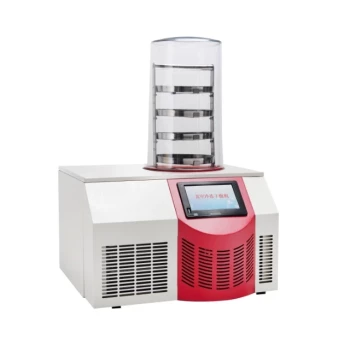
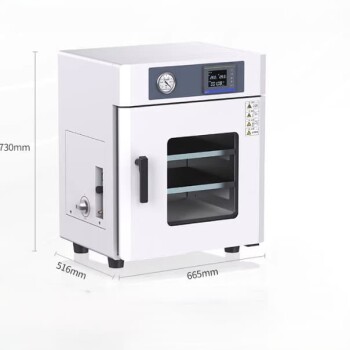
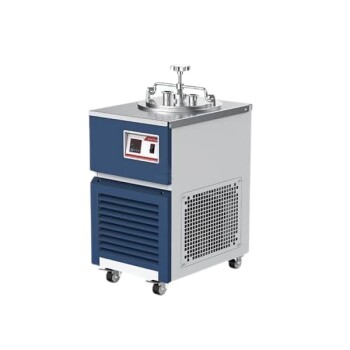
- Benchtop Laboratory Vacuum Freeze Dryer
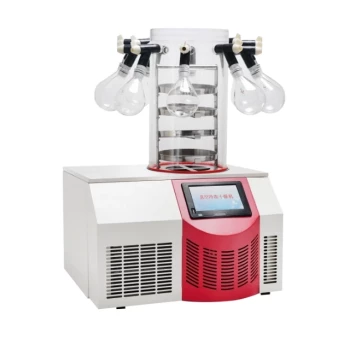
- High Performance Laboratory Freeze Dryer
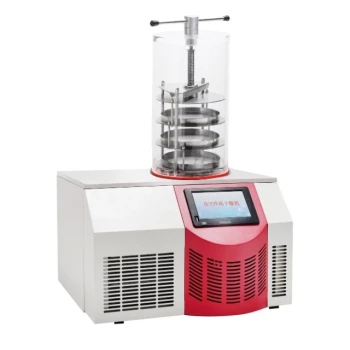
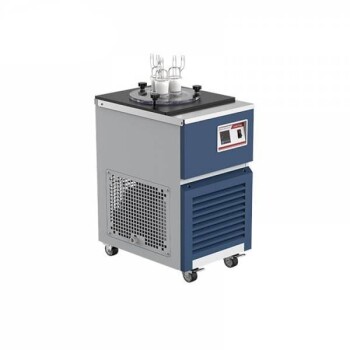
- High Performance Laboratory Freeze Dryer for Research and Development
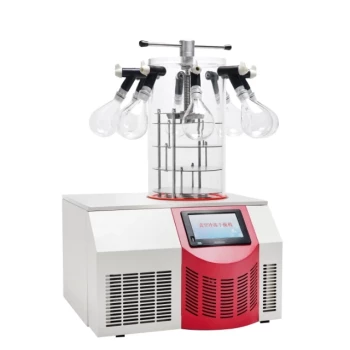
- Benchtop Laboratory Freeze Dryer for Lab Use
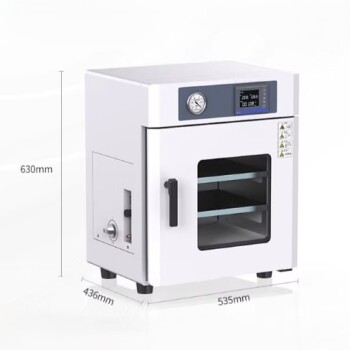
- 56L Vertical Laboratory Vacuum Drying Oven
People Also Ask
- What are the technical advantages of using a laboratory freeze dryer for porous carbon precursors? Preserve 3D Networks
- How do laboratory freeze dryers support scientific research? Preserve Sample Integrity for Reproducible Results
- Why is a laboratory freeze dryer preferred over traditional heating? Preserve Biochar Structure & Maximize Porosity
- What types of liquid samples can be processed using a laboratory freeze dryer? Preserve Your Sensitive Materials
- What role do laboratory freeze dryers play in the food industry? Unlock Superior Food Preservation