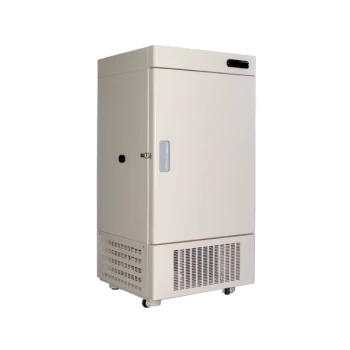
Vacuum freeze drying is the superior method for sensor material fabrication because it eliminates liquid-phase surface tension. By utilizing sublimation rather than evaporation, this process prevents the structural collapse, shrinkage, and particle agglomeration common in traditional oven drying. Consequently, materials retain the high porosity and specific surface area necessary for optimal sensing sensitivity and electrochemical performance.
Core Takeaway: Unlike traditional ovens that rely on liquid evaporation, vacuum freeze dryers use sublimation to preserve the delicate 3D architecture of nanomaterials. This prevents the collapse of pore channels and ensures a maximum number of active sites remain available for sensing applications.
The Physics of Structural Preservation
Eliminating Capillary Forces
Traditional ovens remove moisture through evaporation, which creates significant surface tension at the liquid-gas interface. As the liquid leaves the material, capillary forces pull internal structures together, leading to the collapse of micropores and delicate channels.
The Advantage of Sublimation
A vacuum freeze dryer bypasses the liquid phase entirely by converting ice crystals directly into vapor (sublimation). Because the solvent never enters a liquid state during removal, the "scaffolding" of the material remains intact, preserving the original morphology formed during the freezing stage.
Avoiding Material Shrinkage
In sensor materials like biomass-derived carbon or hollow nanorods, oven drying often results in severe structural shrinkage. Freeze drying maintains the macroscopic volume and microscopic integrity of the material, ensuring the final product matches the intended design.
Impact on Sensor Performance and Integrity
Maximizing Specific Surface Area
Sensors rely on the interaction between a target analyte and the material's surface; therefore, a higher specific surface area directly correlates to better sensitivity. Freeze drying prevents nanosheets and layered structures from stacking tightly, keeping more active sites exposed for detection.
Preserving High-Porosity Networks
For complex composites like CuO@Cu2O/PNrGO, maintaining a porous network is essential for rapid gas or ion diffusion. Freeze drying ensures these channels remain open, whereas oven drying would cause them to clog or collapse, significantly slowing sensor response times.
Preventing Particle Agglomeration
Traditional thermal drying often causes nanoparticles to clump together, a process known as agglomeration. Freeze drying keeps particles in a highly dispersed state, which is critical for maintaining the unique electrochemical properties of materials like nickel-cobalt nanorods.
Operational and Environmental Advantages
Faster Processing and Energy Efficiency
While it may seem counterintuitive, specialized vacuum freeze dryers can be 3 to 10 times faster than conventional vacuum ovens for certain materials. Furthermore, these systems can consume significantly less energy—up to 2 to 3 times less—making them more efficient for long-term laboratory use.
Solvent Recovery and Safety
Many sensor materials are synthesized using organic solvents rather than water. Vacuum freeze dryers are capable of recycling organic solvents, which reduces production costs and minimizes the environmental impact of the drying process.
Oxygen-Free Processing
The vacuum environment within the freeze dryer ensures that materials are dried in an oxygen-free atmosphere. This prevents the unwanted oxidation of sensitive sensor components, a common risk when using traditional air-drying ovens.
Understanding the Trade-offs
Equipment Complexity and Cost
The primary disadvantage of vacuum freeze drying is the initial capital investment. These systems require high-performance vacuum pumps and refrigeration units capable of reaching temperatures as low as -46 °C, making them more expensive than simple thermal ovens.
Maintenance Requirements
Because freeze dryers rely on vacuum seals and condensers, they require more stringent maintenance than traditional ovens. Users must regularly check pump oil and ensure the condenser is properly defrosted to maintain drying efficiency.
Material Preparation Constraints
Freeze drying is not a "plug-and-play" solution; materials must be thoroughly frozen before the vacuum is applied. This adds a preparatory step to the workflow that is not required for standard oven drying.
Applying This to Your Material Research
Selecting the right drying method depends on your specific sensor requirements and material composition.
- If your primary focus is maximum sensitivity: Use vacuum freeze drying to preserve the highest possible specific surface area and active site density.
- If your primary focus is structural integrity of nanorods or gels: Opt for freeze drying to eliminate the capillary forces that cause 3D structures to collapse.
- If your primary focus is rapid prototyping of robust, non-porous materials: A traditional oven may be sufficient and more cost-effective if structural porosity is not a factor.
- If your primary focus is environmental sustainability and solvent recovery: Utilize a vacuum freeze dryer to capture and reuse organic solvents while reducing energy consumption.
By prioritizing the preservation of microscopic architecture through sublimation, you ensure that your sensor materials perform at their theoretical limits.
Summary Table:
| Feature | Vacuum Freeze Drying | Traditional Oven Drying |
|---|---|---|
| Mechanism | Sublimation (Solid to Gas) | Evaporation (Liquid to Gas) |
| Structural Integrity | Preserves 3D architecture/pores | Causes shrinkage and collapse |
| Surface Area | Maximized for high sensitivity | Reduced due to agglomeration |
| Surface Tension | Eliminated (No liquid phase) | High capillary forces |
| Atmosphere | Vacuum/Oxygen-free | Air/Potential oxidation |
| Efficiency | High energy & solvent recovery | High heat loss; no recovery |
Elevate Your Sensor Research with KINTEK Precision
Don't let structural collapse limit your material's potential. KINTEK specializes in high-performance laboratory equipment designed to preserve the delicate architecture of your innovations. From advanced vacuum freeze dryers, cold traps, and ULT freezers to our comprehensive range of high-temperature furnaces and high-pressure reactors, we provide the tools necessary to achieve maximum sensitivity and electrochemical performance.
Whether you are a researcher focused on nanomaterials or a lab manager seeking reliable, energy-efficient solutions, KINTEK’s portfolio—including hydraulic presses, ceramics, and PTFE consumables—is tailored to meet your most demanding specifications.
Ready to optimize your drying process? Contact KINTEK today for expert guidance and premium equipment solutions!
References
- Chenggong Gui. Prediction of food additives based on grey prediction model and electrochemical analysis of gallic acid. DOI: 10.54097/hset.v33i.5328
This article is also based on technical information from Kintek Solution Knowledge Base .
Related Products
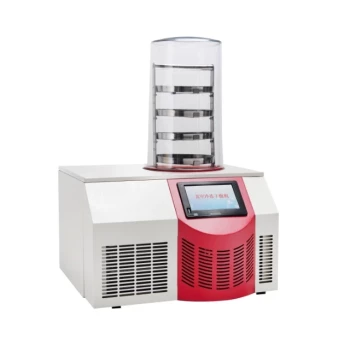
- Benchtop Laboratory Vacuum Freeze Dryer
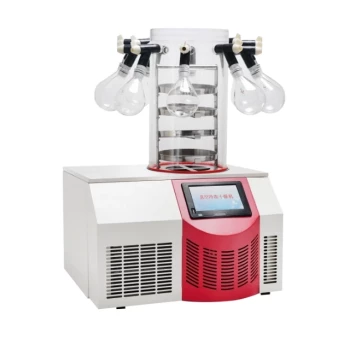
- High Performance Laboratory Freeze Dryer
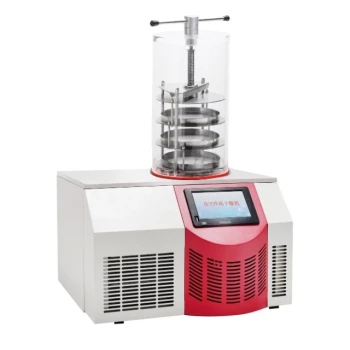
- High Performance Laboratory Freeze Dryer for Research and Development
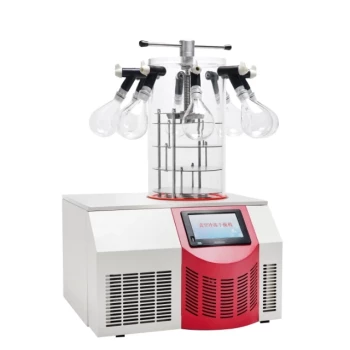
- Benchtop Laboratory Freeze Dryer for Lab Use
- Vacuum Cold Mounting Machine for Sample Preparation
People Also Ask
- What are the technical advantages of using a laboratory freeze dryer for porous carbon precursors? Preserve 3D Networks
- How do laboratory freeze dryers support scientific research? Preserve Sample Integrity for Reproducible Results
- Why is a laboratory freeze dryer preferred over traditional heating? Preserve Biochar Structure & Maximize Porosity
- What types of liquid samples can be processed using a laboratory freeze dryer? Preserve Your Sensitive Materials
- What role do laboratory freeze dryers play in the food industry? Unlock Superior Food Preservation