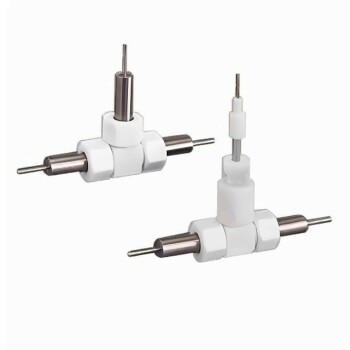
Multi-channel battery testing systems optimize Nano-LiFePO4/C analysis by enabling parallel processing of multiple samples under highly controlled electrical conditions. These systems allow researchers to simultaneously evaluate rate performance (0.1C to 10C), coulombic efficiency, and long-term cycle life with extreme precision. By providing high-fidelity current and voltage regulation, they serve as the definitive tool for verifying the structural integrity and ion-migration efficiency of nanostructured cathode materials.
A multi-channel testing system is essential for accelerating battery material research, offering the throughput needed for statistical significance while providing the high-precision data required to validate structural stability in high-rate environments.
Maximizing Research Throughput and Efficiency
Simultaneous Sample Analysis
The primary advantage of a multi-channel architecture is the ability to run galvanostatic charge-discharge tests on multiple Nano-LiFePO4/C samples at once. This parallelization significantly reduces the time-to-data when comparing different material compositions, dopants, or manufacturing processes.
Automated Long-Term Data Collection
These systems are designed to maintain stable constant current output over extended periods, sometimes reaching thousands of hours or cycles. They automatically record voltage-capacity curves and capacity decay, allowing for continuous monitoring of the material's evolution without manual intervention.
High-Frequency Potential Monitoring
Advanced systems record potential fluctuations at high frequencies, which is decisive for identifying subtle electrochemical shifts. This capability is critical for verifying whether active substances are detaching or if the material is resisting structural corrosion under high-intensity working environments.
Validating High-Rate Performance and Kinetics
Precision Control of C-Rates
Multi-channel systems allow for the accurate setting of various C-rates, typically ranging from 0.1 C to 10 C. This range is essential for evaluating the performance of Nano-LiFePO4/C, specifically testing how well the material handles high-current loads.
Quantifying Ion Migration Efficiency
High-precision battery testing is the most direct method for evaluating whether a 3D mesoporous structure effectively shortens lithium-ion migration paths. By analyzing voltage platforms under different current loads, researchers can visualize the kinetic advantages of nanostructuring.
Real-Time Polarization Analysis
The system monitors voltage polarization during cycling, providing a window into the internal resistance and electrochemical stability of the battery. This data is vital for identifying the suppression of dendrite growth and ensuring the long-term safety of the energy storage device.
Understanding the Trade-offs
Data Management Complexity
The massive volume of high-frequency data generated by dozens of simultaneous channels requires robust storage and sophisticated analysis software. Without automated processing tools, researchers can easily become overwhelmed by the sheer scale of the information.
Calibration and Port Consistency
To ensure objective results, every channel in the system must be precisely calibrated to match the others. Even minor deviations in current or voltage across different ports can lead to false performance variances between samples, potentially leading to incorrect conclusions about material quality.
Making the Right Choice for Your Goal
Whether you are in a lab setting or preparing for industrial production, the application of multi-channel testing should align with your specific objectives:
- If your primary focus is rapid material screening: Prioritize systems with high channel counts and automated data synthesis to quickly identify the most promising Nano-LiFePO4/C formulations.
- If your primary focus is high-rate kinetic analysis: Focus on systems that offer the highest precision in current control and high-frequency sampling to accurately map lithium-ion migration.
- If your primary focus is industrial certification: Utilize long-term cycling capabilities to verify that the regenerated or synthesized material meets capacity retention and Coulombic efficiency standards over thousands of cycles.
By leveraging the throughput and precision of a multi-channel system, you transform battery testing from a bottleneck into a powerful engine for material innovation.
Summary Table:
| Key Feature | Benefit for Nano-LiFePO4/C Analysis | Research Impact |
|---|---|---|
| Parallel Processing | Simultaneous testing of multiple samples | Drastically reduces time-to-data and screening |
| Precise C-Rate Control | Accurate settings from 0.1C to 10C | Validates high-rate kinetics and performance |
| High-Frequency Monitoring | Captures subtle potential fluctuations | Identifies structural corrosion and ion-migration |
| Automated Long-Term Cycling | Continuous monitoring of capacity decay | Verifies structural integrity over thousands of hours |
| Voltage Polarization Analysis | Real-time internal resistance tracking | Ensures long-term safety and stability |
Elevate Your Battery Material Innovation with KINTEK
Precision is the foundation of breakthrough energy research. KINTEK specializes in high-performance battery research tools and consumables, providing the high-fidelity testing systems and essential equipment needed to validate the performance of Nano-LiFePO4/C and other advanced materials.
From high-precision testing channels to our comprehensive range of high-temperature furnaces (CVD, vacuum, atmosphere) and PTFE consumables, we offer the reliable infrastructure your lab requires for high-rate kinetic analysis and long-term cycling certification.
Ready to optimize your lab's throughput and data accuracy? Contact our technical experts today to find the perfect solution for your research goals.
References
- Haozhi Duan, Shuxia Yuan. Solution Combustion Synthesis of High-Performance Nano-LiFePO4/C Cathode Material from Cost-Effective Mixed Fuels. DOI: 10.3390/ma16227155
This article is also based on technical information from Kintek Solution Knowledge Base .
Related Products
- Customizable Swagelok Type Test Cells for Advanced Battery Research Electrochemical Analysis
- Battery Lab Equipment 304 Stainless Steel Strip Foil 20um Thick for Battery Test
- Laboratory Hydraulic Press Lab Pellet Press for Button Battery
- Platinum Sheet Electrode for Battery Lab Applications
People Also Ask
- How does a standardized electrochemical test cell assist in MOx/CNTf electrode screening? Optimize Material Ratios
- Why is a dedicated electrochemical test cell necessary for carbon steel? Ensure Precise Geothermal Corrosion Data
- What is the difference between a voltaic cell and an electrochemical cell? Understand the Two Types of Energy Conversion
- How do the electrochemical cell and three-electrode testing system collaborate? Optimize Zinc Anode Deposition Control
- Why must the electrochemical cell be continuously purged with nitrogen? Ensure Precision in Ni-Cr Corrosion Tests