To safely operate a water bath, you must manage the core hazards of heat, electricity, and potential biological contamination. Key precautions include using the correct electrical outlets, handling the unit with heat-resistant gloves to prevent burns, maintaining water quality with distilled water and algaecides, and ensuring all samples are properly sealed to prevent cross-contamination or spills.
A laboratory water bath is a deceptively simple device that combines multiple risks: heat, water, and electricity. Proactive safety is not about a checklist, but about understanding and respecting how these elements interact to prevent burns, electrical shock, and compromised experiments.

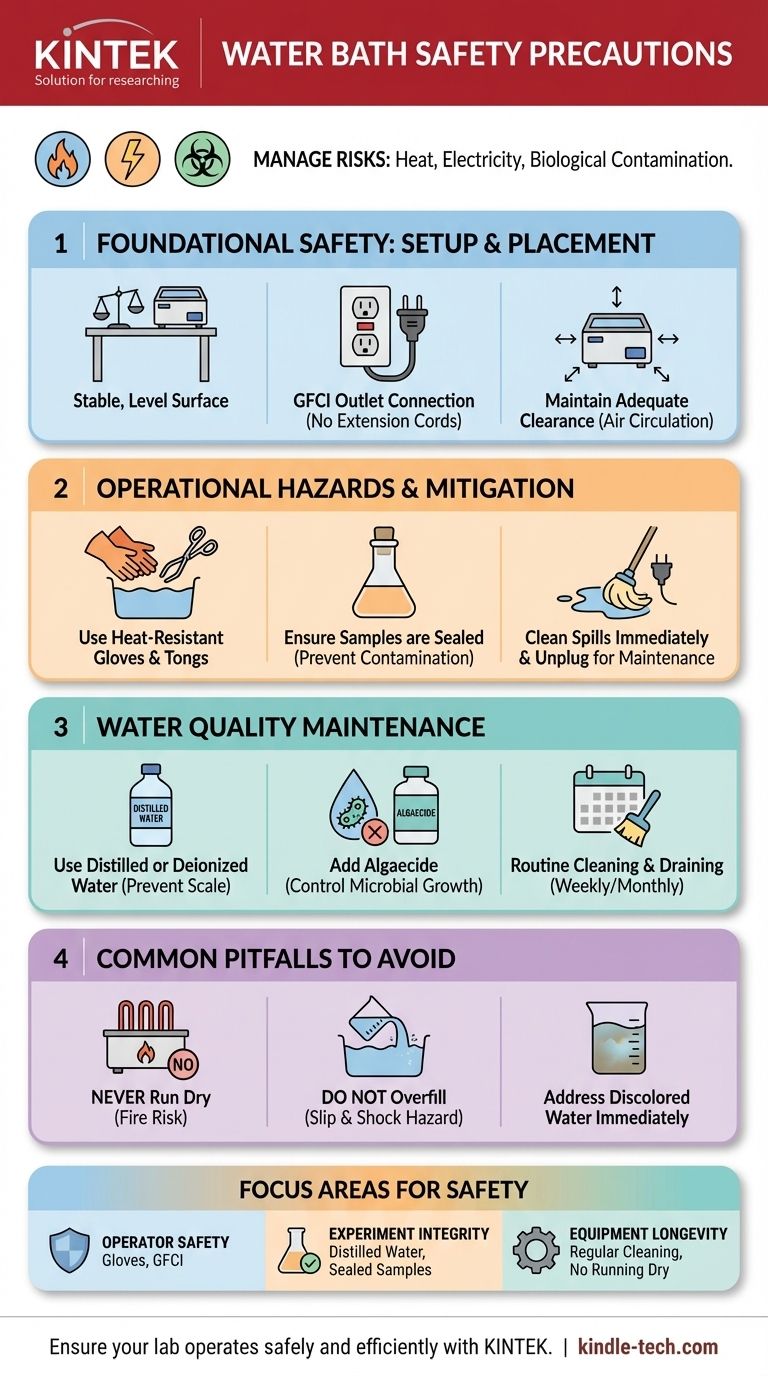
Foundational Safety: Setup and Placement
Proper setup is the first line of defense against accidents. Where and how you place the water bath has significant safety implications.
Choosing a Stable, Level Surface
A water bath must be placed on a sturdy, level benchtop. An uneven surface can lead to spills, creating both a slip hazard and an electrical shock risk.
Ensure the location is away from the edge of the bench to prevent it from being accidentally knocked over.
Ensuring Proper Electrical Connection
Water baths must be plugged into a Ground Fault Circuit Interrupter (GFCI) outlet. A GFCI rapidly shuts off electric power if it detects an imbalance, which can occur if water comes into contact with the electrical components.
Never use extension cords, as they can create a trip hazard and may not be rated for the device's power draw, creating a fire risk.
Maintaining Adequate Clearance
Position the unit with several inches of clearance on all sides. This ensures proper air circulation, preventing the motor and electronics from overheating.
Sufficient clearance also prevents heat from the bath's exterior walls from damaging nearby equipment or materials.
Operational Hazards and Mitigation
Once the bath is running, new risks emerge. Understanding how to mitigate them during routine use is critical for operator safety and experimental integrity.
The Primary Risk: Burns and Scalds
The water and internal surfaces of the bath can cause serious burns. Always assume the unit is hot, even if it has been turned off recently.
Use heat-resistant gloves and tongs when placing or removing items from the bath. Be mindful of steam, which can also cause severe scalds when you remove the lid.
The Hidden Risk: Electrical Shock
Spilling water on or around the bath is a primary cause of electrical hazards. Clean up all spills immediately.
Before cleaning or moving the unit, always unplug it from the wall outlet. This completely removes the risk of electrical shock.
Preventing Sample Contamination
Always use racks to hold your samples. Placing tubes or flasks directly on the bottom of the bath can lead to uneven heating and potential melting if they touch the heating element.
Ensure all samples are in securely sealed containers. This prevents bath water from contaminating your experiment and prevents your sample from contaminating the bath, which is critical if working with biohazards.
Water Quality: The Overlooked Necessity
The water inside the bath is not just a heating medium; it's an active part of the system that requires maintenance to ensure safety and accuracy.
Why Water Type Matters
Use only distilled or deionized water. Tap water contains minerals that will deposit on the heating element and tank walls, forming scale.
This scale acts as an insulator, forcing the unit to work harder, leading to inaccurate temperature control and eventual equipment failure. In severe cases, it can create hot spots and become a fire hazard.
Controlling Microbial Growth
Warm, stagnant water is an ideal breeding ground for algae, fungi, and bacteria. This growth can contaminate experiments and create a potential health hazard from aerosols.
Use a commercial algaecide or biocide specifically approved for water baths to prevent microbial growth. This is especially important for baths that are run continuously for days or weeks.
Routine Cleaning and Draining
Water baths should be drained and cleaned regularly, typically on a weekly or monthly basis depending on usage.
A routine cleaning schedule prevents the buildup of mineral scale and biofilms, extending the life of the unit and ensuring your experiments are not compromised.
Common Pitfalls to Avoid
Several common mistakes can undermine water bath safety and lead to equipment damage or failed experiments.
Running the Bath Dry
Never turn on a water bath without water in it. The heating element is designed to be immersed and will quickly overheat and burn out, creating a fire risk and destroying the unit.
Always check the water level before turning the device on and monitor it during long runs, as evaporation will lower the level over time.
Overfilling the Reservoir
Do not fill the bath to the brim. When you add your samples, the water level will rise, potentially causing an overflow.
An overflow creates a dangerous combination of a slip hazard and an electrical shock risk. Fill the bath only to the recommended level marked on the inside of the tank.
Ignoring Water Discoloration
If the water becomes cloudy, discolored, or develops a film, it is a clear sign of contamination. Do not ignore it.
Immediately turn off the unit, drain the contaminated water, thoroughly clean the tank, and refill with fresh distilled water and a proper dose of algaecide.
Making the Right Choice for Safety
Your procedural focus will determine which safety measures are most critical in your daily workflow.
- If your primary focus is operator safety: Always use heat-resistant gloves and tongs, and verify the unit is connected to a GFCI outlet.
- If your primary focus is experiment integrity: Exclusively use distilled water and sealed sample containers to prevent contamination and ensure accurate temperature transfer.
- If your primary focus is equipment longevity: Commit to a regular cleaning schedule and never allow the unit to run dry or with tap water.
Treating your water bath with consistent care transforms it from a potential hazard into a reliable and safe scientific tool.
Summary Table:
| Precaution Category | Key Safety Measures |
|---|---|
| Setup & Placement | Use a stable, level surface; GFCI outlet; adequate clearance for ventilation. |
| Operational Safety | Use heat-resistant gloves; ensure samples are sealed; clean spills immediately. |
| Water Quality | Use distilled/deionized water; add algaecide; drain and clean regularly. |
| Common Pitfalls | Never run dry; avoid overfilling; immediately address discolored water. |
Ensure your lab operates safely and efficiently with the right equipment from KINTEK.
Water baths are fundamental to many laboratory processes, and proper safety is paramount for protecting your team and your research. KINTEK specializes in providing reliable lab equipment and consumables designed with safety and performance in mind.
Let us help you equip your lab with water baths and other essential tools that meet the highest standards. Our experts can guide you to the best solutions for your specific applications.
Contact KINTEK today to discuss your laboratory needs and enhance your lab's safety protocol.
Visual Guide
Related Products
- Multifunctional Electrolytic Electrochemical Cell Water Bath Single Layer Double Layer
- 50L Chiller Water Bath Cooling Circulator Low Temperature Constant Temperature Reaction Bath
- 10L Chilling Circulator Cooling Water Bath Low Temperature Constant Temperature Reaction Bath
- Optical Water Bath Electrolytic Electrochemical Cell
- Double Layer Five-Port Water Bath Electrolytic Electrochemical Cell
People Also Ask
- What are the guidelines for high-temperature sterilization of the multifunctional electrolytic cell? Avoid Permanent Damage to Your PTFE Lid
- What does the routine maintenance of a double-layer water-bath electrolytic cell involve? A Guide to Ensuring Precision and Longevity
- How does the design of an electrochemical electrolytic cell influence the coating uniformity? Optimize Your Catalysts
- What is the typical volume range of the multifunctional electrolytic cell? Choosing the Right Size for Your Lab
- When is professional repair required for a double-layer water-bath electrolytic cell? Protect Your Lab's Precision and Safety